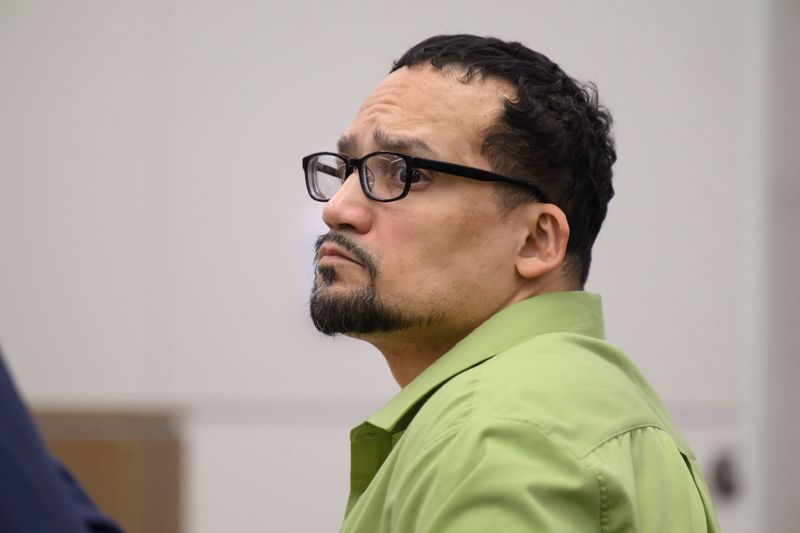
A Wayne County man on trial for allegedly killing a Melvindale cop in April 2024 will likely have a difficult time proving he acted in self-defense, and a jury will have to decide if the defendant’s actions were reasonable, said at least two legal experts.
The jury trial for Michael Lopez, 45, began Monday in Wayne Circuit Court with jury selection and during opening statements Tuesday, his attorney John McWilliams said his client had an “honest, reasonable belief that the officer was about to kill him with a firearm” when he shot Officer Mohamed Said.

But two defense attorneys say Lopez, who is charged with first-degree murder of a police officer, nine weapons offenses and two drug charges, has a difficult battle ahead of him to prove that he shot and killed Said in self-defense.
“It’s going to complicate it (with Said) being a police officer because as long as he’s acting within the bound of what the law allows, there’s very little if not no room to say it’s self defense,” Birmingham-based defense attorney Ryan Ramsayer said. “The complicating factor is going to be the type of force used (by Said).”
One of Said’s coworkers, Officer Hussein Ayoub, testified Tuesday that Said’s gun was still holstered in his duty belt on his waist when he and several other officers found him bleeding on the ground.
The case against Lopez
Said, who been with the Melvindale department for just over a year when he was killed, was working overtime July 21, 2024, when he saw Lopez drop a cigarette butt on the ground outside a car wash. He ordered Lopez to pick up the cigarette, according to Said’s body camera footage, which was played in court on in August 2024.
Lopez apologized and picked up the cigarette, but after Said asked for identification and told Lopez to put his hands up when he kept reaching into his pants, Lopez started running.
Said followed him through bushes and backyards and fired his Taser at Lopez. Said struggled with Lopez on the ground, and Lopez got up to flee, Hadied said.
“This defendant, as he’s running away, pulls out a revolver from his pocket and he’s holding it,” said Wayne County Assistant Prosecutor Rana Hadied during opening statements. “He directs it point blank at the officer’s face. Officer Said backs up and puts hands up. He says ‘we’re good, we’re good.’ What does this defendant decide to do? He shoots him in the face, instantly killing him.”
McWilliams said the case against Lopez only has to do with the moment in time when Lopez believed Said pulled out a gun and pointed it at him, when he believed he was about to be killed.
The jurors have to decide if what Lopez felt — even if his belief was wrong — was a reasonable fear for his life, McWilliams said. He said Lopez will take the witness stand later in the trial to testify on his own behalf.
“The officer was right in his face with a weapon,” McWilliams said. “It was no small fear or anything, he was genuinely, as he will tell you, fearful that he was going to be killed himself.”
What does Lopez have to prove for self-defense?
Ramsayer said Michigan has a “stand your ground” law that allows someone to not flee and to defend themselves. But someone can only use deadly force to prevent death, great bodily harm or sexual assault, he said.
“If you’re not committing a crime or in a place you’re not allowed to be and unlawful force is being used against you, then you could potentially resist by using force, but it’s got to be proportional,” Ramsayer said. “Under common law … you still have the right to defend yourself, even in circumstances where you’re not acting in the most legal of manners. The problem with common law is, again, things have to be reasonable. Deadly force is not to be used lightly.”
A person can use reasonable force to stop an arrest, Ramsayer said. But that doesn’t mean a person is free to commit deadly violence against someone.
“(A jury is) going to have to decide … was your use of self-defense correct and proportionate to what you’re allowed to use or did it exceed the bounds of what was allowed to be used?” Ramsayer said.
Clint Perryman, a Flint-based criminal defense attorney, said in order for Lopez to successfully make a self-defense claim, the jury would have to find that Said acted unlawfully in his actions as a police officer and that Lopez was in fear for his life.
Police are given a lot of discretion in the line-of-duty, which is why they often are immune from prosecution or civil lawsuits, Perryman said. Juries too, tend to extend an enormous amount of deference to police officers, which complicates the defense.
“In my opinion that’s going to be a very, very uphill battle,” Perryman said, “especially if he has priors and can’t legally own a gun.”
Prosecutors have to prove the killing was not justified and defend the legitimacy of Said’s stop of Lopez and their continued interaction, Perryman said.
“If the officer’s conduct from the body camera is questionable, that’s going to create, potentially, problems for the prosecution,” Perryman said. “Even if he thought the officer was being excessive in his roadside interaction and the following fact that he was tased, that’s going to be a very very difficult one to overcome.”
Perryman said he tells his clients that even if they think a stop or other police action is unlawful, they should listen to them and follow their orders, then fight it later in court.
kberg@detroitnews.com
This article originally appeared on The Detroit News: What man who killed Melvindale cop needs to prove for self-defense claim
Reporting by Kara Berg, The Detroit News / The Detroit News
USA TODAY Network via Reuters Connect