I keep telling people I’ve been preparing for retirement for years. The dreams suggest otherwise.
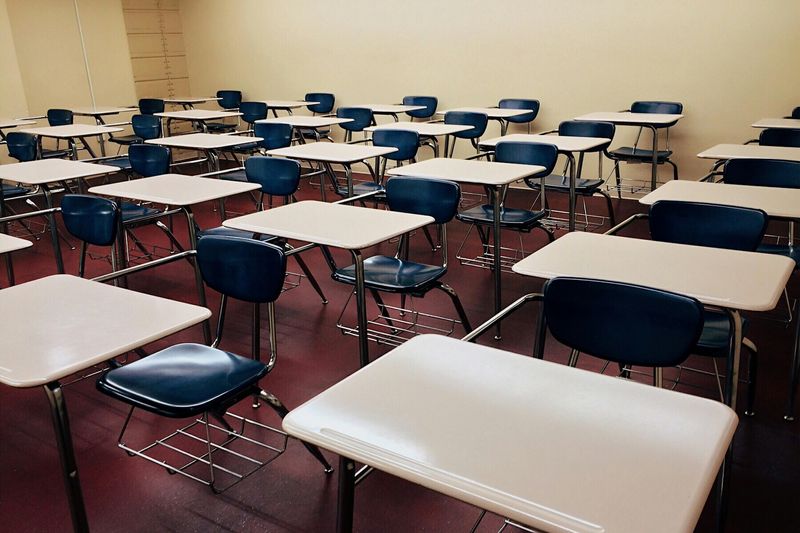
Lately, school-related dreams have become more frequent. In one, I cannot find my classroom. In another, the bell has already rung and 30 students are staring at me while I shuffle through papers, unable to figure out what I’m supposed to teach. Sometimes it is the first day of school and I suddenly realize I have no lesson plans.

I wake up relieved for about three seconds before remembering retirement is actually happening.
Over the past few weeks, I’ve been emptying decades of accumulated teaching material from my classroom cabinets and file drawers at South Lyon East High School. Old lecture outlines. Political cartoons from the Clinton years. Transparencies from the era before PowerPoint. Yellowed newspaper clippings about the fall of the Soviet Union that were once current events.
Teaching social studies means eventually teaching history long enough to become part of history yourself.
One afternoon, I found an assignment from the late 1990s reminding students to save their work to a floppy disk. Many of my current students would not even know what that means. Moments like that make 33 years feel less abstract.
Over those three decades, adults have asked me the same question more than any other: What’s it like teaching kids today?
Usually, the question carries some combination of curiosity and concern. The assumption seems to be that smartphones and social media have fundamentally transformed adolescents into alien life forms.
I understand why people feel that way. Phones and social media have absolutely changed schools. Students now move through a world where every awkward moment can be photographed, reposted or publicly dissected before they even get home. Anxiety levels seem higher. Teachers compete with an endless stream of distraction that fits in a pocket.
But underneath all of that technology, they are still kids in the ways that matter most.
They still want approval while pretending not to care. They still fear embarrassment. They still test boundaries. Sophomores in 2026 are not emotionally all that different from sophomores in 1996. More than anything, they still seem to want adults who consistently show up, care about them, and teach them well.
A few years ago, that reality hit me outside the school walls.
I was standing in line at a gas station in the town where I teach when a young man behind me tapped my shoulder.
“Mr. Kindred?”
It was a former student named Nathan, whom I had not seen in years. He told me he had just finished his degree and was now teaching social studies himself.
Then he said something I did not expect.
“I went into education because of you.”
Over 33 years, I taught thousands of students across tens of thousands of class periods. The seniors from my first year are now in their fifties. Meeting Nathan reminded me how much of a teacher’s life is spent in the company of the young.
The strange thing is that teachers rarely know which moments mattered or which students they influenced. I only vaguely remembered Nathan.
Modern education places enormous emphasis on measurable outcomes. Schools document everything now: benchmarks, growth metrics, intervention plans, data dashboards, pacing guides. Some of that has value. Schools should be accountable.
Yet when former students reach out years later, they never mention grades or AP exam scores.
They remember feeling seen. They remember conversations. They remember teachers who challenged them intellectually and treated them like young adults instead of children.
For most of my career, I considered myself a fairly traditional teacher. I lectured. We discussed ideas. We argued about history, government, politics and human nature. I wanted students to leave my classroom more curious about the world than when they entered it.
Some lessons were better than others. Some days I was distracted. Some days the students were tired. But I showed up with enthusiasm year after year, and I think students recognize consistency more than teachers sometimes realize.
Good teaching and good parenting share something essential: young people notice who shows up for them.
I’ve been fortunate to spend my adult life teaching young people in Michigan and New York. I’m ready for new challenges, and students deserve fresh voices teaching history, government, and citizenship.
It’s time.
I will not miss waking up at 5:30 in the morning or grading papers on the weekend.
But I just might miss those darn kids.
Keith Kindred is a retired Michigan teacher who taught at the high school and college levels for over 33 years. He is also the author of several self-published books and regularly writes about education policy.
This article originally appeared on The Holland Sentinel: The world has changed. Kids? Not as much as you think | Opinion
Reporting by Keith Kindred, Holland Sentinel / The Holland Sentinel
USA TODAY Network via Reuters Connect
By Keith Kindred, Holland Sentinel | USA TODAY Network