As we celebrate America’s 250 years, consider the story of William Quincy Atwood, who was born into slavery but died as one of Saginaw’s wealthiest businessmen.
Atwood was born in Alabama in 1839, the son of an enslaved mother and the plantation master. Atwood’s father died in 1851, and in his will he emancipated William, his mother and his siblings.

The newly freed family moved to Ohio. Over the next decade, William Atwood attended college, worked on the Underground Railroad, joined the California gold rush, opened a restaurant and traded horses.
In 1863, Atwood settled in East Saginaw, where he spent the rest of his life.
Atwood was a savvy investor and businessman. His first real estate deal earned him a $4,000 profit — about $105,000 today. He later opened a sawmill during the state’s timber boom. The Atwood home featured a beautiful lawn and an extensive personal library.
Atwood was a man of influence, active in civic and political life. Atwood helped establish the East Saginaw Colored Debating Society and the Michigan Protective Equal Rights League. He also served on the Saginaw Board of Trade.
A proud Republican, Atwood campaigned for President Ulysses S. Grant’s reelection in 1872 and was a delegate to the Republican National Conventions in 1888 and 1892. He knew Presidents William McKinley and Benjamin Harrison personally and attended Harrison’s inauguration. Atwood also supported fellow Saginaw businessman Aaron T. Bliss in his successful run for Michigan governor.
By 1885, Atwood was influential enough to bring abolitionist Frederick Douglass to Saginaw for an Emancipation Day address. Douglass stayed with the Atwood family.
A respected orator himself, Atwood organized or spoke at more than 20 Emancipation Day celebrations over four decades, including events in Battle Creek, Lansing and Ypsilanti. In 1879, he spoke to a crowd of 5,000 in Grand Rapids.
“Education is another of our great wants,” Atwood said, “for if we would rise we must educate ourselves and our children.”
In the same speech, Atwood asked White Americans to overcome prejudice, urging them to “look upon heart and brain, not color.”
Atwood voiced his opinion on many topics. He wrote in favor of interracial marriage in 1884. He supported voting rights, commented on industrial policy and attended an “indignation meeting” in 1895 after a mob killed several Black men in New Orleans.
Through it all, Atwood remained optimistic about the future.
“Could I gently lift the curtain and point you to the dark intervening clouds beyond,” he said in 1883, “I will tell you further on the sun is shining out brightly, when there will be no invidious distinction based upon color of a man.”
Atwood enjoyed a stellar reputation his entire life. The Saginaw News said he was “universally regarded with marked respect in Michigan.” Other accounts described him as “able” and “conscientious.”
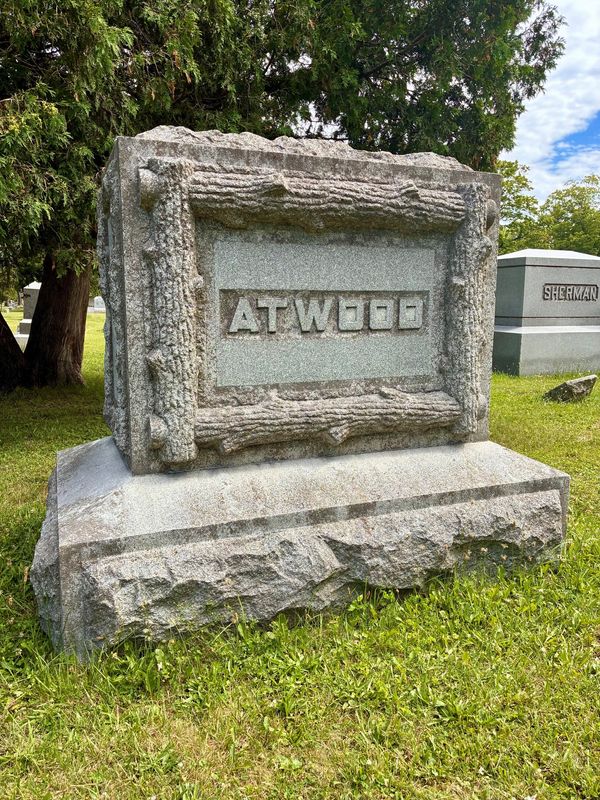
When Atwood died on Dec. 21, 1910, his obituary ran in papers throughout Michigan. He is buried in Forest Lawn Cemetery in Saginaw, along with his wife, Charlotte, and four of their children.
Atwood’s life captures the promise of America. A man born into bondage helped others find freedom and became a friend of governors and presidents.
Freedom was a central theme throughout Atwood’s life. In 1895, Atwood spoke at the opening of a Masonic hall in Saginaw, where a local reporter captured his comments. Atwood argued that nations that enjoy the greatest liberty make the greatest advances in civilization, science and the arts.
The reporter summarized Atwood’s remarks: “Life was nothing without liberty and there was nothing so grand as being free.”
Michael J. Reitz is executive vice president of the Mackinac Center for Public Policy.
This article originally appeared on The Detroit News: The story of Saginaw’s William Q. Atwood reflects America’s promise | Reitz
Reporting by Michael Reitz / The Detroit News
USA TODAY Network via Reuters Connect
By Michael Reitz | USA TODAY Network