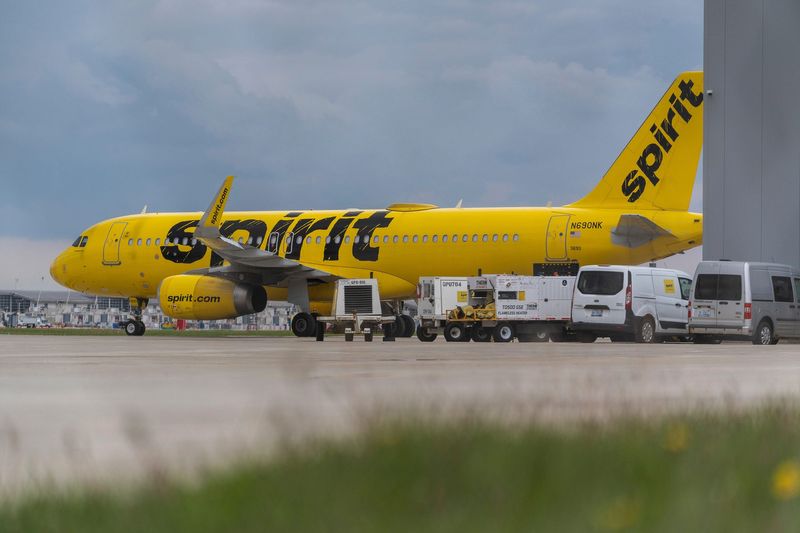
Detroit Metropolitan Airport and the airlines that fly there could soon face financial fallout from the bankruptcy of Spirit Airlines, which held about 11% of the market share at the airport.
The only question is: How much will it hurt?

Spirit moved about 1.7 million passengers through Metro Airport in 2025 and was its second largest carrier after Delta Air Lines before it ceased operations in early May.
Officials from the Wayne County Airport Authority, which owns and operates Metro Airport in Romulus and Willow Run Airport in Ypsilanti and Van Buren townships, declined interview requests from the Detroit Free Press this week.
An authority spokesperson said in an email message that Spirit paid about $26 million in total revenue last year to the authority, which included fees, leases and other charges. That’s about 7% of the airport operating revenues logged in 2024, the last full year for which data are available.
The true cost to the authority remains unknown as Spirit’s passengers likely provided additional indirect revenue through such sources as parking fees, food and retail sales, ground transportation services and car rental services.
“As far as economic impact, we are in the process of evaluating at this time,” airport authority spokesman Matt Morawski wrote in an email message. “We will do everything we can in our power to minimize any inconvenience to the traveling public.”
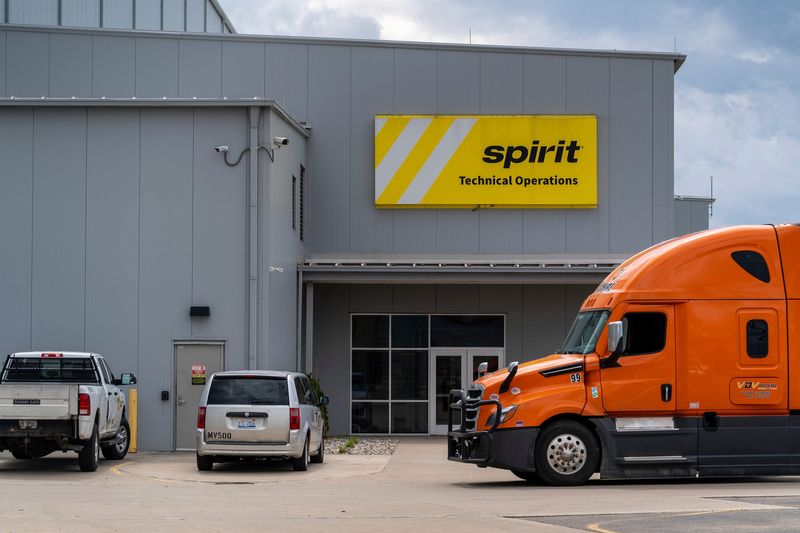
Morawski said the airport’s leaders are reviewing options for Spirit’s gate spaces and other leased property, including the 126,000-square-foot maintenance hangar Spirit built there in 2016.
At the time, Spirit told the Detroit Free Press that it got a $1 million performance-based grant from the Michigan Strategic Fund and a tax abatement from the city of Romulus, which influenced the airline’s decision to build the hangar at Metro Airport rather than in Texas.
It could be a while before the full scope of the economic fallout from Spirit’s abrupt closure will be fully known, Morawski said.
“Given that many of the matters involved may need to be resolved through Spirit Airlines’ bankruptcy proceedings, no decisions have been made at this time, and will likely not be made in the near future,” he wrote.
The airport authority has some financial protection because it operates on what’s known as a residual methodology. Each year, the authority proposes a budget for what it expects it to cost to run Metro Airport. The airlines that operate there must approve it.
The authority’s bond filings note that the airlines are ultimately responsible for the net cost of operating the entire airport, including debt payments.
“If the authority incurs a deficit in any operating year, it has the ability to increase landing fee and terminal rental rates to the signatory airlines in order to recover the amount of the deficit,” the bond statements say.
The statements go on to note that in good years, when revenues exceed expenses, the surplus must be refunded to the airlines.
Morawski said the authority doesn’t have to wait until the end of the year to raise rates, if it decides to do so.
“An adjustment to rates may be made halfway into the fiscal year for any known deficits,” Morawski wrote.
In other words, the airlines that continue to operate at Metro Airport could face higher costs from the authority, which they could incorporate into their ticket prices.
Last year, the authority noted to bondholders that Spirit had filed for bankruptcy protection and said that any financial difficulties incurred by carriers that use Metro could hurt the authority’s bottom line.
If Spirit’s bankruptcy trustee declines to honor its lease obligations to Metro, that lost money would end up being charged to the carriers that remain.
“There is no assurance that the remaining signatory airlines would be financially able to absorb such additional cost resulting from such rejection,” the bond filings say.
Neither Delta Air Lines nor Frontier were willing to comment on what the loss of Spirit Airlines would mean for them in terms of fees and other costs they face at Metro.
The collapse of Metro Airport’s second-largest carrier
After financially struggling for years and several attempts to restructure and return to profitability, Spirit Airlines announced May 2 that it would immediately cease operations and begin the process of liquidating its assets through bankruptcy proceedings.
The no frills, low-budget carrier, which was founded in 1964 in Michigan, suddenly folded.
“For more than 30 years, Spirit Airlines has played a pioneering role in making travel more accessible and bringing people together while driving affordability across the industry,” said Dave Davis, Spirit’s president and CEO, in a statement issued at 2:24 a.m. May 2.
“In March 2026, we reached an agreement with our bondholders on a restructuring plan that would have allowed us to emerge as a go-forward business,” the statement said. “However, the sudden and sustained rise in fuel prices in recent weeks ultimately has left us with no alternative but to pursue an orderly wind-down of the company. Sustaining the business required hundreds of millions of additional dollars of liquidity that Spirit simply does not have and could not procure. This is tremendously disappointing and not the outcome any of us wanted.”
The Detroit Free Press asked Spirit Airlines this week for details about how and when the liquidation of its assets would occur and how much is owed to the Wayne County Airport Authority.
Rachel Chesley, a spokesperson for Spirit Airlines, emailed a response Wednesday, May 6, saying she would work to provide those details despite “the limited remaining resources at the company.”
However, additional information was not immediately provided.
Other carriers that operate at Metro, including United Airlines, American Airlines, Southwest and JetBlue, did not respond to requests from the Detroit Free Press for comment on potential charge-backs they could face to cover the lost revenue from Spirit.
Other airlines step up to fill gap left by Spirit
The sudden void created by the closure of Spirit Airlines also creates an opportunity for other carriers. It’s one that Colorado-based Frontier is seizing.
James Dempsey, president and CEO of Frontier Holding Group LLC, said that as it became evident Spirit could cease operations, Frontier positioned itself to launch “routes that we thought would be opportunities. … And so you’ve seen us move quite quickly.”
The company plans to expand service this summer with nine additional routes and 15 daily departures across 18 former Spirit routes, including Detroit, Orlando, Las Vegas, Dallas, Fort Worth, Texas, and Fort Lauderdale.
“This gives customers more options … to rebook their travel plans with confidence while keeping fares low,” Dempsey said during a May 5 earnings call.
Spirit played a “meaningful role in providing affordable travel to a wide range of consumers in an industry dominated by four major airlines.”
Its loss “meaningfully alters the supply landscape,” Dempsey said. “Given our low-cost structure and disciplined approach to capacity deployment, Frontier is best positioned to provide the best value in those markets.”
Frontier already has added two routes from Detroit Metropolitan Airport — one to Fort Lauderdale and another to Las Vegas, said Jennifer de la Cruz, Frontier’s senior director of communications.
“We have operated those routes previously but weren’t currently offering them,” she said in an email to the Detroit Free Press. “Additionally, we are continuing to evaluate our overall route network to determine future route additions.”
Starting in July, she said, Frontier will continue to add capacity to the following nonstop routes from Detroit to:
Additionally, de la Cruz said the following routes are seasonally paused, but will resume from Detroit later this year:
De la Cruz declined to comment on whether Frontier plans to purchase the lease of Spirit’s maintenance hangar at Metro. Nor would she comment on any potential fee increases now that the company is gone.
Delta Air Lines told the Detroit Free Press on May 6 that it has no announcements to make about new destinations, flights from Detroit Metropolitan Airport or about facilities it uses there. Instead, it issued this statement:
“Delta remains deeply committed to Detroit as DTW’s largest global carrier, operating over 350 peak-day flights this summer to more than 100 destinations around the world. Our focus right now is on supporting customers impacted by Spirit’s shutdown and continuing to provide reliable service for travelers across the region.”
What will become of the Spirit hangar at Metro?
Jason Miller, chief investment officer for Grand/Sakwa Properties LLC, a Farmington Hills-based commercial real estate owner and developer, said he follows the airline industry closely and watched with interest when Spirit constructed its nearly $32 million commercial airline maintenance hangar on the authority’s land at Detroit Metropolitan Airport.
“What will be interesting is what happens to determine who ends up in control of that property,” Miller said.
He predicted that as bankruptcy proceedings move forward, the 30-year land lease the company signed with the airport authority could be auctioned off.
“Now that Spirit is liquidating, the bankruptcy court still has to unwind the estate,” Miller said. “And they’ve got various assets that they are going to try to get rid of or sell. They might auction them off. This will be one of them.
“If they are unable to find a buyer for this lease … they’ll cancel the lease in bankruptcy, and then, Detroit Metro Airport will own that building. They won’t pay anything for it, but they’ll own the building. … [The authority] will theoretically be able to lease it to somebody else at market rent, which is going to be a higher number, certainly, than what they entered into.”
If the land lease is sold, however, the buyer also would get the building, Miller said, which is often what happens in the retail industry.
“A retailer like Bed, Bath and Beyond might go bankrupt and has 400 or so stores. The bankruptcy estate will sometimes auction those off and other retailers oftentimes will step in and try to acquire those leases,” Miller said.
Sometimes, other retailers will purchase a lease out of bankruptcy because the rent is lower than current market value for the location. Other times, he said, they’ll take over a lease because they’re trying to block competitors from scooping up the space.
“As a result, a lot of the spaces that are vacated by Bed, Bath and Beyond, Toys R Us or Sports Authority get backfilled fairly quickly,” he said.
Beyond the loss of revenue from the land lease the authority had with Spirit, Miller said the company’s bankruptcy could cause financial strain at Metro Airport in other ways, too.
“Spirit was paying a lot more in terms of passenger fees and user fees and the use of other spaces like gates,” Miller said. “So, with Spirit going away, at least there’s a fairly significant short-term hit to Metro Airport in terms of its overall revenue.
“What the airport will certainly hope happens is that some other airline will step in and sort of fill the void, but I don’t really think in this environment we’re going to see a lot of airlines eager to step in and effectively fill 100% of the gap that Spirit is leaving behind.”
Contact John Wisely: jwisely@freepress.com On X: @jwisely. Contact Kristen Shamus: kshamus@freepress.com.
This article originally appeared on Detroit Free Press: Spirit’s collapse leaves bills and opportunities at Metro Airport
Reporting by Kristen Jordan Shamus and John Wisely, Detroit Free Press / Detroit Free Press
USA TODAY Network via Reuters Connect