Moratorium seems to be a buzzword for elected officials in some Michigan communities, often related to data centers.
But a temporary halt on new gas stations and car washes has popped up, too, often in communities where there have been conversations about the Pennsylvania-based Sheetz gas stations and convenience stores coming into the market.

“The focus is to ensure we don’t have gas station row or car wash row throughout the city,” said Jonathan Lafferty, a Warren City Councilman, who with his colleagues in May approved an up-to-eight-month moratorium on new gas stations and car washes in Michigan’s third-most populous city.
He said the moratoriums aren’t to cap the number of these businesses.
“We welcome all types of businesses in the city. If you want to invest in the city, we will help you,” Lafferty said. “What we are attempting to do is to ensure our commercial corridors tell the story of Warren. … We care about the way the city looks and appears. … We want that diversity to be reflected in our ordinances that space them appropriately around the city. The development of Sheetz kind of emphasized the need for the changes in the ordinance.”
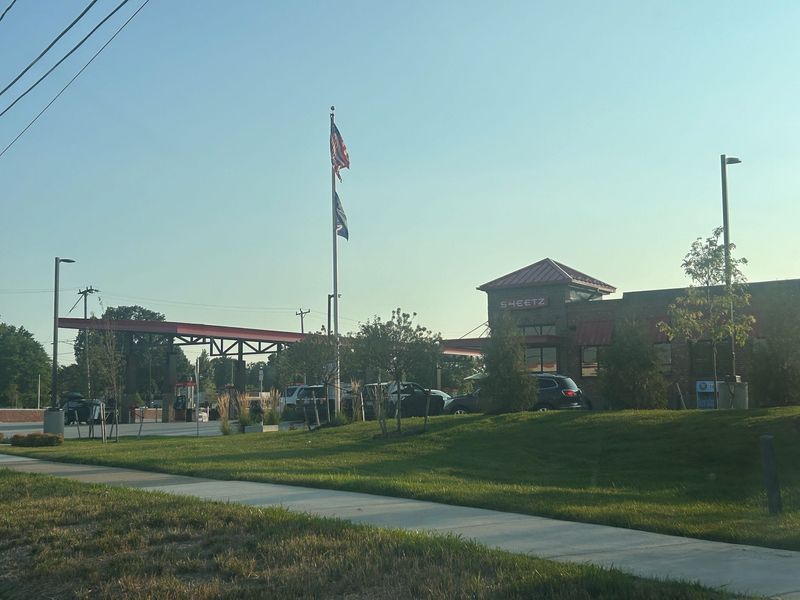
Sheetz entered Michigan in 2024 and expects to operate nearly 20 stores in the state by year-end, according to its website. In a 2025 release, the company said it planned to open 50-60 stores across southeast Michigan over the next five to six years. Prior Free Press reporting put that investment at $500 million.
Petroleum group: Moratoriums can be ‘double-edged sword’
A moratorium on new gas stations in Roseville, where a Sheetz is planned, has now been lifted after the City Council recently amended the city’s ordinance regarding motor vehicle service centers. However, a temporary halt on new car washes remains in place as officials continue to study that topic, City Manager Ryan Monroe said.
“You don’t want to prevent business from coming to your community,” he said, but added that people don’t want the same type of business on every corner. “It’s a balancing act, for sure.”
An eight-month moratorium on new auto service stations, which gas stations fall under, also is in place in East Lansing, where the City Council voted on the issue during a meeting in February, immediately after it approved a Sheetz.
Mark Griffin, president of the Michigan Petroleum Association in Lansing, said the group is monitoring gas station moratoriums, which can be a double-edged sword by keeping out-of-state businesses that want to build out, but also preventing local people who may want to build from doing so.
“We think that’s not necessarily a good idea. We think the market should decide. Customers should decide ultimately which gas stations survive and which don’t in a competitive marketplace,” he said, adding that existing stations don’t want competition, although new businesses could make some up their game.
Griffin said new gas stations are often $2 million to $3 million projects, depending on the size, and often are owned by Michigan businesses that hire local people to work in the stores. He said a 24-hour operation may require 15 to 25 people to cover all the shifts and manage the staff, stock the shelves and do required maintenance. In some urban areas, he said, a gas station may be the only food source in that area.
Griffin said there are about 5,000 gas stations in Michigan, with the group’s membership owning about 3,500 of them. Many also have car washes attached. During his time with the group, which Griffin said dates to 1993, the state has had between 4,500 and 5,000 gas stations. He said Sheetz currently is not a member of the association.
Roseville changes lift new gas station moratorium
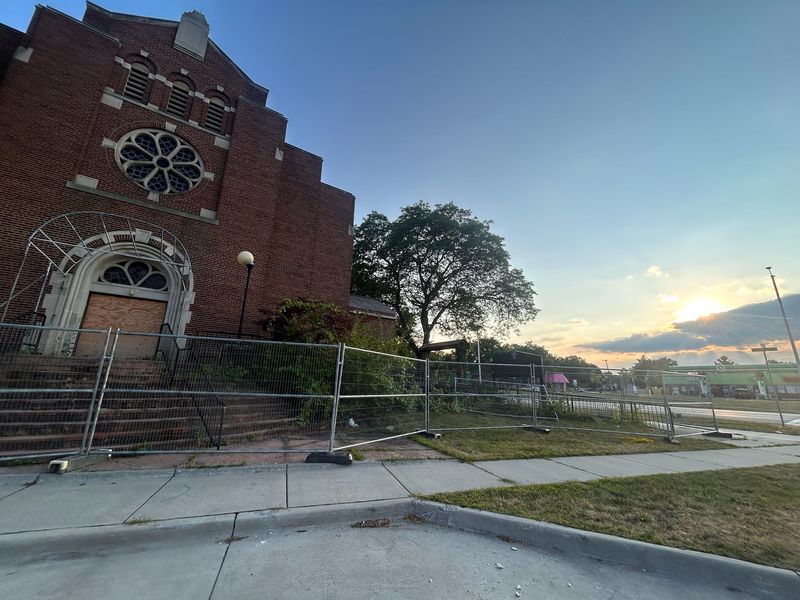
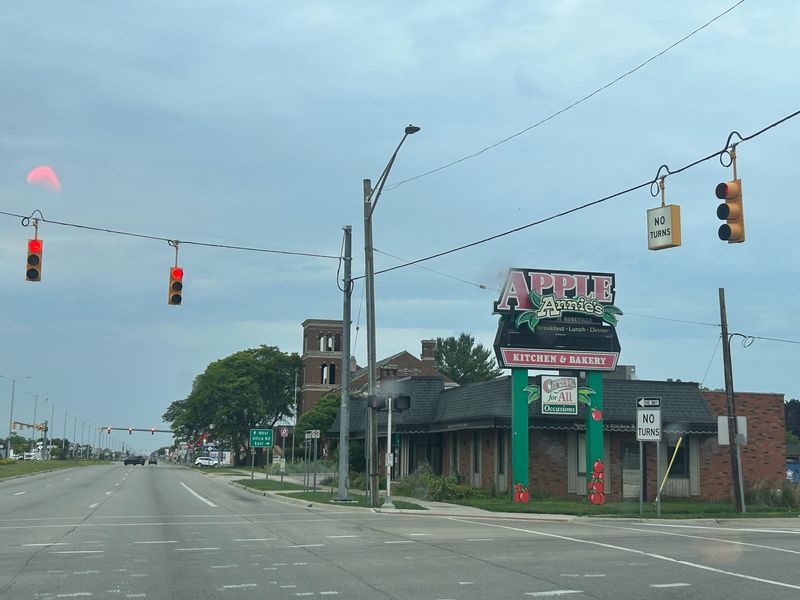
Monroe said Roseville has 23 gas stations, with plans for a Sheetz and another gas station and convenience center in a different location, bringing the number up to 25 when those are done. The gas station moratorium didn’t stop the planned Sheetz along Gratiot Avenue at Utica Road on the site of the former Sacred Heart Catholic Church, a beloved, historic site that shuttered in 2017, and the former Apple Annie’s Kitchen & Bakery restaurant, which closed in mid-June.
There’s a gas station across Gratiot from that site and another just up the road on the same side where the Sheetz will be as well as others along the busy, multi-lane Gratiot corridor in the city, which is just under 10 square miles and estimated to have just under 47,000 residents. Monroe said asbestos is being removed from the former church, surrounded by fencing, and demolition may start there in three to four weeks.
Monroe said the City Council approved changes to the ordinance regarding motor vehicle service stations, which covers gas stations, in mid-July, and the moratorium was lifted.
The biggest changes, he said, are that these businesses must be at least 500 feet from an existing school, hospital, church, public library or other building of assembly and more than 1,000 feet from an existing gas station on the same side of the street.
Existing gas or service stations not in compliance are grandfathered, he said, and they can still add on and do renovations to their buildings. One example of a grandfathered situation would be the Costco gas pumps next to a BP gas station around 11 Mile and Gratiot, which, he said, are well within 1,000 feet of each other.
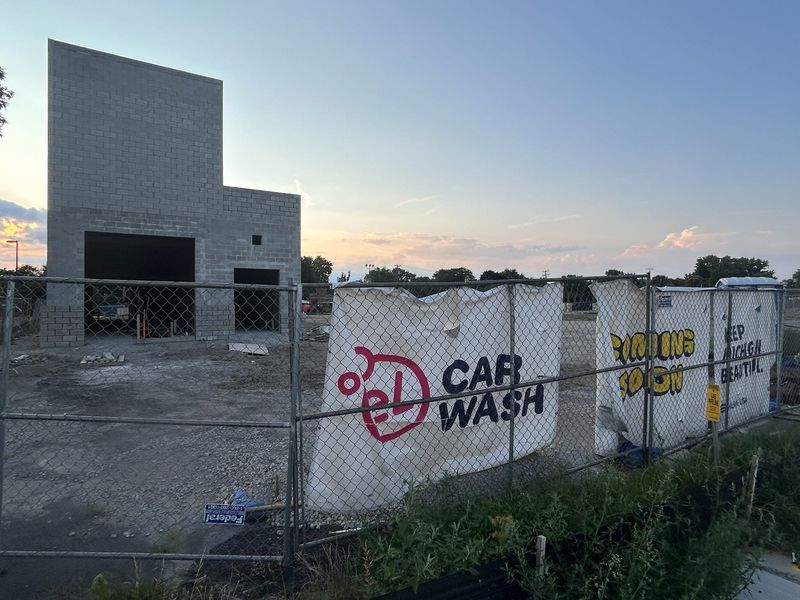
Monroe said that he anticipates similar changes in the coming months for new car washes, which are still under a moratorium. He said there were 11 car washes, including coin-operated ones, with two more planned before the moratorium, bringing the total up to 13 when those are complete. Existing car washes can expand and renovate their buildings under the moratorium.
Jay Wells, 25, of Detroit was vacuuming his vehicle at the Clean Express Auto Wash at Gratiot and 14 Mile Road in Roseville, where he said he washes and vacuums often as he has a membership. Wells, who was one of about 10 people vacuuming their vehicles as others went through the car wash, said he’s a car person and likes to have his cars clean, smelling good and the tank full.
“I like having options,” Wells said, adding that he likes the idea of there being many gas stations and car washes as they provide “different packages for different people.”
In Warren, Councilman Dave Dwyer said during the May meeting where that city’s moratoriums were unanimously approved that “this is something that really has been a long time coming.” He said the city had just over 34 square miles and about 69 gas stations and about 25 car washes.
The ‘Sheetz effect’
Lafferty said Warren has two Sheetz locations with a third under construction, and the city has seen the “Sheetz effect,” with existing gas stations starting to renovate and uplift their properties after Sheetz built their new gas stations and storefronts. That’s good for the city’s economy, residents and taxpayers, he said.
The city of East Lansing had received three applications for gas stations since April 2024 − two new gas stations, including a Sheetz, and the expansion of an existing one, all of which were approved. There also were six other gas stations operating elsewhere in the city, according to City Council agenda materials online.
The council wants to consider whether the city, which is estimated to have just over 49,000 residents and just over 13 square miles, is saturated with such land uses and if ordinances should be changed. The moratorium prohibits acceptance or processing of any new land use applications for auto service centers, under which gas stations fall.
“So, I think this is a good idea. I think it’s an opportunity to plan for a trend that we couldn’t really foresee,” Mayor Erik Altmann said during the council’s Feb. 3 meeting. “And I think it’s an opportunity to hear from the public as part of that planning process … even if we don’t change our policy in the end, we at least will know it makes sense. So I think this is timely and appropriate.”
Conversations about moratoriums or limits on gas stations and/or car washes have occurred in other communities, including in Livonia and Allen Park.
Livonia City Councilman Brandon McCullough said he would like to see a moratorium of some sort and a discussion on the topic so the community doesn’t get overloaded on redevelopment when it has so much stock in the city.
“We are so saturated with car washes and gas stations,” he said, adding that he is worried that when the fad is over, the sites might be tough for redevelopment.
McCullough estimated there are 19 car washes − and growing− in the 36-square-mile city. The City Council’s law and education committee, which he chairs, is to discuss gas station and car wash items at its Aug. 17 meeting, including potential ordinance language related to limiting the distance between bodies of water and new gas stations and a 12-month moratorium on approvals for new car washes.
In Allen Park, gas station owners proposed a moratorium as an amendment to the city’s ordinance related to auto service stations when the city’s planning commission was reviewing a proposed Sheetz, said Matt Baker, the city’s building department director and economic development director.
He said the planning commission voted down the proposed moratorium in 2025. Ultimately, he said, the Sheetz did not get approved as variances for the project were not granted by the city’s Zoning Board of Appeals.
Baker said a moratorium for car washes has never been brought up.
Car wash industry to grow; Michigan one of strongest markets
In Toledo, Ohio, which borders Michigan, the City Council decided in mid-July not to issue a moratorium on gas stations, but to request a study from the city’s Plan Commission on gasoline and fuel sale stations.
The city, Ohio’s fourth largest, had a moratorium on car washes from July 2024 through the end of January 2025 to study the impact of the proliferation of such businesses on public health and safety surrounding neighborhoods, including environmental concerns and re-use concerns for the properties as well as other issues.
According to a February 2025 letter to the City Council from the secretary of the city’s Plan Commission, the study found that Toledo saw a recent increase in new commercial car washes.
It said the 2023 International Carwash Association U.S. Consumer Pulse Study cited that home car washing declined by 60% since 1996 because of increasing demand for conveniences, which car washes provide. It said the adoption of the subscription-based payment model added to the convenience.
It also said a decrease in operating costs from subscription-based payments and increasing car wash technology that lower water, sewer and electric bills have made investment firms more eager to invest in “safely profitable” car wash companies.
“With an influx of investors, national-oriented car wash companies have been expanding quickly into new cities to capitalize on the aforementioned convenience-oriented demand and to capture said demand away from other companies doing the same,” the letter said.
The Midwest Car Wash Association in Lansing said in a statement that Michigan is one of the strongest car wash markets in the country because of its climate, road salt usage and seasonal weather conditions, contributing to strong consumer demand for professional car wash services.
It said that industry estimates indicate there are about 2,100 professional conveyor, express, in-bay automatic and full-service car wash facilities operating in Michigan. The number approaches 4,000 when self-service facilities, gas station car washes and mobile wash services are included.
An Aug. 5 article by Professional Carwashing & Detailing magazine says the U.S. has more than 60,000 professional carwash locations. The Midwest Car Wash Association said the professional car wash industry forecasts annual growth estimated at 5% to 8% over the coming years.
Being a car wash owner or investor can be lucrative. The U.S. car wash services market size was estimated at more than $15 billion in 2025 and is expected to reach more than $17 billion by 2033, according to Grand View Research, a California-based market research and consulting company.
As car wash growth continues, the Midwest Car Wash Association said, it “believes it is important that expansion be guided by thoughtful planning and collaboration between municipalities and the car wash industry.”
The group said it supports the continued growth and long-term success of the professional car wash industry, and it understands why some communities may choose to implement a temporary moratorium while they review zoning ordinances and evaluate future development.
“Our objective is not simply to see more car washes built, but to encourage responsible, sustainable growth that benefits business owners, customers, and the communities they serve. When new car washes are concentrated too closely together, it can create market conditions that make it difficult for both existing and new operators to achieve long-term profitability and continue investing in their communities.
“If municipalities such as the Cities of Warren and Roseville use a temporary moratorium to establish thoughtful zoning standards—including appropriate spacing between facilities and sound site planning requirements — it can ultimately strengthen the local marketplace. Well-planned development helps protect existing investments while providing future operators with a greater opportunity to succeed. Responsible planning benefits everyone by creating a healthy, competitive marketplace rather than one that becomes oversaturated.”
Contact Christina Hall: chall@freepress.com. Follow her on X, formerly Twitter: @challreporter.
Support local journalism. Subscribe to the Free Press.
Submit a letter to the editor at freep.com/letters.
This article originally appeared on Detroit Free Press: Some Michigan cities put brakes on new gas stations, car washes
Reporting by Christina Hall, Detroit Free Press / Detroit Free Press
USA TODAY Network via Reuters Connect
By Christina Hall, Detroit Free Press | USA TODAY Network