While Adrian’s Siena Heights University will close at the end of its next academic year, several other Catholic colleges and universities remain open in the state and offer academic programs for undergraduates and graduates, guided by a Roman Catholic philosophy.
Siena Heights University had about 2,300 students in the 2023-24 school year, according to data compiled by MI School Data. The small college faces financial challenges prompting its upcoming closure, the President Douglas Palmer announced on June 30.

The Catholic liberal arts college was founded in 1919 by the Adrian Dominican Sisters as St. Joseph College for women, according to the school’s website. In 1939, it was renamed Siena Heights College in honor of St. Catherine of Siena, a 14th-century Dominican nun. It became co-ed in 1969 and, in 1998, it became Siena Heights University.
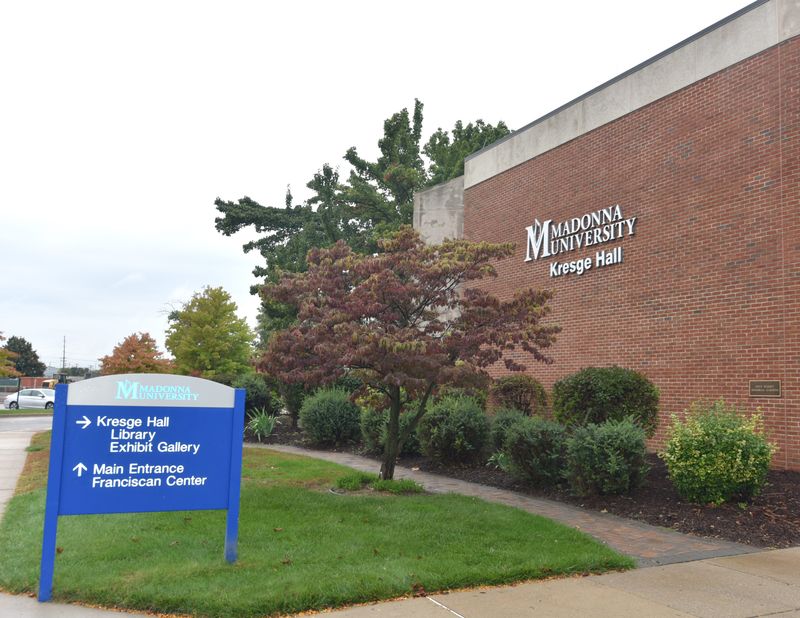
Three other Catholic colleges and universities will remain open across Michigan. University of Detroit Mercy boasts a historic campus in Detroit, Madonna University is based in Livonia and Aquinas College is in Grand Rapids.
There are more than 200 Catholic colleges and universities in the U.S., according to the Association of Catholic Colleges and Universities, U.S. News reported in 2023. The oldest is Georgetown University in Washington, D.C., which was founded by Bishop John Carroll in 1789, and the largest is DePaul University in Illinois.
Here’s what to know.
What’s happening at Siena Heights?
Siena Heights University is set to close at the end of its next school year amid financial challenges facing many small liberal arts colleges, the Detroit Free Press reported.
“For 105 Years, Siena Heights University has been a beacon of light in a world sometimes cast in darkness,” Palmer said in a June 30 statement. “The spirit of Siena Heights will continue long after the institution itself closes its doors because it lives in every graduate, faculty member, and staff person who has been on campus – whether in-person or online.”
Madonna University offers Catholic education in metro Detroit
This Livonia-based Catholic university runs under the leadership of President Christopher Dougherty, the university’s website says.
Students can choose from more than 100 career-focused majors with over 60 bachelor’s degrees, 70 certificates and 30 master’s and doctoral programs at Madonna University.
Madonna University offers additional campus programs in Southfield and Macomb.
Who operates the university?
The school was founded in 1937 as Presentation of the Blessed Virgin Mary Junior College, operated by the Felician Sisters, nuns from Felician Central Convent in Livonia.
Who are the Felician Sisters?
The Felician Sisters were founded in 1855 by Blessed Mary Angela Truszkowska, of Poland, who was inspired by the lives and spirituality of Saint Francis of Assisi, Saint Clare and Saint Felix of Cantalice.
As a Franciscan community, they follow the Rule of the Brothers and Sisters of the Third Order Regular of Saint Francis.
How much does Madonna University cost?
Undergraduate full-time tuition costs $27,360 for 24-36 credits, with nursing credits and room and board extra, according to the university.
Madonna University has a student body of about 2,040 undergraduate students and about 404 graduate students, per the university.
Home of the Crusaders, the school is part of the Wolverine-Hoosier Athletic Conference, Mid-States Football Association and National Association of Intercollegiate Athletics.
Historic University of Detroit Mercy lies in the heart of Detroit
The origins of Michigan’s oldest Catholic university began in 1877 with the founding of Detroit College, later the University of Detroit, by Jesuits, a Catholic religious order, according to the university’s website.
The Religious Sisters of Mercy, a religious order of Catholic nuns, opened Mercy College as a women’s school in 1941. The two institutions merged in 1990 to become the University of Detroit Mercy.
The Detroit-based university offers over 100 undergraduate and graduate academic programs for a student body of about 5,600. Full-time tuition rates vary by program and are in the $30,000 range.
While the main campus is at Livernois Avenue and McNichols Road in Detroit, additional programs are available at the Novi campus, School of Dentistry Corktown Detroit campus, School of Law Riverfront Detroit campus, Macomb University Center in Clinton Township and Aquinas College partnership in Grand Rapids.
Home of the Titans, the school is a member of the National Collegiate Athletic Conference, Horizon League, Mid-American Conference and the Atlantic Sun Conference.
Who are the Jesuits and Religious Sisters of Mercy?
Ignatius Loyola (1491-1556) founded the Roman Catholic religious order known as the Society of Jesus, or Jesuits, encylopedia.com said.
The Jesuits take four vows: poverty, chastity, obedience and the worldwide mission set by the pope.
The Sisters of Mercy are an international community of Roman Catholic women who dedicate their lives to the Gospel of Jesus and take vows of poverty, chastity, obedience and service. Founded in 1831 by Catherine McAuley, they also take a fourth vow of service.
How much does Detroit Mercy cost to attend?
The 2024-25 cost to attend varies, according to the school’s website. Students living at home could pay about $43,000 for tuition and other fees while in-state engineering and architecture students living off campus might pay as much as $58,000.
West Michigan features Aquinas College
This Grand Rapids-based liberal arts college was founded by the Dominican Sisters, a Catholic religious order, in 1886, according to the school’s website. Aquinas College is named for the 13th century saint Thomas Aquinas.
Aquinas College offers over 100 majors and minors for its over 1,100 full-time undergraduate and graduate students, as of 2023, Data USA says.
How much does Aquinas cost to attend?
Tuition rates vary and include $41,192 traditional undergraduate tuition for 12-20 credit hours.
Home of the Saints, the college is a member of the Wolverine-Hoosier Athletic Conference, according to the conference’s website.
Who are the Dominican Sisters?
At a small crossroads in southern France, in the 13th century, Dominic de Guzman, a holy man, recognized the necessity for sanctuary for women who rejected heresy and were in danger, according to the Dominican Sisters of Grand Rapids. Dominic found a safe home for them in Prouile, near Fanjeaux. Eventually, more women joined the group.
Four Dominican Sisters from a convent in Regensburg, Germany, went to New York City in 1853. Twenty-four years later, in October 1877, five of those Dominican Sisters from the New York Convent arrived in Traverse City. In 1889, Sisters were invited by the bishop of Grand Rapids, Henry J. Richter, to assume the administration of a home for orphans and children in need.
The Detroit Free Press contributed.
Contact Jenna Prestininzi: jprestininzi@freepress.com.
This article originally appeared on Detroit Free Press: Siena Heights is closing. Are there any other Catholic universities in Michigan?
Reporting by Jenna Prestininzi, Detroit Free Press / Detroit Free Press
USA TODAY Network via Reuters Connect