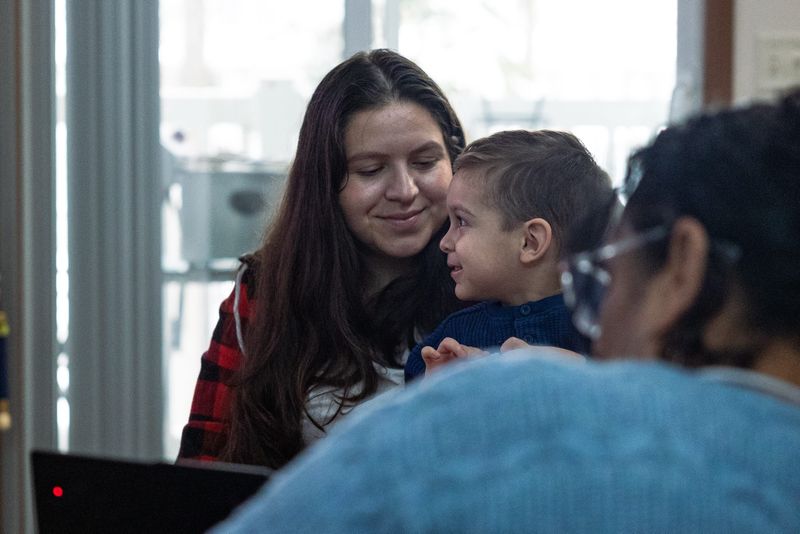
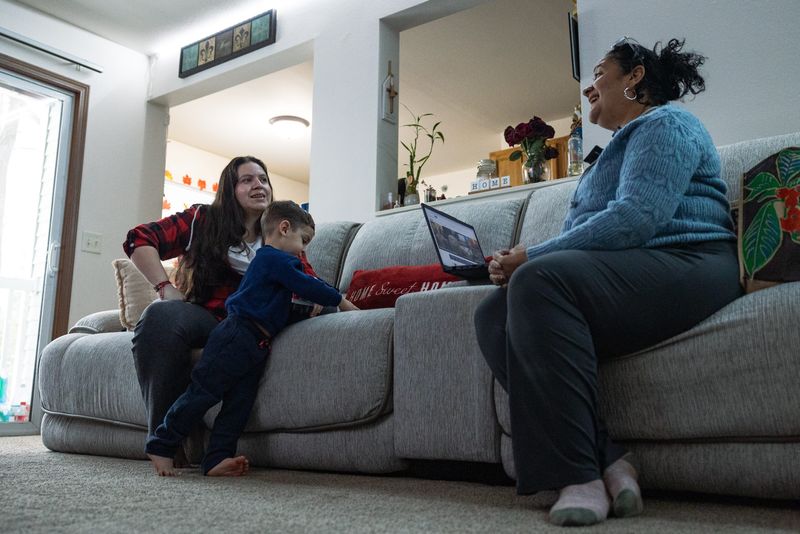
When Jen Dominique, mother of three, faced the closure of her child’s Head Start program in November because of the federal government shutdown, there was one resource she wished families with young kids in her community in the Upper Peninsula could still rely on.
“We would have the Great Start Collaborative Family Coalition to lean on, but we lost that,” said Dominique, who lives in Delta County with her three kids. “It just feels like it’s all collapsing, we’re falling further behind. We’re already in a smaller town, we don’t have a lot of resources here.”

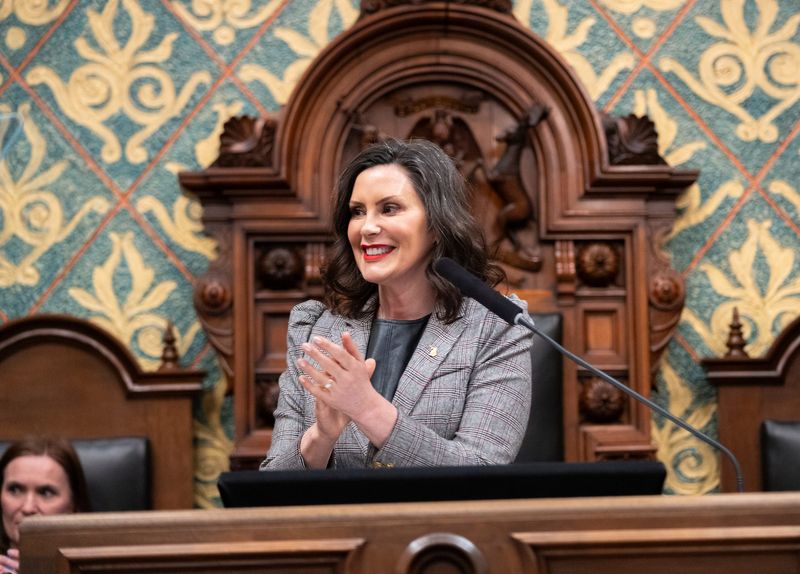
In this year’s state budget, legislators and Gov. Gretchen Whitmer unexpectedly cut all $19.4 million in funding for the state’s Great Start Collaboratives and Family Coalitions, which included funding for early childhood home-visiting and literacy programs.
It is not clear why the funding was cut but early education leaders say they were caught off guard once the cut had already been made and weren’t given the opportunity they’d usually have to inform legislators about program impact, due to this year’s unconventional budget process marked by delays and partisan fights.
For families with young kids like Dominique’s, the loss of a program that for 20 years has helped parents navigate early childhood and prepare kids birth through 4 years old for kindergarten feels untenable — another blow within a season that’s already seen stressors stacked up from food stamp delays and temporary loss of federally-funded childcare.
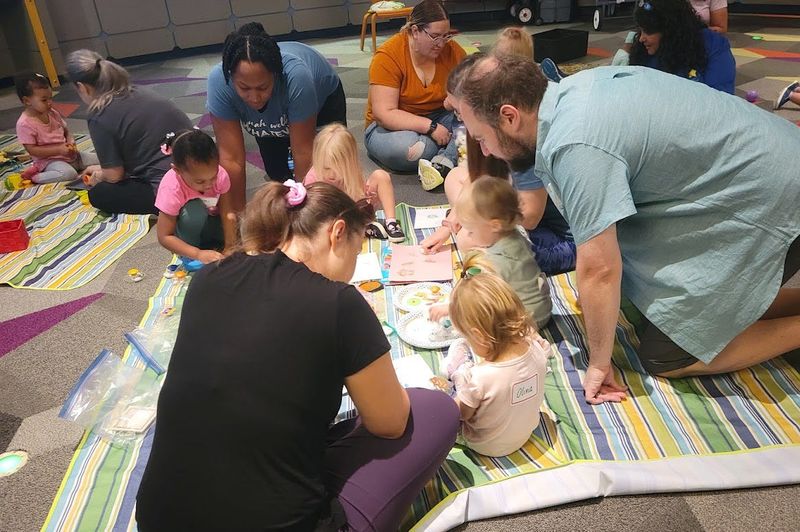
Dominique lamented the loss of funding for her Great Start Collaborative’s literacy programs in particular, one of which met multiple times a month for story groups and playtimes.
“Another early literacy program that is gone,” she said. “We really are left nothing, stranded, lost.”
School district leaders, early educators, and parents say Dominique’s sentiment is felt across the state. The Great Start Collaboratives and Family Coalitions operated in each county in Michigan helping parents navigate and access early childhood services including childcare and preschool, literacy programming, developmental screenings, home visits for new parents, family playgroups and parent educational events.
Without them, families don’t have any central early childhood entity to lean on to help navigate the high stakes and overwhelming years before their kid enters kindergarten.
Now that funding has been cut, each county’s program is feeling the repercussions differently: Some have shut down while others will significantly scale back services when funds run out. Other programs have access to alternative funding sources and are sorting out how long they can keep their programs running.
This uneven impact “creates disparities,” between kids who can continue accessing early childhood services and educational opportunities, and those who will now have less access, said Ashley Aaron, former co-director of Delta-Schoolcraft County’s Great Start Collaborative in the Upper Peninsula. The program closed at the end of October.
The impact of the steady loss of early childhood services and support as programs run out of money “will be felt both immediately, and perhaps more alarmingly, long term, as this was all about upstream prevention efforts,” wrote Rich Van Tol in an email to the Free Press. Van Tol is the Bay-Arenac Great Start Collaborative coordinator.
Van Tol said long term societal impacts include things like poor academic performance, as kids enter school ill-prepared. Van Tol’s Great Start Collaborative is using carry-over as well as other grants and local funds to stay open and doesn’t currently have an end date.
This cut also comes amidst concerns over historically low fertility rates in the United States, which represents the total number of babies each woman will have in her lifetime. Fertility rates in the U.S. are down about a quarter since 2007, and though future doom over birth rates is contested, some of key drivers for the lower rate include economic insecurity and the cost of raising kids.
Advocates are lobbying the state to bring back funding as soon as possible, ideally ahead of next year’s budget cycle, with efforts spearheaded by the Michigan Association of Intermediate School Administrators (MAISA).
But exact legislative timing for when a supplemental bill will be introduced to get funding reinstated is not yet known, said David Ladd, a lobbyist working with MAISA. Funding for the Great Start Collaboratives flowed through Intermediate School Districts and many ISD leaders say they see the program as an essential component of the educational landscape in their districts.
Whitmer’s office did not respond to a request for comment on efforts to get the funding restored.
“The foundations (of the program) are very clear — that family engagement, early literacy, and coordinating resources needed for parents ensure all kids are ready for kindergarten,” said John Severson, executive director of MAISA.
“If we can do that well, we know through research there’s a great shot of them reading by third grade. That’s part of the work linking this whole system together.”
Uneven impact
So far, it looks like many of the hardest hit Great Start Collaborative programs are in smaller, less populated communities in northern Michigan that have fewer resources to sustain services.
In a document Van Tol shared with the Free Press, Great Start Collaborative staff across Michigan shared their program plans following the cut. The document shows of the around 40 who reported their status, four have closed with an additional nine set to close by the end of December, the majority of which are in northern Michigan. Eight programs listed have found funding to carry them to June 2026 and all other programs that reported didn’t list expected end dates.
One of those programs in the Upper Peninsula is Aaron’s, the Delta-Schoolcraft Great Start Collaborative. Though it officially closed at the end of October, the program was able to sustain a lot of its work through moving it under community partners, said Aaron.
For example, the United Way will continue one of its literacy programs, Reach Out and Read, that embeds literacy promotion in pediatric clinics. A few local libraries will also continue to host monthly story times, that will now be planned by parents, for families with young kids. Carry-over money will continue to fund a Great Start Collaborative-funded home visiting program through June 2026.
While Aaron is proud that small pieces of her Great Start Collaborative’s work were able to sustain, she recognizes the cut as a major loss for families who will still miss out on a slew of early childhood opportunities, like larger, more expensive initiatives such as the Community Baby Shower. This was a project providing free online parenting courses among other resources, which now won’t move forward.
“It’s a lot more isolating in the smaller communities,” Aaron said. “Cutting early childhood services is really hard for families. They built this network of people they could confide in and lean on, and that was taken away from them.”
In western Michigan, Kent County’s Great Start Collaborative is set to close at the end of January once funds run out, said program director Paula Brown. In the last year, their program reached nearly 35,000 families with literacy efforts – including book distribution and programming – and helped collect and distribute around 64,000 diapers to families across the county.
The Kent County Great Start Collaborative also funds the majority of a home-visiting program known as Baby Scholars which will scale services back significantly in the new year.
Some of the state’s most populous counties, like Wayne’s and Macomb’s Great Start Collaboratives are also impacted, though the programs have more alternative funding options to keep services going at least temporarily.
The Wayne County Regional Educational Service Agency, or Wayne RESA, has stepped in with a nearly $250,000 investment to keep some pieces going, including funds to sustain Help Me Grow, a statewide early childhood navigator system connecting families to things like the pre-K referral system and developmental screenings, along with tech platforms allowing the agency to track and respond to “thousands of families seeking services for their children,” said Wayne RESA superintendent Daveda Colbert in an email statement.
While it appears Macomb County’s Great Start Collaborative will continue to fund its Help Me Grow early childhood navigation system with carry-over funds, it has been stripped of a some components including its Family Coalition, said Christina Clarke, who previously worked as a family liaison for three years, along with two other staff members, before all were laid off at the end of September.
The Macomb County Intermediate School District did not respond to calls to confirm its Great Start Collaborative’s ongoing programming as of Thursday, Dec. 4.
Family liaisons were “out in the field, talking to a parent who tells you my child is 4 years old but speaking like a 2-year-old … we connected them to Help Me Grow and made it very humanized, when this can be very scary. We built that bridge,” Clarke said.
Home visits hit hard
Home-visiting programs paid for either partially or entirely by Great Start Collaborative funds were disproportionately impacted by the recent cut.
Tequia Adams oversees one of these home-visiting programs known as Baby Scholars, launched in 2011 in Kent County.
Adams, an early childhood professional with over 20 years of experience, said the program runs between 11 to 12 weeks and uses simple, fun activities to educate parents on how to help their babies soak up learning during the most important years for brain development. Playing games, reading, and embedding back and forth interactions into every day routines like taking a bath or cooking help activate a child’s brain.
Baby Scholars focuses particularly on economically disadvantaged Black and Latino families who can’t afford childcare or get into free early education programs like Head Start that have long wait lists in the county, Adams said. As a result, these families lack access to opportunities for early learning. Going into a home, parent coaches meet families where they are, “helping them see themselves as their child’s most important teacher,” she said.
“A lot of parents don’t know what to teach a baby or what they need to learn in the youngest years,” Adams said.
Adams said nearly half of kids in Kent County start school behind in terms of language skills and social-emotional cognitive development. Baby Scholars aims to close these learning gaps before kids reach school age.
After participating in the program, Adams said parents report feeling empowered, having richer interactions with kids, more reading and play, and more conversations.
According to Baby Scholars data tracking 29 parenting behaviors in four different categories including responsiveness, affection, encouragement and teaching, last year 98% of parents who participated in the program showed measurable improvement, especially in the teaching domain, Adams said.
The two upcoming Baby Scholars winter cohorts, one for infants and the other for toddlers, will run through June 2026 with funds provided by Corewell Health. After that, it will scale back from serving around 240 families to 88.
While Baby Scholars only operates in Kent County, two other home-visiting models — Parents as Teachers and Health Families Michigan — are nationwide models operating in counties across the state. Cuts in funding to these two home-visiting programs represent around a quarter of the nearly $20 million Great Start Collaborative funding eliminated statewide.
For Parents as Teachers, 27 out of the 31 programs across the state relied on Great Start Collaborative funds. Six of these programs have already closed as a result of the state budget cut, with nine more at risk of closure by the end of the school year, impacting a total of 300 families across Michigan, said Benjamin Hazelton, national director of government and community engagement at Parents as Teachers, a nationwide home-visiting model.
If funding is not restored by next year’s state budget cycle, at least half of these programs will have to discontinue services, said Hazelton.
Hopes tied to reinstatement push
After Great Start Collaborative funding was cut, ISD leaders took action to build a coalition of school districts in support of getting it reinstated, which MAISA director Severson said was the first and hardest step to making a strong case for getting the program back.
Currently, a proposal is being drafted for funding for a new version of the Great Start Collaboratives, what Severson refers to as “the 2.0 version.”
The new version will look to standardize the Great Start Collaborative program across all counties, while still allowing for flexibility needed to address unique needs in each community, said Amy Brauer, director of the Early Childhood Administrators Network, one of MAISA’s statewide networks focused on the delivery of early childhood programs and services.
The hope is that this provides the ability to have one centralized access point for early childhood services and resources across all counties that measures the same outcomes. Previously, Great Start Collaboratives were collecting data to measure outcomes and impacts but it was harder to quantify the impact because each program was collecting different data.
MAISA lobbyist David Ladd said next steps to introduce the funding proposal are not yet certain.
“This was the backbone of the early childhood system and we have to have something in place,” Severson said.
Beki San Martin is a fellow at the Detroit Free Press who covers childcare, early childhood education and other issues that affect the lives of children ages 5 and under and their families in metro Detroit and across Michigan. Contact her at rsanmartin@freepress.com.
This article originally appeared on Detroit Free Press: Parents ‘stranded, lost’ without state’s long running early childhood program
Reporting by Beki San Martin, Detroit Free Press / Detroit Free Press
USA TODAY Network via Reuters Connect