Lansing — Jason Tunney, the Republican nominee in a battleground Michigan Senate race, suggested in an interview that spiking gas prices might hurt his bid to win a special election the political world will be watching Tuesday.
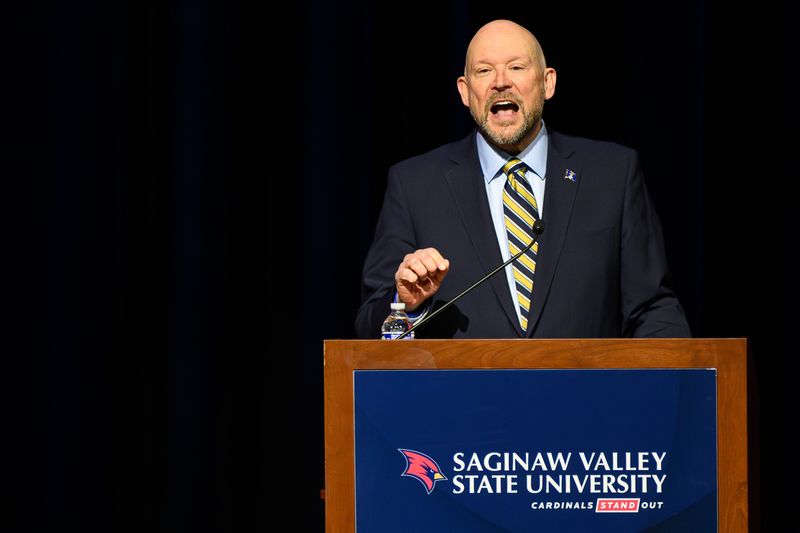
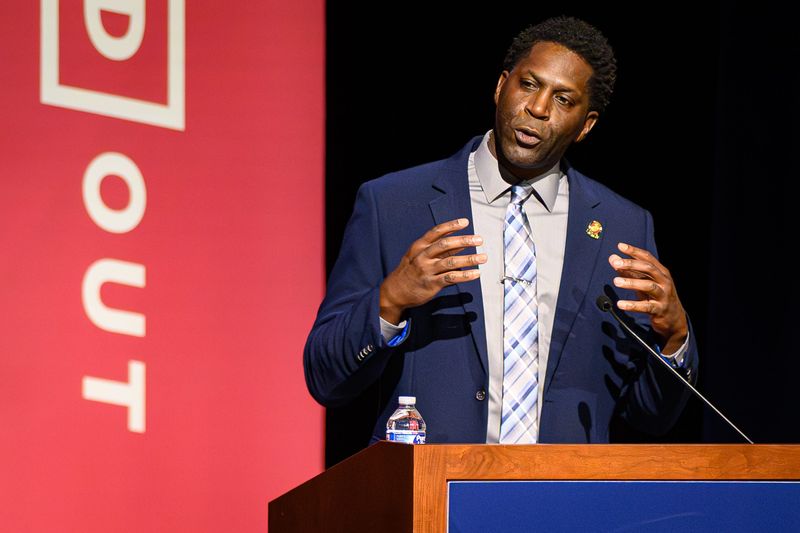
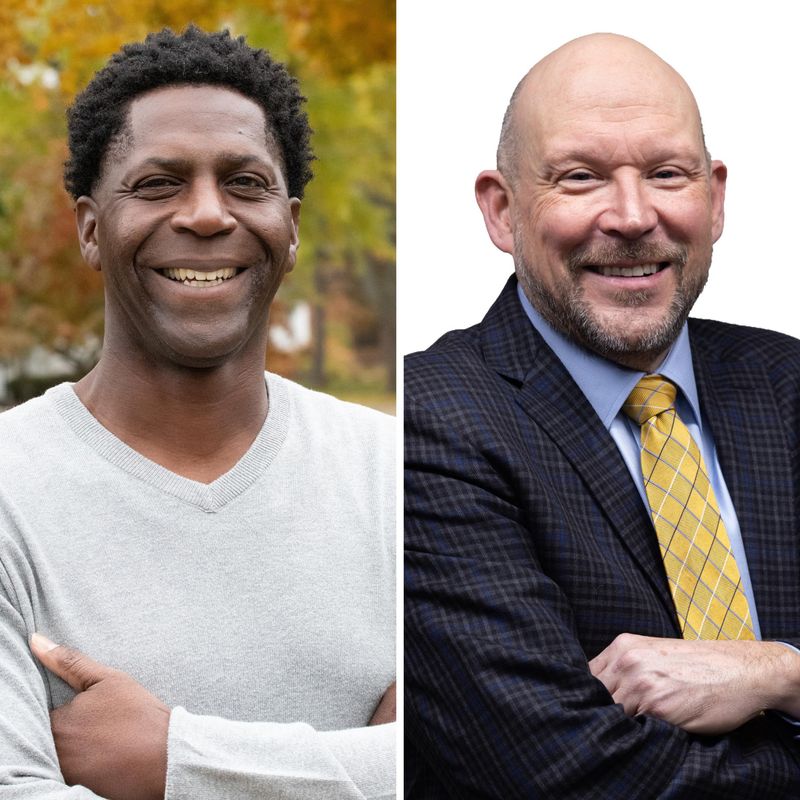
Voters in the 35th District, which spans Bay, Midland and Saginaw counties, will pick one of three candidates to represent them for the remainder of the year: Tunney, a lawyer and businessman from Saginaw; Democrat Chedrick Greene, a firefighter from Saginaw; or Libertarian Ali Sledz from Midland.

The race will provide early insights into where voters in one key area of Michigan stand 26 weeks before the Nov. 3 general election, in which the state will choose a new governor and a new U.S. senator. The special election also comes 16 months into Republican President Donald Trump’s second term as war in the Middle East has hiked gas prices in the U.S.
In an interview Friday — as some Michiganians were paying $4.99 a gallon for regular unleaded gas — Tunney said rising fuel costs were coming up in conversations during his door-to-door campaigning.
Asked if the spike was hurting his bid for the state Senate, Tunney replied, “I don’t think it helps.”
Currently, Democrats hold a 19-18 majority in the Michigan Senate. The 35th District seat has been vacant since former state Sen. Kristen McDonald Rivet, D-Bay City, was sworn in as a member of the U.S. House on Jan. 3, 2025.
In August — after months of criticism about leaving the seat empty — Democratic Gov. Gretchen Whitmer called the special primary election for Feb. 3 and the special general election for Tuesday. The winner will serve the final months of McDonald Rivet’s four-year term and run as the incumbent in the regular August primary election.
If Republicans are able to flip the seat, the partisan breakdown in the Senate would be 19-19. Democrats would maintain leadership of the Senate, as Lt. Gov. Garlin Gilchrist II, a Democrat, would have the tie-breaking vote if there’s a 19-19 tally. However, Republicans would effectively have veto power by being able to withhold a vote to prevent a tie and Gilchrist’s ability to weigh in.
Yet, Greene is viewed by many as the favorite on Tuesday, partially because of a string of victories Democrats have had in special elections in other states since Trump’s election in November 2024. McDonald Rivet, a former Bay City commissioner, won the seat in 2022 by 6 percentage points over Republican former state Rep. Annette Glenn, 53%-47%.
Sen. Darrin Camilleri, D-Trenton, chairman of Senate Democrats’ campaign team, said Trump is engaging in a war against Iran that nobody wants or understands.
“Republicans are going to lose on Tuesday by a big margin, and Republicans know it,” Camilleri said.
What’s been the focus in the 35th District?
A big loss could ignite a flashing warning sign for the Michigan GOP ahead of the midterm election. On Nov. 3, voters will pick candidates to fill every seat in the state Legislature.
In February, the Michigan Republican Party’s chairman, Jim Runestad, referred to the 35th District as a “50-50 seat,” meaning the election should be close.
“It will be a real bellwether,” Runestad told fellow Republicans at an event, according to a recording provided to The Detroit News. “If we win the seat … it’s going to be looking good all the way down.
“It will depress the Democrats. It will excite the Republicans.”
On the campaign trail, Tunney has emphasized Whitmer’s delay in calling the special election and focused on public safety, education policies and lowering taxes. People aren’t happy and want a better government, Tunney said on Friday.
“We are headed in the wrong direction,” Tunney said of the state.
On Greene’s campaign website, he’s vowed to “fight for every policy and dollar that helps hardworking men and women build better lives in our Great Lakes Bay Region.”
Carol Sullivan, Greene’s campaign spokeswoman, agreed with Tunney that gas prices were an issue in the race.
Asked what Greene would do to combat rising fuel prices, Sullivan said he’d use his office to find any way possible to save residents money.
Where is the campaign cash coming from?
Greene’s campaign reported raising $404,000 as of April 19, while Tunney’s campaign report collecting $398,000.
The Michigan Labor Political League, the Michigan Regional Council of Carpenters and Whitmer’s Building Bridges political action committee have all made maximum contributions of $24,500 to Greene’s campaign.
The Michigan Senate Democratic Fund, the main account of Senate Democrats, has also spent about $694,000 on the race, according to disclosures.
As for Tunney, his campaign’s top contributors have been Tunney himself, who loaned his bid $212,500, and a series of three PACs tied to Senate Minority Leader Aric Nesbitt, R-Porter Township, which each gave $24,500.
Tunney’s filings have referenced $158,000 in spending by the Senate Republican Campaign Committee, the main account of the Senate GOP.
Asked why Senate Democrats had spent so much more than the Senate GOP on the race, Tunney said the numbers showed how desperate Democrats were to keep the seat.
Jason Cabel Roe, a Republican political consultant, said the GOP faces an uphill battle to win the district in a special election, in which voters tend to be more favorable to Democrats than in a regular election.
The 35th District is trending toward Republicans, but it’s not all the way there yet, Cabel Roe said.
As for gas prices, Cabel Roe said voters in the special election likely won’t blame the state Legislature for what’s happening and will be more sophisticated about the causes.
“It doesn’t mean they’re not surly and pissed off,” the consultant added.
cmauger@detroitnews.com
This article originally appeared on The Detroit News: Surging gas prices loom over pivotal special election in Michigan
Reporting by Craig Mauger, The Detroit News / The Detroit News
USA TODAY Network via Reuters Connect