(This story has been updated to include new information.)
The owner and operator of a Clinton Township business that was storing hazardous materials before a 2024 fire and explosions that rocked residents for miles and rained debris on a teenager a quarter mile away, killing him, will stand trial.

Noor Kestou of Commerce Township, owner of the former Goo Smoke Shop/Select Distributors, was bound over Oct. 16 to Macomb County Circuit Court on a charge of involuntary manslaughter, a 15-year felony, in connection with the March 4, 2024 incident.
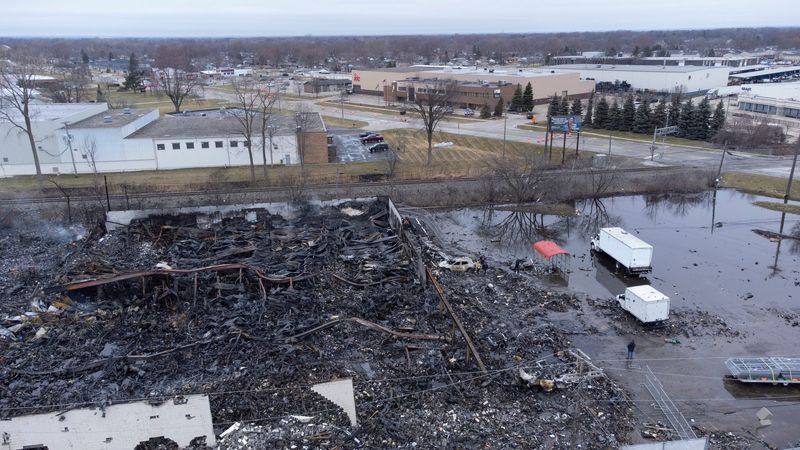
The explosions and fire occurred in a warehouse carrying thousands of cans of nitrous oxide and butane that township officials previously said were improperly stored. Clinton Township Firefighter Matt Myers was injured and bystander Turner Salter, 19, of Clinton Township, was killed.
41B District Court Chief Judge Sebastian Lucido spoke for about five minutes, first addressing the Salter family, who sat in the front row of the Clinton Township courthouse. Lucido said while everyone may get caught up in the legalese, briefs, legal arguments and elements of the offense: “I think we kind of lose sight of the tragedy that happened here.”
“So, to the Salter family, my condolences,” he said. “I’m very sorry for your loss.”
Lucido continued, saying in this case “the defendant had hundreds, if not thousands, of canisters of butane and nitrous oxide,” adding that, per testimony, Kestou’s inventory system wasn’t that accurate and there were up to 30 pallets of nitrous − over 70,000 pounds.
Lucido said Kestou knew these were hazardous materials and the building Kestou was located in was not zoned for allowing this hazarous material.
Lucido said in Kestou’s emails to the township’s director of planning and community development, he wanted warehousing. Lucido said the director’s response was that Kestou’s proposed use was not a permitted use for that location and the property’s zoning was general commercial, which allowed retail, not warehousing, and to locate the business in the township it must be in a light industrial area.
“So clearly, Mr. Kestou knew he was not to be warehousing in that location,” Lucido said. “The defendent knew he wasn’t to warehouse and he did it anyways. He brought in 70,000 pounds of nitrous into this location. And there’s reasons we have these laws. It’s because it’s not safe to store that much material in that small of a location.”
“And is it foreseeable that a fire can happen? Yes, I think … to a reasonably ordinary person, it is foreseeable … With that much nitrous and that much butane, it’s certainly foreseeable that somebody could be injured and die. And for those reasons, I think the defendant’s actions were gross negligence.”
Lucido continued Kestou’s bond. Kestou, 33, is scheduled to be arraigned Nov. 3 in Circuit Court.
Salter’s family had no comment as they left the courthouse.
County Prosecutor Peter Lucido said in a release after the ruling: “My office has a duty to pursue accountability when unlawful conduct results in the loss of life. The court’s decision to bind this defendant over on an involuntary manslaughter charge reflects the seriousness of the evidence gathered to date. We will continue to pursue this matter with the diligence and integrity the victim, his family, and this community deserve.”
The business was a wholesale supplier of novelty items, phone accessories and other merchandise to discount and other retailers. Items that exploded at the former 15 Mile and Groesbeck business included lighter fluid, vape pens, and butane and nitrous oxide canisters weighing 10-15 lbs, township officials have said. Knives and blades in the building were tossed into the air.
During a preliminary exam, which occurred on and off since May, township building and fire officials testified that they did not see hazardous materials during inspections before the business opened in 2022 and that it would have been barred from storing large quantities of nitrous oxide and butane together without additional safety measures.
“The only thing hazardous we saw was a small rack of butane for refilling lighters,” said Clinton Township Building Inspector James Surbrook said of an April 2022 visit to the building. “They were asked if it was all they were going to have and they said yes.”
Building Department Superintendent Barry Miller said it would be incumbent upon a business owner to secure additional approvals if they later chose to store large quantities of the chemicals. Such a change could also result in a zoning redesignation from mercantile to high-risk, triggering more frequent inspections. The building was not re-inspected after 2022 because no complaints were submitted against it, several township witnesses said.
Questioned by an attorney for Kestou, Miller conceded the township does not inform building owners of the types of hazmat storage that requires additional approval, but said if he were a business owner who began storing chemicals, “I would probably call the local official to find out if I need to get the permit.”
County prosecutors also presented as witnesses several of Kestou’s relatives who were working in the building when the situation unfolded.
Employees including office and purchasing manager Kevin Zaytuna, 26, who testified they never received training on the storage of the hazardous materials. Zaytuna and others testified that they did receive an explanation or take courses on how to ship the products.
Zaytuna testified that he felt the ceiling and building start to shake in March 2024 and took cover under his desk, thinking it might be an earthquake. He was called out of the building to find it on fire, then dialed 911. His next call was to Kestou, who asked him if it was bad. Zaytuna said he told Kestou it was.
“The way the building shook, I knew it was serious,” Zaytuna testified in May.
He said the part of the building on fire was a storage area that had butane, lithium batteries and phone chargers. He testified that nitrous oxide was stored in parts of the perimeter of the front of the building, with butane mostly in a back storage room, though some butane was in an aisle.
Zaytuna testified that a couple of hours before close, the back room “felt like a heat wave hit me,” but the front of the office was cool, which he thought was odd. He testified that Kestou was there that day until about about 6:30 p.m.
Assistant Prosecutor Carmen DeFranco told the court that an autopsy report indicated Salter died of blunt head trauma and the manner of death was accident. He said Salter was struck by an object with the size and shape of the canisters located at the site after the blaze.
Kestou is represented by a trio of seasoned attorneys: James Thomas, Stephen Rabaut and Peter Torrice. He was charged in April 2024. Messages were left for Thomas and Rabaut, who could not be immediately reached for comment after the hearing.
During one cross-examination, Torrice focused questions on whether the witnesses ever saw a building official come in and indicate this was a hazardous materials problem.
Zaytuna testified that he only knew of one fire official who came to the building after an issue with the phone lines tripping the alarm. He also testified there was a repair man in the building in January 2024 regarding an issue with heaters in the back room.
About a dozen people sat with Salter’s parents in the first two rows of the courtroom at the start of the preliminary exam in May.
Cleanup at the site was completed Jan. 13 and cost about $1.3 million, according to an online update posted by the U.S. Environmental Protection Agency. In all, it said, 28,295 DOT-compromised aluminum and steel nitrous oxide compressed gas cylinders intact and fire damaged were degassed, devalved and recycled.
“The number of exploded compressed gas cylinders (based on visual cleanup) is hard to quantify but safe to say in the thousands.Hundreds of thousands cans of ultra-refined butane were identified during the cleanup strewn throughout (co-mingled) the explosion debris, in addition to pallets of cans underneath layers of debris. Hundreds of intact cans of butane were identified, secured, and properly disposed throughout the cleanup process,” according to the Jan. 15 update.
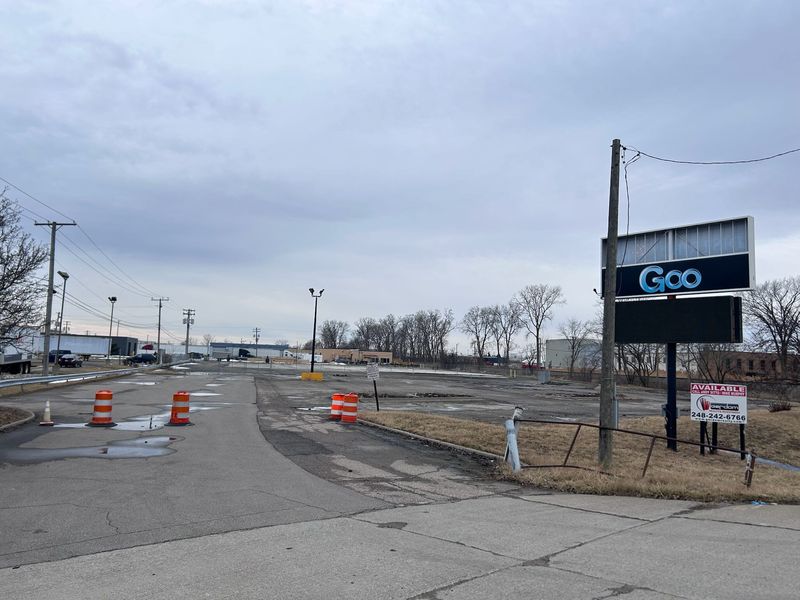
By the end of February, the site was cleared, though a business sign with the name “Goo” remained.
Staff writer Violet Ikonomova contributed to this report.
Contact Christina Hall: chall@freepress.com. Follow her on X: @challreporter.
Support local journalism. Subscribe to the Free Press.
Submit a letter to the editor at freep.com/letters.
This article originally appeared on Detroit Free Press: Owner of Clinton Twp. building that exploded, caught fire in 2024 ordered to trial
Reporting by Christina Hall, Detroit Free Press / Detroit Free Press
USA TODAY Network via Reuters Connect