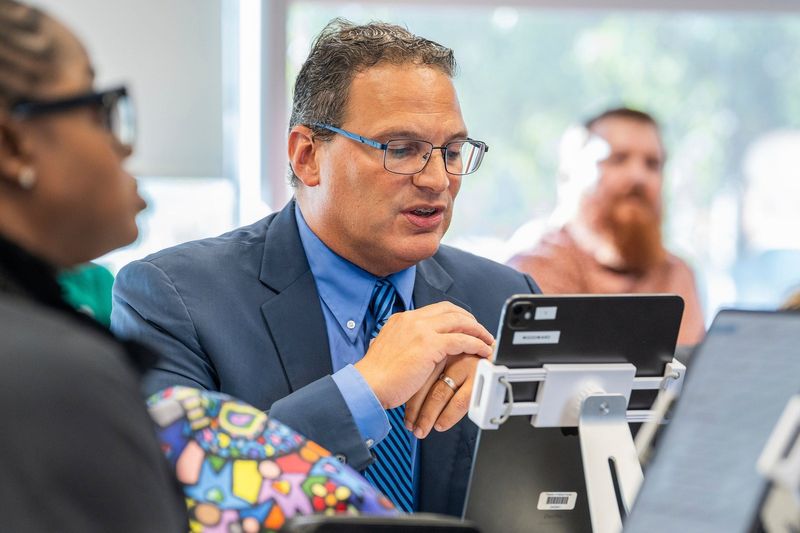
Oakland County commissioners decided against making a financial disclosure rule to police themselves, nixing a proposed voluntary system and instead encouraging state lawmakers to pass a bill mandating local officials publicly reveal information about their assets.
Commissioners originally planned to vote to give themselves until 2028 to come up with a system to voluntarily disclose incomes outside of their county salary as a way to prevent conflicts of interest. They didn’t vote on that plan during the Thursday, Dec. 11, meeting, but instead approved a resolution 15-2 asking the state legislature to give the county formal authority to craft a system with penalties.

“One of the reasons we’ve decided to make a change in direction, because we agree with (public commenters) that a lot of things that were potentially in a voluntary program didn’t necessarily have some teeth or beef to it, so we came to agreement that we’re going to set that aside for now and we’re going to move forward with the resolution to the state legislation requesting authority to make such requirements on ourselves and other elected officials within Oakland County,” said Commissioner Michael Spisz, the top Republican on commission, ahead of the vote.
Over a dozen Oakland County residents spoke during public comments in favor of the county making its own ethics and disclosure rules.
During public comment, Karen Amato, a trustee of the Troy Democratic Club, urged the Democratic majority commission to reconsider its ethics policies and said considering weak disclosure policies is the kind of behavior that leads voters to believe both parties are the same.
“It’s disappointing to see Democrats resist ethics reform,” Amato said. “If Dems don’t stand for ethics, what do we stand for?”
The state Legislature is weighing a bill that would require many elected county officials file financial disclosures. State Rep. Donni Steele, R-Orion Township, cited issues in Oakland County as to why she wanted to push for the legislation.
She presented it during a recent House committee meeting. Lawmakers appeared interested, but wanted her to expand the bill: she proposed applying the new disclosure rules only to Michigan’s largest counties, while her colleagues appeared to favor enacting a disclosure law for all counties.
Commissioners Charlie Cavell and Kristen Nelson, both Democrats, voted against the resolution last week. They previously pushed their own ethics measures that were ignored by the majority.
“This resolution is asking Lansing to do the job this board is fully capable of doing and doing so right now,” Nelson said ahead of the vote. “This resolution does not create financial disclosure. It does not require anyone in this county to report anything. It doesn’t fix loopholes, prevent conflicts of interest or increase transparency in any way.”
The call for action from the state comes amid heightened scrutiny of Oakland County government: Board Chairman Dave Woodward and other commissioners face questions about how their side jobs impact their public votes while other county leaders try to move on from a scandal earlier this year that saw a business owned by a county employee receive a six-figure contract.
Woodward and other commissioners have denied engaging in any conflicts.
The county hired a law firm to investigate how the employee-owned business could get the public contract. Although the law firm determined the contract broke the law, the county administration declined to pursue criminal investigation.
Spisz opted to file a formal criminal complaint with the Oakland County Sheriff’s Office. However, a spokesman for the office told the Free Press they referred the complaint to the Michigan State Police, “to avoid the appearance of any conflict of interest.”
Lt. Michael Shaw, a spokesman for the state police, said Tuesday, Dec. 16 the agency received the complaint “a few weeks ago” and “found nothing to investigate.”
While Woodward formally introduced the original disclosure system as a way to increase ethical conduct in the county, the commission never publicly explored ways to encourage compliance or ensure the information included in the disclosures are accurate.
The vote comes after county lawyers advised commissioners they could not force elected officials to file records crafted to increase transparency and public trust in government. Commissioners alluded to this advice during a recent commission committee meeting, and the county lawyers released a summary of their position earlier this week.
The legal advice provided by the county’s corporation counsel pointed to a 1976 opinion issued by the Office of the Michigan Attorney General. The opinion deals with how county personnel policies apply to elected officials in that county.
“This opinion noted that the county board had budgetary powers related to those elected officials but said, ‘…a board of county commissioners has no control over the selection, dismissal or conditions of employment of elected county officials,’” reads a portion of summary of the Oakland County lawyer’s advice for the commission.
As noted in this advice, the county commission controls budgetary powers and the pay of other elected officials: on Thursday, they also voted to give County Executive Dave Coulter a roughly $6,000 raise, from $235,000 to just over $241,000. But a spokesman for Coulter and the corporation counsel did not answer questions about why the commission could not in some way tie an elected official’s pay to filing a financial disclosure.
“The Michigan Attorney General opinion cited is pretty clear the Board of Commissioners does not have the statutory authority to require the other county elected officials to make disclosures,” said spokesman Bill Mullan in an email.
In a statement, Coulter vowed to keep pushing for the authority to mandate disclosures.
“I will work with the Board of Commissioners to encourage the Legislature to give county governments clear statutory authority to enact mandatory, enforceable financial disclosure policies for all county elected officials,” Coulter said.
“But we know how slowly things can move in Lansing, and I’m not going to wait for the legislature to act. My senior staff and I will post personal financial disclosure forms on my webpage by Jan. 15, 2026, and I will work with the board in the new year on additional measures to further strengthen public trust in county government.”
The county commission also has many other powers short of removing someone from office; Commissioner Brandon Johnson, a Democrat representing parts of Auburn Hills and Rochester Hills who leads the committee that worked on the disclosure measure, acknowledged as much after their recent meeting.
“There’s a lot that you can do in the realm of shame, I think shame is pretty expansive. You could say no more travel, no more going to any conferences, no more committees,” Johnson said earlier in December, specifically speaking about county commissioners.
None of these ideas were discussed during committee before the commission decided to instead call on the state Legislature to take action.
Reach Dave Boucher at dboucher@freepress.com and on X @Dave_Boucher1.
This article originally appeared on Detroit Free Press: Oakland commissioners opt out of vote for financial disclosures
Reporting by Dave Boucher and Natalie Davies, Detroit Free Press / Detroit Free Press
USA TODAY Network via Reuters Connect