Growing up in Wayne County a daughter of Lebanese immigrants, Ameera Hashwi learned about Islam through her parents. She felt deeply connected to her faith as she attended school, with plans to become an attorney.
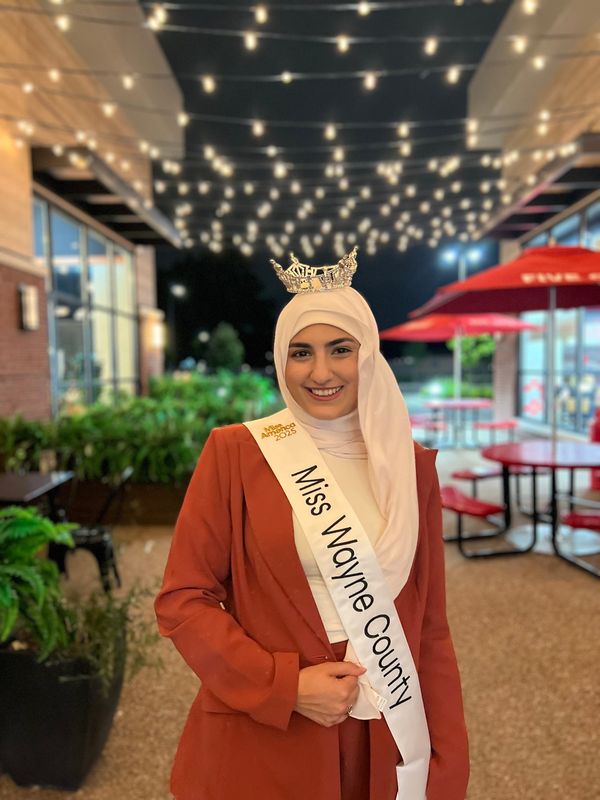
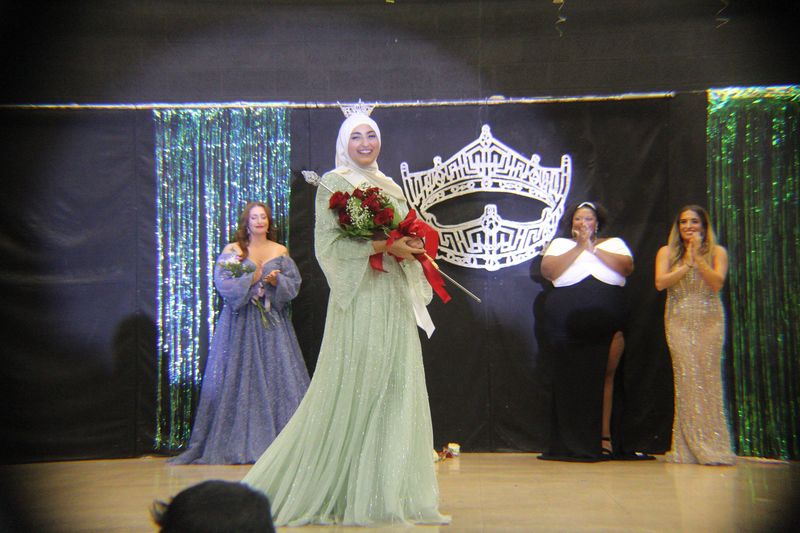
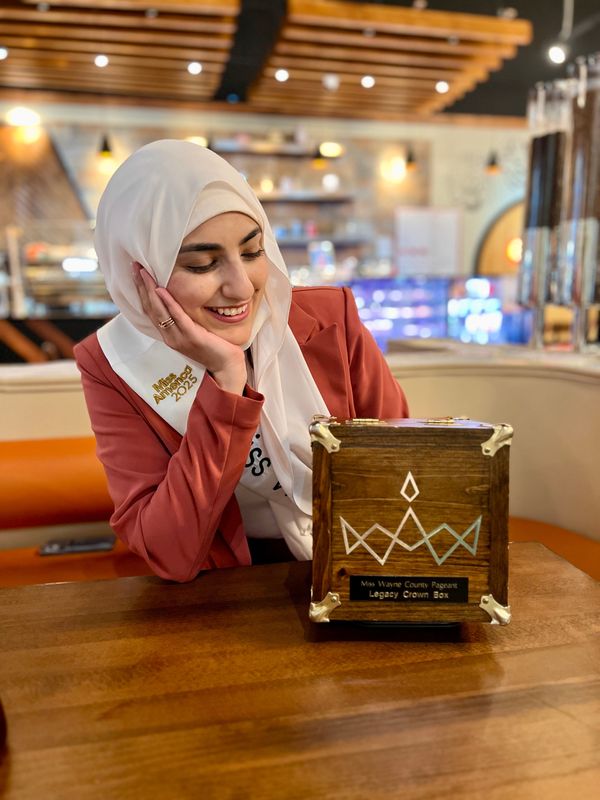
But the Dearborn Heights woman didn’t feel ready to start wearing an Islamic headscarf, often known as hijab, until a few days before she graduated from law school last year at Wayne State University in Detroit. She surprised her classmates when she showed up at graduation in May 2024 donning a headscarf. Hashwi, 25, had competed before in local beauty pageants without a scarf, but in August 2024, she wore hijab in the Miss Wayne County pageant. And this year, she competed again in the contest held Aug. 10 at a Catholic school in Redford Township. Hashwi won this time, becoming the first woman wearing an Islamic headscarf to win Miss Wayne County and possibly the first in the U.S. in a local Miss America contest, according to pageant officials.

“The love and support I’ve been shown by everybody has been amazing,” Hashwi told the Free Press in an interview after winning the title. “I have had people reaching out to me from different states all across America, different title holders, current and previous, even people’s mothers, just telling me how great it is what I’ve done, and how amazing it is to just have someone representing our community.”
Hashwi’s victory is one example of how Muslim women in metro Detroit who wear hijab are taking part in and succeeding in mainstream activities, from sports to local government to business. At Fordson High School in Dearborn, where more than 80% of the students are of Arab descent, only seven students in the senior class of 1990 wore hijab in their yearbook photos, but that number has grown a lot over the decades as hijab has become more popular in Wayne County. The culture of beauty pageants has also changed over the decades, with more of an emphasis now on character and public service than appearance, a trend that overlaps with the Islamic ideal of modesty that encourages women and men to cover up. While some conservative clerics still frown upon women taking part in beauty pageants, many others in the Muslim community have been supportive of Hashwi. She is set to compete in the Miss Michigan contest in June 2026 in Muskegon and, if she wins that, in the Miss America pageant.
“I really care about my religion,” Hashwi said. “It’s been a really big part of who I am. I love the idea of putting on a scarf.”
The decision to start wearing hijab is a personal one for many women, informed by their spirituality, culture and awareness of their identity. For Hashwi, she felt her law school graduation marked a pivotal moment in her adulthood and so the time was right.
“There’s something that changes in you when you graduate and you’re about to enter the adult world,” she explained about her decision to wear the headscarf. “Part of you just feels like you’ve grown, you’ve changed as a person as time goes on. And I personally felt like I was ready to wear a scarf. I loved it. I loved the way it looked on me. I loved the way it made me feel. And I decided, why not? So I put it on three or four days before my law school graduation, and none of my classmates knew I had put it on. I showed up to my graduation and just shocked everybody, and it was amazing.”
Miss Wayne County has often had diverse contestants and winners from Black, Asian American and Arab American communities. Founded about 100 years ago, Miss America initially didn’t allow non-White women to compete and the first Black winner wasn’t chosen until 1984, when Vanessa Williams won, PBS reported. In 2022, Taylor James became the first Muslim to win Miss Wayne County; she did not wear hijab in the contest. In 2010, Rima Fakih, of Dearborn, who also did not wear hijab, became the first Muslim to win Miss USA. There have been other contestants wearing hijab before in mainstream beauty pageants over the years, such as Halima Aden in Miss Minnesota USA, NPR reported. And there’s also a Muslim beauty pageant, Miss Muslimah USA, that’s often held in Dearborn, where a majority of contestants wear hijab. But Hashwi may be the first to wear hijab and win a local contest that’s part of a mainstream beauty pageant.
“I’m 99.9% certain she is the first local winner in the history of Miss America to win wearing the hijab scarf,” said Sheila Sigro, director of Miss Wayne County. None of the judges who chose Hashwi as the winner were Arab American or Muslim, she said.
“The judging panel this year was comprised of four white women, one of whom is a former Miss Michigan, and one Asian man,” Sigro said.
Sigro said she’s been prepared over the years to help secure the crown on top of a headscarf in case of a winner with hijab.
“Every year I made certain that there was masking tape backstage to secure the crown just in case” the winner has a headscarf, she said.
Hashwi currently practices municipal law, representing cities and their employees, such as EMS workers and police officers. She was sworn in as an attorney by Judge David Turfe of 20th District Court in Dearborn Heights, the first Muslim judge in Dearborn Heights.
Hashwi has competed in pageants for a few years. After graduating cum laude from Wayne State University with a degree in economics, she became interested in pageants during her first year in law school after seeing on TikTok a video of a law school student who became Miss Texas. It was also a way to earn money for scholarships; she won more than $1,600 in scholarship money from the Wayne County pageant. The day before she won Miss Wayne County, she also competed for Miss Oakland County, winning first runner-up. The Miss America allows contestants to compete in multiple contests as long as they live, work or go to school in the county; Hashwi works in Oakland County. It’s open to people of diverse backgrounds, including observant Muslims.
“Miss America is very accommodating to whatever I need in terms of religious wear,” Hashwi said. “So when it came time for my athletic wear, if I needed to be more covered up, that was perfectly fine.”
Contestants are judged in various categories. Thirty percent of the scoring comes from the results of their interview on their public service initiative. Hashwi, who’s competing in the Detroit Free Press Marathon in October, spoke about her “Step Up and Serve” plan for encouraging public health through community programs.
Another 20% of the score comes from the talent performance. Hashwi, who grew up listening to classic Arabic songs her parents loved, sang “Chi Aam Yekhlass,” a 1977 song by Lebanese singer Magida El Roumi.
“It’s about the fear of loss, loneliness, and the passage of time,” Hashwi said of the song. “It’s a song about love, a song about passion, a song I’ve always loved. I grew up listening to a lot of old Arabic music. … I grew up listening to all these Lebanese classics. So when it came time for me to pick a talent, I decided to pick something that would help me stay true to myself, and something I really enjoyed, singing.”
Another 20% of scoring was for the evening gown competition. Hashwi wore a full robe that covered her body, which is another example of the idea of hijab, which refers not only to a headscarf, but to clothing and demeanor.
She feels the Miss America pageant overlaps with her own values.
“Miss America really focuses on your intellect,” Hashwi said. “It focuses on your community service, your passion and your drive. At the end of the day, those factors are what makes somebody a winner.”
Contact Niraj Warikoo: nwarikoo@freepress.com, X @nwarikoo or Facebook @nwarikoo
This article originally appeared on Detroit Free Press: Miss Wayne County makes history as first winner with hijab
Reporting by Niraj Warikoo, Detroit Free Press / Detroit Free Press
USA TODAY Network via Reuters Connect