More mocktails, fewer traditional steaks and higher checks to cap a meal are all changes Michigan diners — and restaurant operators — are noticing. It’s not their imagination.
The divergent trends — record-high beef prices, a decline in alcohol consumption and increased labor costs — are reshaping the economics of eating out and serving those who do. In an adapt-or-die industry, restaurants are making changes or losing business: 51% of Michigan operators saw same-store sales decline in March, and 55% saw customer traffic drop, says the Michigan Restaurant & Lodging Association.

Restaurants across the country are facing pressure from both sides of the equation, and Michigan is no exception. In 2025, Gallup reported a record-low drinking rate, with only 54% of U.S. adults and 50% of young adults saying they consume alcohol. At the same time, in April, the USDA reported a record-high average retail price for beef at $9.64 per pound, up about 13% from the year before. The reasons for the skyrocketing prices: strong demand and the smallest U.S. cattle herd in 75 years.
For restaurants and bars, those trends translate into higher costs and tougher decisions as they manage multiple challenges at once.
“It used to be, when we started this business, that if your prices went up on the cost of a steak, you might be able to absorb that because you’re just trusting that folks are going to have a martini when they go out to eat,” Union Joints owner Curt Catallo told The Detroit News. “That way you can kind of make it up somewhere else, but that safety net doesn’t exist anymore.”
For some operators, adapting to the changing economics of dining out is becoming a matter of survival: “Restaurants are closing every day. It’s a challenging industry the very best of times, and these are unique times,” said Justin Winslow, president and CEO of the Michigan Restaurant & Lodging Association.
“The old rules don’t work anymore, and so they’re trying to adapt even faster. Restaurants who have not been able to adapt, or just have a clientele that has not been able to stay with them, are the restaurants that have closed. And we’ve seen a fair share of that.”
In Detroit, several restaurants and bars have closed over the past year, including the Sugar Factory Restaurant and Brasserie, UFO Bar, Wright & Company, O’Halloran’s Public House and Apple Annie’s Kitchen & Bakery. The businesses have not publicly cited their reason for doing so.
Beefing up the bill
How much flexibility a restaurant has in navigating these shifts depends largely on its business model, Winslow said: “Let’s say you’re fine dining and you’re a very top-tier steakhouse. Beef prices can be a challenge, but you have a little more flexibility in what your guest is willing to pay. That’s a little different than those who are on the value side of the chain. Their guests are a little more price sensitive and maybe won’t come back as often or at all.”
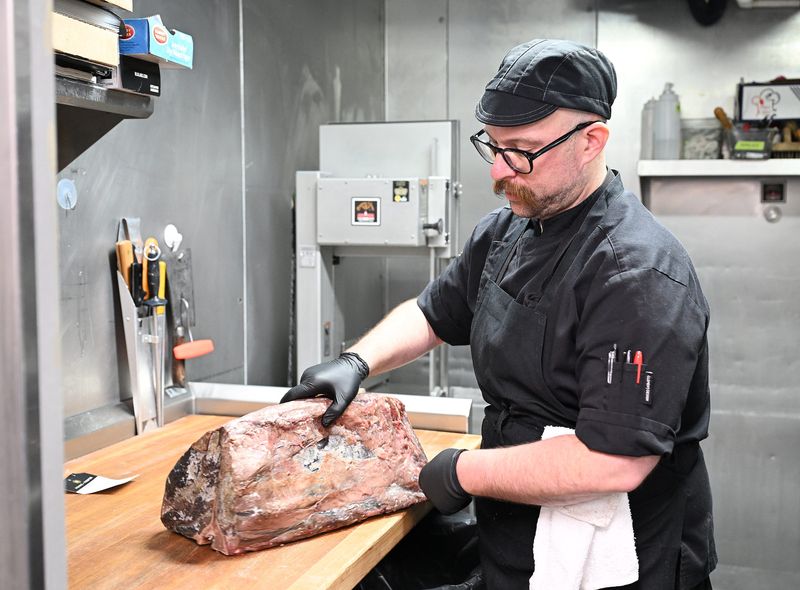
Marrow Detroit is one of those restaurants that appears better positioned to weather the increase. The butcher shop and restaurant in Eastern Market, known for sourcing locally, charging premium prices and serving less traditional cuts of meat, has actually benefited from the changing market, said Heather Ratliff, Marrow Detroit Provision’s vice president of sales and operations.
“Really, because our entire principle is about supporting local, viable farms, and we have always had this focus on making use out of the more unique parts of the animal, we have been able to absorb and ride out this storm with very little customer-facing impact,” Ratliff said. “I think what we’re seeing is that the other products in the market are kind of catching up to our pricing. But our quality remains paramount.”
Others have had no choice but to adjust. Catallo, owner of Union Joints, explained that his southeast Michigan chain has shifted attention toward alternative cuts of meat while also emphasizing menu items such as pizza and pasta that are less affected by rising beef costs.
“I’m sure that there’s some steakhouses that might be immune to pricing, but that’s not true of us. We have an obligation to provide value to our guests, because we cast such a big net,” Catallo said. “We know that our customers — if gas prices go up, that might mean that they’re going to skip lunch on a Wednesday. If protein prices go up, it might mean that they’re going to go with the pasta instead.”
Restaurants where beef plays a smaller role on the menu have had an easier time limiting price increases. “While we do serve beef, it has always been a small percentage of the menu, and we’ve just raised our prices on those dishes accordingly,” said Andy Hollyday, executive chef and partner of Selden Standard in Detroit.
For steakhouses, however, raising prices across their menus has been much harder to avoid.
“We’ve increased our prices significantly,” said Sam Trick, executive chef of Prime + Proper in Detroit. “I think we’ve increased between that $5 and $10 range per steak recently. But really increasing our price on a steak and being in a restaurant level like this only makes us want to strive and succeed more to make sure that every single thing from start to finish is 100% perfect, no flaws.”
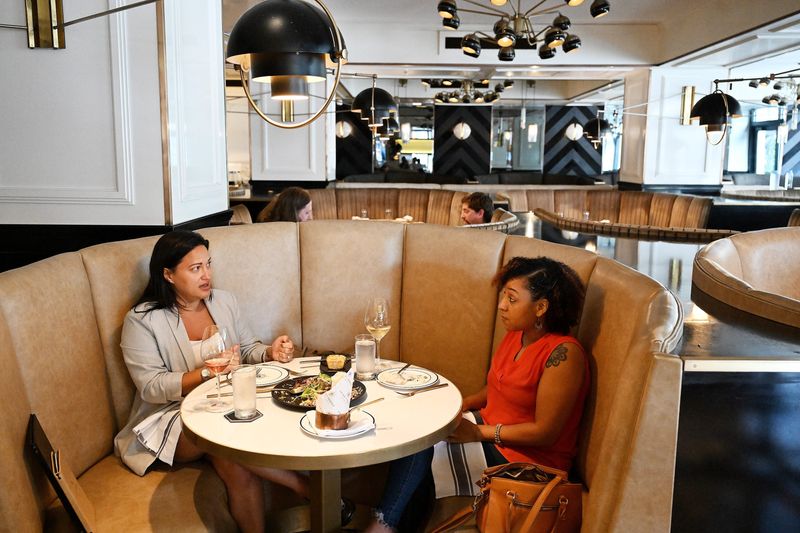
Joel Halperin, a partner at Prime + Proper, said that most customers accept the higher prices because they are paying for a special experience: “We certainly are a place for a premium product, and the experience we create in the restaurant you can’t emulate in your home.”
Detroiter Olivia Brazer agreed: “I know it’s a luxury to go out to eat, but if you want to go out, you buy what you want to buy and what you enjoy anyways. It’s kind of the same with gas, like yes, it’s expensive, but you still have to drive anyways.”
It helps that consumers have generally been understanding about the reason behind price increases, Catallo said: “The only good news is that the rising prices aren’t just rising for restaurants; they’re rising at the grocery store, too. People recognize that these costs are rising because they see it behind their shopping carts.”
Still, some consumers like Detroit native James Fantroy say restaurant prices remain too high for them: “I’ve noticed a big, big difference in pricing. That’s exactly the reason why I don’t go out to eat as much anymore. I feel like I can make the food at home for cheaper. Sometimes it’s about the experience, but I’m not willing to pay for that experience.”
Beef prices are only one of several rising costs restaurants are facing. Labor costs are up, too. Michigan’s minimum wage increased from $10.56 per hour in February 2025 to $13.73 per hour on Jan. 1, 2026. The tipped minimum wage also increased from $4.01 to $5.49 during that period.
“The post-pandemic labor costs are much higher than the pre-pandemic labor costs, and that’s not a bad thing, but it’s a reality,” Catallo said. “I think the guests understand that just doing business is more expensive today than it’s ever been.”
Restaurants rethink happy hour
Even as restaurants pay more for food and labor, one of their most profitable revenue streams — alcohol sales — has become less dependable.
“This kind of happened post-COVID, where people are migrating to different things, whether it’s having a gummy in the parking lot before dinner instead of having that second glass of wine — but all these things affect the formula of our business at a time when the commodity costs have never been higher and the labor costs have never been higher,” Catallo said.
Restaurant operators say they have responded by expanding other offerings rather than resisting the shift. “Restaurants are nothing if not very adaptive,” Winslow said. “The tastes of the consumer, their guests, are changing all the time, so they have to be attuned to that and be willing to change.”
As restaurants rethink the sources of their revenue, some are looking beyond food and drinks altogether. Northern Lights Lounge co-owner Michael Solaka said the Detroit restaurant is pivoting to boosting revenue from live entertainment to offset financial strain in other areas.
“We’ve been trying to increase our revenue from door sales for talent,” Solaka said. “That’s really where the money is to increase net revenue. But our profit margins are down, cash is down, everything’s on a credit card, so it’s just … it’s been a challenge. So we’ve been there 24, almost 25 years, and we’re struggling right now, which I never thought we would be.”
Others are expanding their nonalcoholic offerings. At Yiamas Hospitality Group, which operates several Detroit restaurants and bars including Exodos Rooftop, founder Yanni Dionisopoulos said alcohol consumption has noticeably declined since the pandemic.
“Exodos being mostly a nightclub and rooftop lounge had a significant clientele based on bottle service, and that’s nowhere near what it used to be before COVID,” Dionisopoulos said. “In the last few years, there’s been a significant decrease in alcohol consumption, but there has been an increase of non-alcoholic cocktails and beers and drinks that is taking place, so that somewhat balances it off.”
The company introduced a full mocktail menu about a year and a half ago.
“It’s been surprisingly doing really well,” Dionisopoulos said. “People are more into health. We noticed that, for example, with people that do still drink, you’ll hear a lot of vodka soda, tequila soda, where you don’t hear the juices, the Red Bulls or the Coke that we’re used to back in the day.”
Ron Scott, a partner at SavannahBlue and Willow Detroit in downtown, does not believe the falling drinking rate is just due to health: “In the case of people drinking less, I don’t think that is just based on people’s perceptions of alcohol consumption, but it’s also a budget of people not really having the same level of spending power that they would have, just based on the economy.”
That’s why Willow recently added some cheaper cocktails to entice more restaurant-goers to drink, but the results have been modest. The challenge, Scott said, isn’t any one expense or a change in consumer habits. It’s managing all of them at once.
“Prime costs, so food costs and labor costs — all of them are up. Because margins are as thin as they are, we have no ability to absorb any of that. Any problems we may have had quickly become a negative,” Scott said. “So we have to pass that cost on to customers in our food and drink prices while at the same time trying to be more efficient with portion sizes and everything else to make the numbers work.”
atisch@detroitnews.com
This article originally appeared on The Detroit News: Michigan restaurants adapt to rise of the mocktail, fall of the steak
Reporting by Alyssa Tisch, The Detroit News / The Detroit News
USA TODAY Network via Reuters Connect
By Alyssa Tisch, The Detroit News | USA TODAY Network