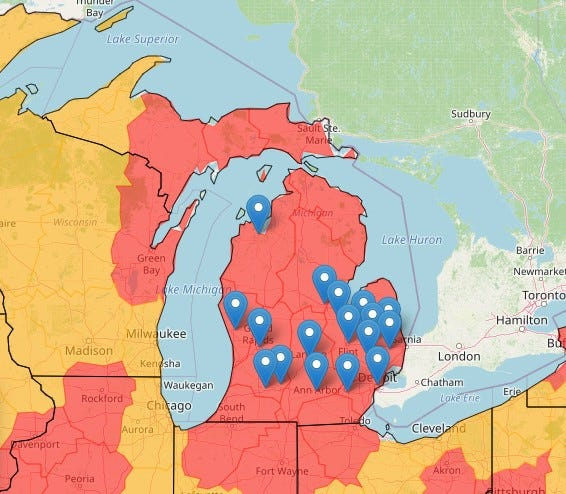
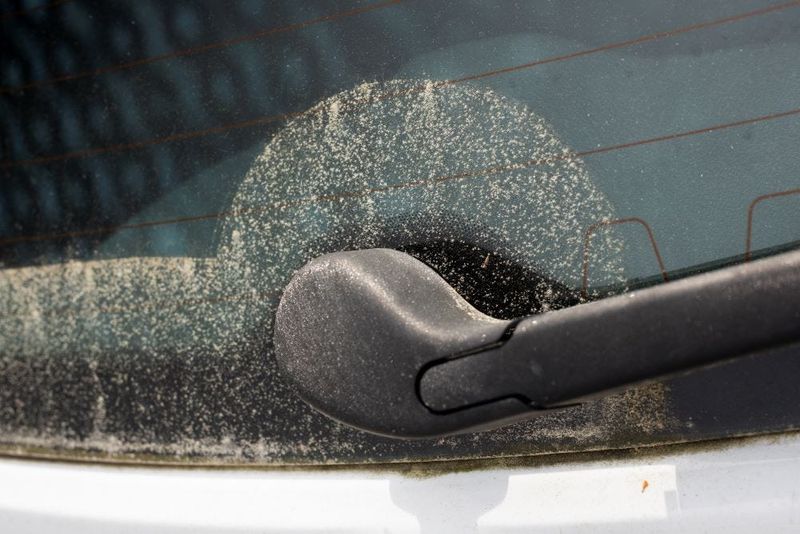
Michigan is under a high pollen count to start this week, May 26-27, meaning Michigan residents who suffer from hay fever may feel worsening symptoms.
Birch, oak, mulberry and ash trees are the top allergen producers across Michigan on May 26, according to the Pollen.com national allergy map, with most of the state seeing high concentrations of the allergy triggers.

The pollen count in Michigan is high (9.7-12) across the entire Lower Peninsula and most of the Upper Peninsula on Tuesday, May 26, meaning instruments are collecting high concentrations of pollen grains/fungal spores and sensitive groups are likely to feel symptoms. The western U.P. has a lower count, in the medium range.
For Wednesday, May 27, a high to medium-high pollen count is expected across Michigan. For the rest of the work week, the pollen count holds steady at a medium-high count.
Allergies to tree, grass or weed pollen are a shared annoyance among millions on Americans. Starting in about March and continuing throughout summer, plants release powdery particles as they reproduce that cause people to have reactions that include sneezing, congestion, coughing, itching and puffy eyes, noses or throats, according to the Cleveland Clinic.
“If you have a pollen allergy, your immune system thinks pollen is a dangerous intruder. It produces chemicals to fight off the pollen, and you experience an allergic reaction,” the Cleveland Clinic said.
From March to June, Michigan residents battle tree pollen, the Allergy Asthma Center of Rochester, Michigan said, which spreads easily on warm, dry and windy days. Grass pollen is the next main allergen that typically occurs during the summer months, then ragweed pollen follows in the fall.
On high pollen-count days, experts recommend staying indoors as much as possible, according to the Asthma and Allergy Foundation of America. It’s also important to combat pollen indoors with some simple steps: take shoes off outside; shower as soon as possible; keep windows closed; wipe off pets outside; and wear fresh clothes to bed.
It is also useful to schedule outdoor activity to avoid peak pollen hours. Pollen typically peaks in the early morning and in the early afternoon, according to IQAir.
To help manage symptoms, pollen forecasts are available online, including at Pollen.com, The Weather Channel, AccuWeather, IQAir, Kleenex and the U.S. Air Quality Index.
More on Michigan’s pollen count on May 26-27:
Are pollen count levels bad in Michigan?
Here’s the May 26 pollen count – grains of pollen per cubic meter of air – for city across the state according to Pollen.com:
Will my allergies be bad on Wednesday, May 27?
Here’s the May 27 pollen forecast across Michigan according to Pollen.com:
When are peak pollen times?
The time of day may impact how intense your allergy symptoms are. Typically, pollen peak times are during early morning hours as pollen begins to rise.
“This increase is due to the biological rhythms of plants, which often release pollen at first light. The cooler, more humid conditions of the morning support the buoyancy of pollen grains, which can then travel greater distances,” IQAir said.
Pollen peaks again in the early afternoon as temperatures peak.
“The heat causes air to rise, which can carry pollen grains from the ground level upward, spreading them over a wider area. This is particularly the case for grasses and certain tree species, which release their pollen during these warmer periods,” IQAir said.
Peak times vary based on location (such as urban or rural areas) and weather conditions.
What is pollen?
Pollen is tiny egg-shaped male cells that appear as a yellow, fine dust or powder that gets released into the air by flowering trees, grasses and weeds the U.S. Forest Service said. This is part of a plants’ reproductive cycle and is essential to all of Earth’s ecosystems.
Contact Sarah Moore @ smoore@lsj.com
This article originally appeared on Lansing State Journal: Michigan is under a high pollen count to start the week. How to track
Reporting by Sarah Moore, USA TODAY NETWORK / Lansing State Journal
USA TODAY Network via Reuters Connect