Michigan nursing home residents whose stays are covered by Medicaid have not seen an increase for more than 30 years in their personal needs allowance, a monthly amount they can use for everyday expenses like clothing, soap or toothpaste.
Now, a state legislator has introduced a bill to more than triple the allotment to $200 — just two months after the Free Press reported on residents’ push for an increase.

Michigan’s personal needs allowance has been $60 since at least 1994. The bill, HB 5835 of 2026, introduced in April by state Rep. Karl Bohnak, R-Deerton, sets the amount at $200.
The introduction of HB 5835 is a “crucial step in supporting resident dignity and autonomy and ensuring basic personal needs can be met,” said Michelle Danou, Assistant State Long Term Care Ombudsman.
The increase to the monthly allotment, if passed, would impact more than 40,000 nursing home residents who rely on Medicaid, which has limits on income and assets to qualify for coverage. But nursing home residents covered by SSI and Medicaid, or veterans eligible for a VA pension, may not see the same benefit under the bill in its current form.
Three legislators based in the U.P. sponsored the bill: state Rep. Bohnak, state Rep. David Prestin, R-Cedar River, and state Rep. Gregory Markkanen, R-Hancock.
Bohnak’s office declined the Free Press’s request for comment.
The total cost to the state of increasing the personal needs allowance to $200 was not available.
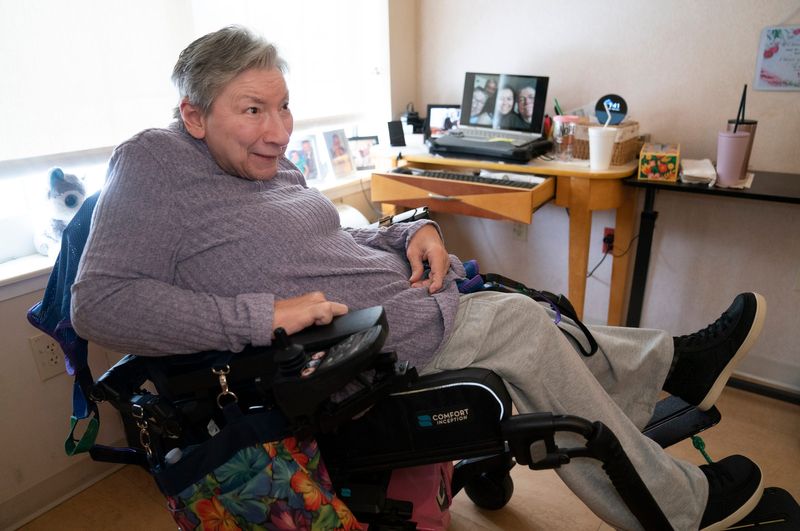
“Having a bill introduced to increase the PNA (personal needs allowance) would mean that the quality of life for nursing home residents across Michigan would improve,” Pattie Townsend, 66, vice president of the resident council at Medilodge of West Bloomfield, told the Free Press in an email.
“I would be able to purchase toothpaste for my sensitive teeth, bathing and skincare products for sensitive skin and a haircut on a more timely basis,” she said.
“It would also validate that our voices are being heard and that we are entitled to a sense of dignity.”
Mel Joslin, 71, a nursing home resident and president of the resident council at Marquette County Medical Care Facility, collected dozens of letters from nursing home residents across the Upper Peninsula and mailed them to Bohnak, his state representative, earlier this year.
“The residents of Marquette County Medical Care are finding it more challenging than ever to navigate our personal expenses and have the freedom to purchase items that lend to a higher quality of life when we only receive sixty dollars per month,” Joslin stated in his letter.
Townsend and Joslin are both members of the statewide resident council comprised of nursing home residents working for the increase.
“We have been working on getting help for everyone,” Joslin told the Free Press, about the issue and advocacy work of nursing home residents throughout the state.
The bill has been referred to the Committee on Health Policy, chaired by state Rep. Curt VanderWall, R-Ludington.
“I take these proposals seriously,” VanderWall told the Free Press in an email on April 29. “And I look forward to hearing from people how this bill would affect them and their families.”
The personal needs allowance was set by the federal government in 1972 at $25 and increased to $30 by the Omnibus Budget Reconciliation Act of 1987. States can choose to supplement the amount; Michigan allows residents to keep an additional $30 of their income.
Not all nursing home residents are able to keep $60 of their own income for personal needs. When a nursing home resident receives Supplemental Security Income (SSI) and Medicaid pays for at least half of their stay, the monthly benefit for personal needs is $37 ($7 of which is supplemented by the state). Veterans eligible for an improved pension from the U.S. Department of Veterans Affairs receive $90 per month.
In fiscal year 2025, about 40,528 Michigan nursing home residents were eligible for the $60 personal needs allowance, while about 2,241 received $37 monthly.
There were 1,584 veterans living in Michigan nursing homes, during the same time period, but the number of veterans receiving the $90 monthly stipend is not available, according to a spokesperson for the state health department.
The total cost was $11.8 million (state and federal combined), with the state’s share at about $4 million for fiscal year 2025 for people who were eligible for the $60 personal needs allowance. Nursing home residents who received $37 for personal needs cost the state $188,216 during the same time period, according to the state health department.
In 2026, the median amount available to nursing home residents by state was $70, according to data compiled by the American Council on Aging. Alaska provides the maximum monthly benefit, $200, and Alabama provides the minimum, $30.
Nursing home residents in 14 states and the District of Columbia saw an increase as of January in their personal needs allowance compared with last year. A number of states like Arizona, Colorado, Minnesota, Nevada, New Hampshire, North Dakota and Washington make annual cost-of-living adjustments to the monthly amount to prevent inflation from eroding residents’ purchasing power.
HB 5835, as introduced in the Michigan Legislature, does not include language that ties the personal needs allowance to inflation. Nor does it specifically address the $37 personal needs allowance for nursing home residents whose stay is covered by SSI and Medicaid or the $90 per month that eligible veterans receive.
The Michigan Long Term Care Ombudsman Program and the Michigan Elder Justice Initiative issued a news release in support of nursing home residents’ push to raise the personal needs allowance following Free Press reporting in February.
“The allowance hasn’t been raised in more than 30 years. If adjusted for inflation, it would be more than double its current rate,” the groups said in a joint news release. “While the increase would make a huge difference for residents, it would require only a very modest additional cost in the state Medicaid budget.”
The Michigan Long Term Care Ombudsman Program is a government-funded statewide program with 40 local ombudsmen, who advocate for residents’ rights in nursing homes, licensed homes for the aged and adult foster care facilities. The Michigan Elder Justice Initiative, a nonprofit established in 2011, advocates on behalf of vulnerable older adults and people with disabilities.
Townsend, who has lived in a nursing home since 2020 and receives just $37 each month for personal items, told the Free Press the amount of money nursing home residents are allowed to keep each month for personal needs should concern all Michigan residents.
“Unfortunately, everyone is at risk of becoming a nursing home resident or knows someone who is, making this a relevant issue for all,” Townsend said.
Contact information for local ombudsmen can be found on the Michigan Long Term Care Ombudsman Program website: mltcop.org or by calling 866-485-9393.
Kristi Tanner is a data reporter. Contact her at ktanner@freepress.com
This article originally appeared on Detroit Free Press: Michigan bill could raise nursing home residents’ allowance
Reporting by Kristi Tanner, Detroit Free Press / Detroit Free Press
USA TODAY Network via Reuters Connect