One of the increasingly popular and controversial diet trends in the Motor City and its suburbs right now isn’t one that shrinks waists, it’s one that shrinks roads.
Road diets reduce travel lanes with goals of safety and increased accessibility for pedestrians and bicyclists and they are, or want to, transform thoroughfares and entire downtowns.

What is a road diet and why cities use them
“They work particularly well in downtowns,” Berkley Community Development Director and urban planner Kristen Kapelanski said. “The world is hopefully becoming a little less car-centric.”
But while city officials seem to love them for their reductions in crashes and boon to businesses − with Detroit recently seeking to trim down Fort Street and multiple reductions deemed “successful” in Oakland County − motorists and even pedestrians often have a strong distaste for road diets, finding it exceedingly painful to give up lanes.
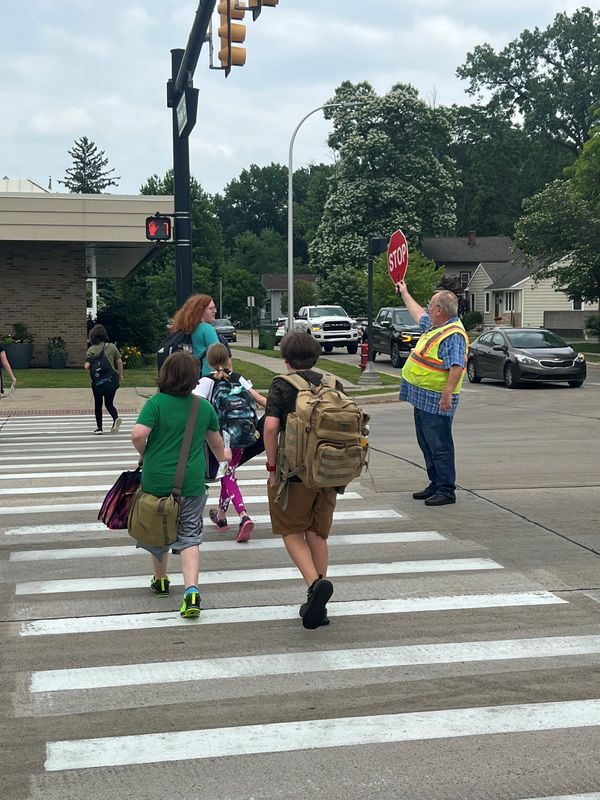
Among those hating a recent monthlong road diet trial on North Main Street in Clawson were Jeanne Wolf, who called the new road configuration “terrible,” Andrew Engle, who said he was “not a fan,” and school crossing guard Todd Owens, who bluntly opined, “I think it totally stinks. Traffic is worse, it backs up at the light, it’s not safer, and it’s not a great idea.”
Clawson pilot draws mixed reaction
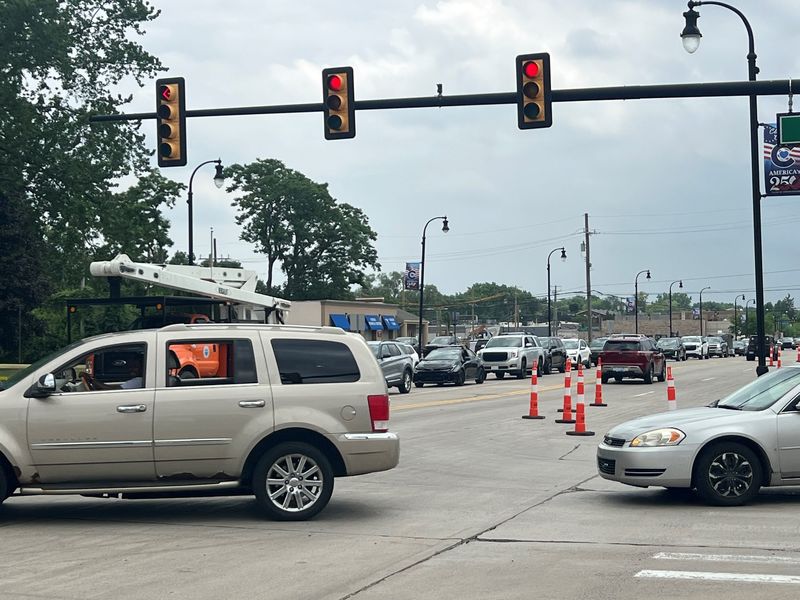
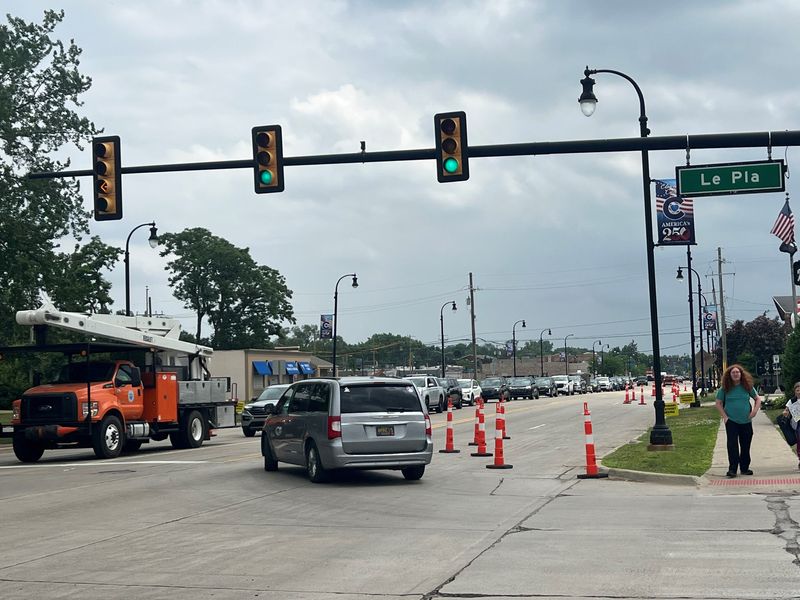
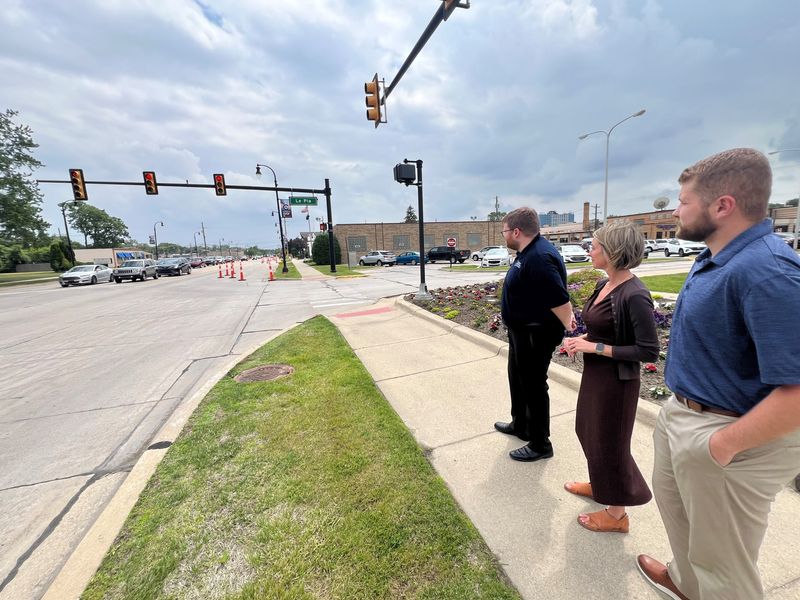
Clawson officials acknowledged that the idea of reducing a quarter-mile of North Main from five lanes to three to calm traffic and improve safety is getting mixed results in a public survey.
The grant-funded “Road Diet” pilot program on North Main, which typically carries around 16,000 vehicles per day, was implemented in the middle of May and was scheduled to end the week of June 15. The city plans to keep the survey open through at least the end of June.
The reduction in traveling lanes adds about 30 on-street parking spaces, and if it is deemed successful and the council agrees, it could be implemented long-term with curb cuts on North Main from just north of 14 Mile to Roth Boulevard and Phillips Avenue.
“It’s achieving what we’re hoping for, which is traffic calming as you head into downtown Clawson,” City Manager Nik Stepnitz said, adding the project has been talked about for the past couple of years. “It’s better for safety, and better for businesses, more parking has been added. The schools supported making the community safer.”
Slower traffic, safer students
The Clawson Public Schools’ K-12 campus is directly west of this section of North Main Street and was a primary motivator for the road diet, along with a master plan that calls for safety modifications around major corridors with an additional goal, Stepnitz said, “of making the downtown feel more like a downtown rather than one you drive through.”
DDA Executive Director Kristen Urbanik said she believes the road diet is definitely making the downtown more welcoming for people who are walking.
“It’s not as loud, and traffic is moving slower because of the reduction in speed,” she said. “We are obviously getting mixed reviews.”
Stepnitz and Urbanik estimate that the road diet might lead to motorists having to wait through one or two light changes and perhaps add two to three minutes to a commute.
Drivers push back on lane reductions
Andrew Engle, who resides a half-block off Main and wondered whether the road diet was part of a plan to provide more parking for apartments that are being constructed in the area, said the reduction in lanes changed his driving habits. During peak hours, he is using Rochester Road, which has four lanes.
“Drivers are selfish; no one wants to just let you in,” he noted. “If I’m running late, I’m not going through downtown Clawson.”
He added that the resistance to the road diet could very well be that it is simply a change.
“There are two things people hate: the way things are and change,” Engle said.
Wolf, a Royal Oak resident who was visiting the post office, agreed that changes to roadways are particularly difficult for senior citizens like herself.
“It’s a hazard for night driving, when it’s harder to see and all of a sudden the lane is gone,” she said. “It’s startling when you’re driving, and there is something there that wasn’t before, whether it’s edges or curbs … If you’d laid it out that way to start, we’d be used to it. People can’t get used to roundabouts; they aren’t going to get used to this.”
Where road diets are working in metro Detroit
While the North Main Street road diet is new and experimental, Clawson already has one permanently on South Main going into Royal Oak, a city that has a few.
Royal Oak’s most recent road diet began in 2023, when the city reduced Rochester Road to one lane in each direction with a center turn lane from Main Street to 13 Mile Road. The road diet plan on Rochester Road will be completed this year with the same reduction to one lane in each direction between 13 Mile and 14 Mile roads, with a center turn lane.
Royal Oak City Engineer Holly Donoghue said while there was initial pushback to the road diet plan, traffic studies have shown a reduction in crashes, with an addition of only about 30 seconds to time spent in traffic on Rochester Road.
“Anytime you say road diet, it’s controversial,” she said. “A diet itself is a negative term for a lot of people, as they think you are taking something away … but it’s also a popular improvement. It’s getting more popular because we are looking at all users, including bicyclists and pedestrians.”
With that in mind, Royal Oak plans to implement a road diet in 2027 on 11 Mile Road from Woodward to Stephenson Highway, moving curbs inward to install a 2-mile-long, 10-foot-wide concrete pathway on the north side of 11 Mile Road for pedestrians and bicyclists to share.
The extension of the pathway into adjoining communities, including Huntington Woods, Berkley, Oak Park, and Southfield to the west, as well as Madison Heights to the east, is an idea still being discussed.
Birmingham Police Chief Scott Grewe said his city has had two very successful road diets, one on Maple Road from Southfield Road to Cranbrook that took the road from two lanes in each direction down to one lane in each direction with a turn lane. That change, which he said occurred at least a decade ago, has been great.
“There were concerns initially that it would be a traffic nightmare and create congestion and backups, and that hasn’t happened at all,” Grewe said. “It has reduced the amount of accidents.”
More recently, he said the city did the same road diet configuration on Adams Road from Maple to just north of Derby, south of 16 Mile Road, and he has not seen any complaints about congestion.
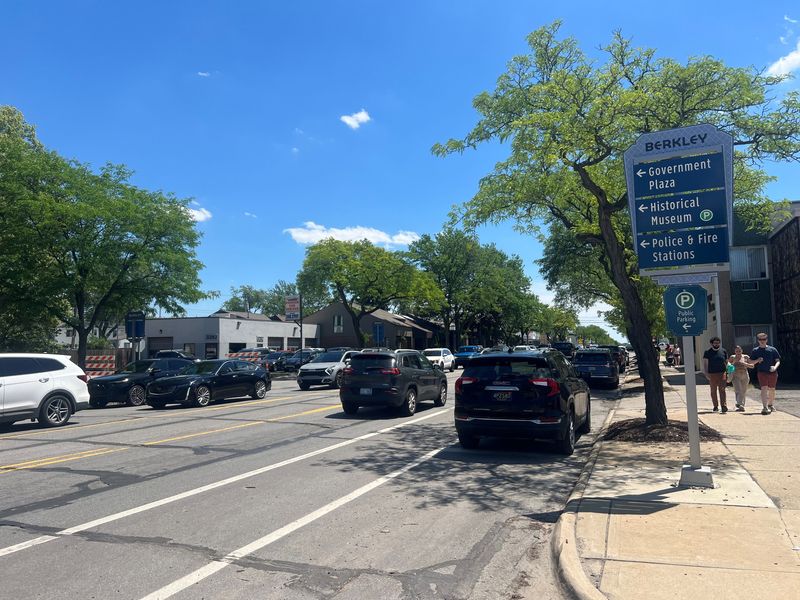
In Berkley, a road diet on Coolidge Highway from 12 Mile Road to 11 Mile Road in 2019 took Coolidge from four travel lanes with on-street parking down to one travel lane in each direction with a center turn lane, with parking spaces near the curb and bike lanes next to the motor vehicle lanes.
Berkley Community Development Director Kristen Kapelanski said the measure has been a benefit to the community.
“When you create more space for bikes and pedestrians, it acts as an economic development tool and draws more people to downtown to explore,” she said. “We’ve seen businesses become more successful because of the environment created by the road diet.”
Like Birmingham, Berkley initially had pushback from community motorists concerned about increased time spent in traffic. However, Kapelanski said traffic timing counts showed that while travel time increased slightly, it was not enough to cause concern.
The feeling of safety has definitely increased, she said, particularly with drivers exiting vehicles they have parked on Coolidge.
Jenya Abramovich, planner with the Southeast Michigan Council of Governments (SEMCOG) said it’s more than just a feeling of safety. The Federal Highway Administration cites road diets as a proven safety countermeasure, a strategy effective in reducing roadway fatalities and serious injuries. Studies shared by the federal agency show that the most common road diet, reducing a thoroughfare from four lanes to two travel lanes with a center turn lane, reduces all crashes by 19% to 47%.
“Road diets are not the best solution for every roadway, but when there is excess capacity, where a lot of roads are overdesigned, rightsizing them makes for safer and more efficient roads,” Abramovich said. “We know crashes can happen, but we don’t want mistakes to cost people their lives. Anything we can do to reduce crashes and fatalities should be the priority for everyone.”
Kapelanski is unsure whether Berkley will try further road diets. Twelve Mile Road is under the jurisdiction of the Road Commission for Oakland County, which, she said, the city is always pushing to consider pedestrian and bicycle amenities.
But she continues to look at other communities and applaud areas where they have seen success with road diets.
“One of the biggest road diets I couldn’t believe they pulled off was Woodward in Ferndale,” she said. “They took a lane out of Woodward, which is a really big deal to get MDOT (Michigan Department of Transportation) to go along with. … It would be radical if they did more of a road diet on Woodward. It does feel better and safer in Ferndale.”
Whether Clawson stays on the road diet or falls off remains to be seen.
“The whole intent of the pilot is we are relying on the public to give feedback on whether it’s reasonable,” Stepnitz said.
The public survey remains open through at least the end of June. Visit Clawson, MI – North Main Street Road Diet Pilot Program Survey
Contact reporter Susan Bromley at sbromley@hometownlife.com.
This article originally appeared on Detroit Free Press: Metro Detroit’s road diet plans have officials, motorists weighing in
Reporting by Susan Bromley, Hometownlife.com / Detroit Free Press
USA TODAY Network via Reuters Connect
By Susan Bromley, Hometownlife.com | USA TODAY Network