Mackinac Island — The November general election might end up being a referendum on Michigan’s powerhouse corporate donors.
A voter-initiated proposal seeking to ban political donations from DTE Energy, Consumers Energy and state contractors like Blue Cross Blue Shield of Michigan has a shot at making the November ballot. The bid is putting this nonautomotive Big Three on defense for their prolific giving to Michigan politicians through official campaigns, leadership political action committees and the slushier dark money variety — known as 501(c)4 accounts — that have become commonplace at the state Capitol.

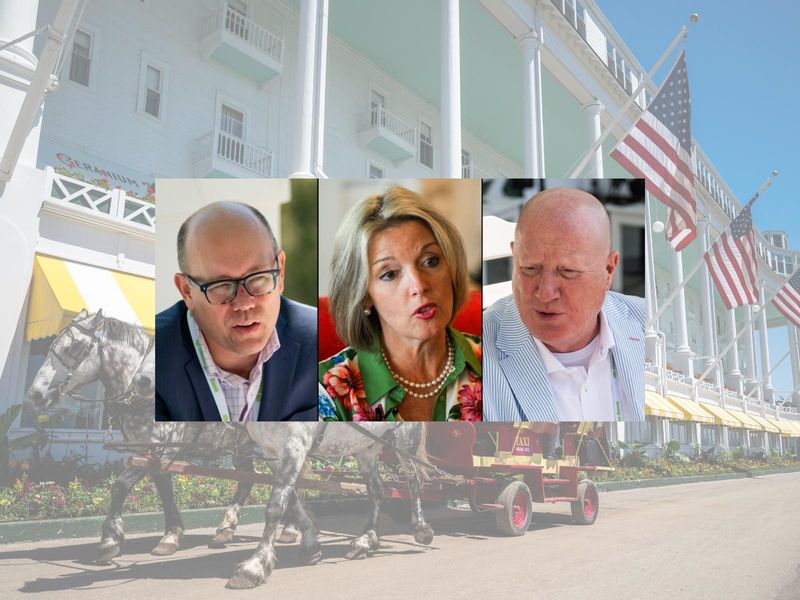
As the state’s political elites meet this week on Mackinac Island for the annual Mackinac Policy Conference for time-honored gabbing, seersucker suits and parties, a grassroots coalition is getting out the mop in Lansing.
The ballot campaign committee, Michiganders for Money Out of Politics, known as the “MMOP” campaign, said it turned in more than 562,000 signatures on Wednesday, the deadline to submit petitions for ballot questions to make the November ballot. Legal challenges notwithstanding, the group needs 356,958 valid petition signatures to qualify for a spot on the Nov. 4 ballot.
The proposal is, in effect, a declaration of war on traceable and untraceable money that permeates throughout Michigan politics — the kind that underwrites this week’s confab at the Grand Hotel and assorted haunts on an island without cars.
“This is going to be a David versus Goliath fight. But we’re ready for it,” said Sean McBrearty, co-chair of Michiganders for Money Out of Politics and a longtime environmental activist.
Executives for the new Big Three pushed back on the notion that they’re Goliath in this battle, noting the MMOP campaign is being aided by the kind of “dark money” they decry. The campaign is receiving financing from out-of-state groups.
Blue Cross Blue Shield of Michigan, a political powerhouse, views the ballot campaign as an assault on its ability to influence public policy that affects the health insurance coverage of its 4.5 million customers, nearly half of the state’s population.
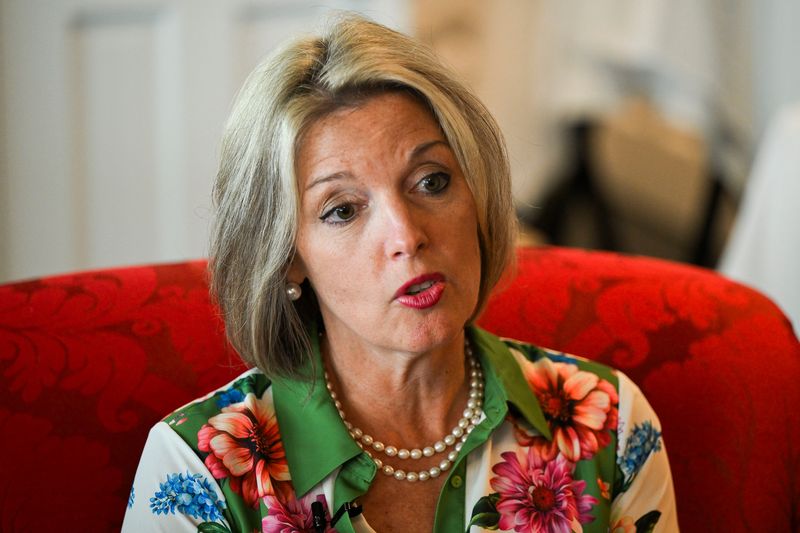
“I think our voice is really important when it comes to public policy,” Blue Cross CEO Tricia Keith said Wednesday in an interview at the Mackinac Policy Conference. “The government has a lot to say about our business, and we work hard, (from) our individual contributor-employee all the way through to the board, to make sure that our voice is heard, and I would be very concerned if out-of-state special interests are trying to impact our ability to have conversations that are important to people carrying our card.”
But Michiganders for Money Out of Politics is unapologetic for taking money from out-of-state interests. The group’s leader said it is just playing by the rules of the game, rules that the likes of DTE Energy, Consumers Energy and Blue Cross exploit every day.
“To change the game, we are going to take money from any source that is willing to fund us to be able to stop these entities from continuing to buy our politics,” McBrearty said.
Consumers Energy executive decries fairness of being forced to ‘disarm’
Michigan’s monopoly utility companies know they are the primary target of this campaign — and they’re planning to defend their political turf in Lansing should this proposal make the ballot.
“I think it is really unfair to have us unilaterally disarm the business community in the political process,” said Brandon Hofmeister, senior vice president of strategy, sustainability and external affairs at Consumers Energy. “The utilities are the face of this initiative. But it’s really going to have a dramatic impact on the place of business in the Legislature.”
The utilities and Blue Cross throw their weight around Lansing in a variety of ways. They all have political action committees funded by voluntary employee donations. About 75% of DTE Energy’s 10,000 employees donate to its company PAC, said Trevor Lauer, vice chairman and group president for DTE Energy.
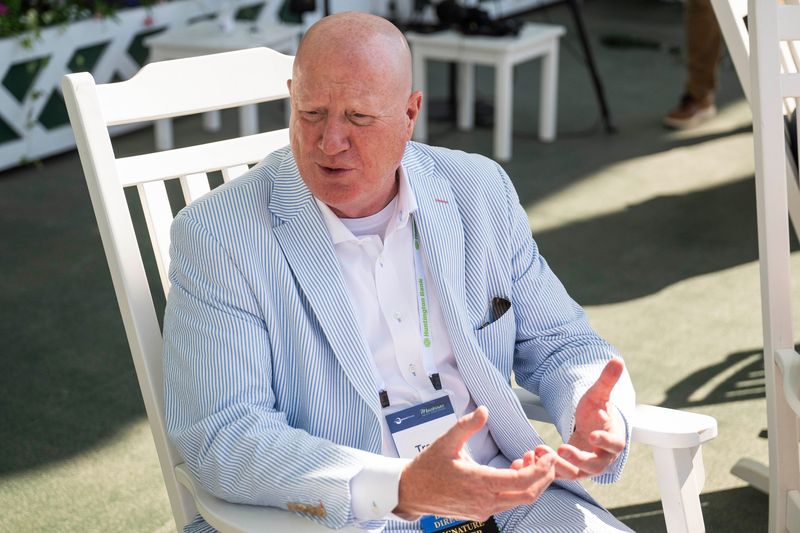
“It’s hard for me to imagine that a company’s employees can’t be active politically in the issues that matter to them, to their families, to their livelihoods,” Lauer said Wednesday in an interview on the Grand Hotel’s newly renovated big porch.
The ballot campaign is the culmination of decades of ever-growing resentment to the power and influence DTE, Consumers and Blue Cross have exerted in Lansing over the administrations of multiple governors, assorted regulators for their industries and the revolving door of state lawmakers, largely thanks to voter-imposed term limits.
Blue Cross is under fire for repeated double-digit premium hikes and, like almost all insurers, for customer complaints about the myriad challenges in getting various procedures and drugs covered.
DTE and Consumers face a mountain of criticism over their ever-rising electricity rates, the grid’s reliability with every passing storm and a deepening suspicion that they’ll foist the cost of feeding power-hungry data centers onto average electric ratepayers, who are suffocating under cost inflation and wage stagnation.
The vast political influence of DTE, Consumers and Blue Cross, and how they are treated in Lansing, could be litigated at the ballot box this fall on multiple fronts.
If progressive firebrand Abdul El-Sayed wins the Democratic nomination for U.S. Senate, he plans to sharpen his criticism of their influence, particularly that of Blue Cross, which aided Gretchen Whitmer’s winning campaign in a 2018 primary.
Blue Cross executives did him in.
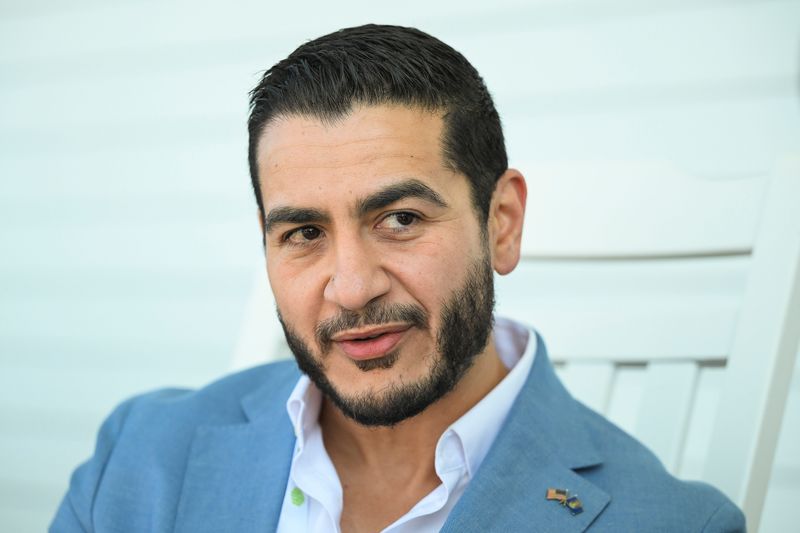
“And I’m going to do them in when I’m in the U.S. Senate,” El-Sayed said of Blue Cross on Wednesday.
“Health insurance corporations take our money to pay their CEOs tens of millions of dollars to raise our rates, to reimburse health care providers in our region at like criminally low rates, to charge us thousands of dollars in deductibles, to put us into medical debt and some people into bankruptcy because they get sick.”
“Like the fact that they spend their money to buy off our politicians is the reason they’re allowed to continue a parasitical business model,” El-Sayed added.
El-Sayed, a longtime supporter of single-payer health care, relishes the chance of making Blue Cross and other insurers his punching bag on the campaign trail this fall, if the MMOP proposal makes the ballot and he wins the Aug. 4 primary against U.S. Rep. Haley Stevens of Birmingham and state Sen. Mallory McMorrow of Royal Oak.
“At the end of the day, it’s not about what they did to me,” El-Sayed said of Blue Cross. “I could care less, frankly. It’s about what they do to everyday people, every single day, up and down our state.”
‘Money … buys access’ to politicians, executive says
The ballot proposal has the potential to cut off campaign donations from hundreds of businesses that have contracts with the state government. Blue Cross falls under that category because it contracts with the state to provide insurance for state employees and manages Medicaid insurance coverage for hundreds of thousands of low-income residents.
But the proposal could ensnare businesses of all sorts whose owners give money to Michigan politicians.
Supporters of the measure argued the only way to combat perceived corruption in Michigan politics is to bleed the system dry.
“The problem is money has corrupted it to such a degree that we can’t expect the politicians to fix it,” said state Rep. Jim DeSana, a Downriver Republican and self-described “Pat Buchanan conservative.”
The result, however, could be that labor unions that don’t have contracts with the state government could suddenly gain more power and influence than the likes of DTE, Consumers and Blue Cross.
“I think it’s important that all organizations, including DTE, have the ability to have a strong and active political action committee,” DTE’s Lauer said.
One of the reasons these companies have so much influence at the Capitol is that their businesses, unlike say General Motors, Herman Miller or Amway, are directly regulated by the state government.
Hofmeister, the Consumers Energy executive, acknowledged the company’s political giving “allows us to have a conversation with an elected official” that the utility’s officials may not otherwise be able to have.
“What money has historically done in politics, in my opinion, it doesn’t buy votes. … It buys access,” Hofmeister told The News. “Is that fair or unfair? It’s the reality of the system.
“What we use our political committees for is to have a voice.”
That voice could be on the ballot this fall.
clivengood@detroitnews.com
This article originally appeared on The Detroit News: Livengood: Blue Cross, utilities face act of war over their Lansing influence
Reporting by Chad Livengood, The Detroit News / The Detroit News
USA TODAY Network via Reuters Connect