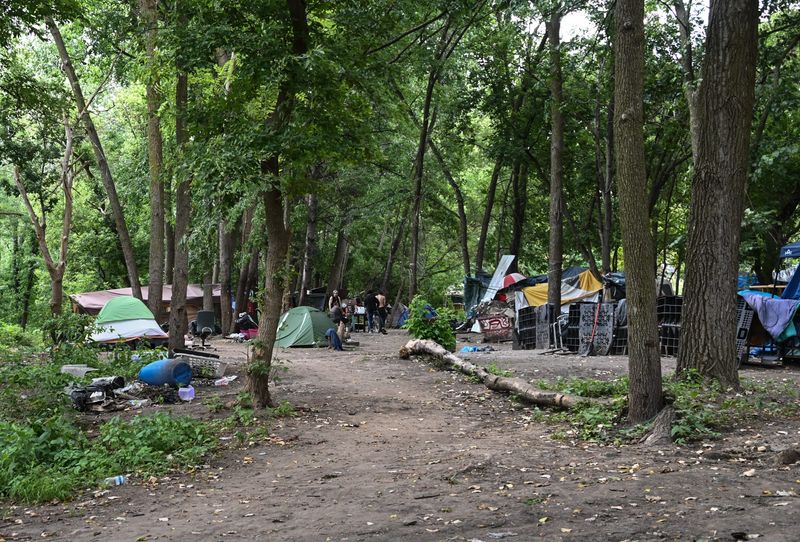
LANSING — A set of 50 modular tiny homes purchased by the city of Lansing could be available to people who are homeless starting next summer, as plans for a city-funded community as an alternative to camps for the homeless begin to take shape.
The plan is a great start, said Kitty Henry and LaSandra Jones, two of about 70 people who came to the Foster Community Center on Aug. 26 to help shape the city’s modular home policy.

Fifty homes are sorely needed, they said, but more would be better.
Kim Coleman, Lansing’s director of Human Relations and Community Services, hosted a meeting to hear about ideas, solicit ideas for where to put the homes and give updates.
Lansing City Council members unanimously approved earlier this month the purchase and temporary storage of 50 modular tiny housing units for $640,000. It will cost about $750,000 a year to run programs at the units.
The homes would likely require a multi-acre site that could accommodate what would legally be classified as a campsite, Coleman said. Getting state and local zoning and licensing approvals will likely take several months, with March as a good target to start construction on the site, she said.
She said pods would be located on one site, likely with fencing, and that spot has yet to be determined, but there have been many suggestions, including the former Life O’Riley mobile home park on South Washington Avenue and some city parks.
There are two parts of the planning for the modular community, Coleman said. One city group will handle the logistics like zoning and licensing while the other will include community input, programming and options available to guests.
The program is likely to serve fewer people than initially projected. Council members were told at previous meetings that guests would stay between three and six months but Coleman’s numbers suggest that’s more of a minimum than an average expectation.
The community could accomodate 64 people at a time since some of the units can house two people, yet she said it is unlikely that the community would serve 120 people a year, as originally estimated, because of the likely length of stays.
The pods were purchased at a steep discount from a Kalamazoo charity that was not able to get a similar program launched.
Coleman told the State Journal that the “wrap-around service” costs would be lower than typical because the city plans to partner with existing groups rather than establish many of those services independently.
Peter Spadafore, an at-large city council member who attended the Tuesday, Aug. 26, meeting, said he heard a lot of enthusiasm and optimism for the program. He said the ongoing funding of the homes would likely include alternatives or supplements to city dollars, such as grants and partnerships with private or charitable organizations.
Daphine Whitfield, a human relations and community services manager for Lansing, pointed to a Nevada program that uses the same 50 ModPod brand tiny modular homes. She said the county-run program is in its fourth year and is paired with a large shelter and a separate facility for women and children.
The number of homeless individuals in the Reno, Nevada, area was around 900 at the start of the program, and it dropped to about 300 in the first year and rose in the next two years to be around 400 people, Whitfield said.
Coleman said the pods would be low-barrier, meaning the community would accept just about anyone, including people who have criminal records, substance abuse problems or behavior issues. She said the community would be for adults only.
“Hopefully, this won’t be placed anywhere where there’s a threat to kids or families,” Coleman said.
Coleman said there are two broad groups that could be part of the pod community: Those seeking rapid rehousing and others needing transitional housing. People needing rapid assistance are typically close to getting a job or a home or making other progress while those needing transitional housing could have additional mental health or substance abuse challenges and will typically require more time.
The modular homes would be available to both groups of people, Coleman said, which makes it difficult to estimate the amount of time it would take for guests to move on.
Coleman said the future homes are expected to include:
Contact Mike Ellis at mellis@lsj.com or 517-267-0415
This article originally appeared on Lansing State Journal: New tiny home community for homeless in Lansing could happen by next summer. What to know
Reporting by Mike Ellis, Lansing State Journal / Lansing State Journal
USA TODAY Network via Reuters Connect