Pope Leo XIV is a car guy and it turns out many popes before him also were car guys.
The Vatican has a long history of owning fancy cars; some were given to the pontiffs — such as Ferrari’s gift of a 2005 Ferrari Enzo in red to Pope John Paul II and later sold at auction for $6 million, with money donated to aid the southeast Asia tsunami victims — or Lamborghini’s gift of a white Huracan RWD sports car donated to Pope Francis to be auctioned with proceeds going to charity.

In other cases, the Vatican purchased many luxury vehicles, including from American automakers. The Vatican’s car collection goes back to the early 1920s.
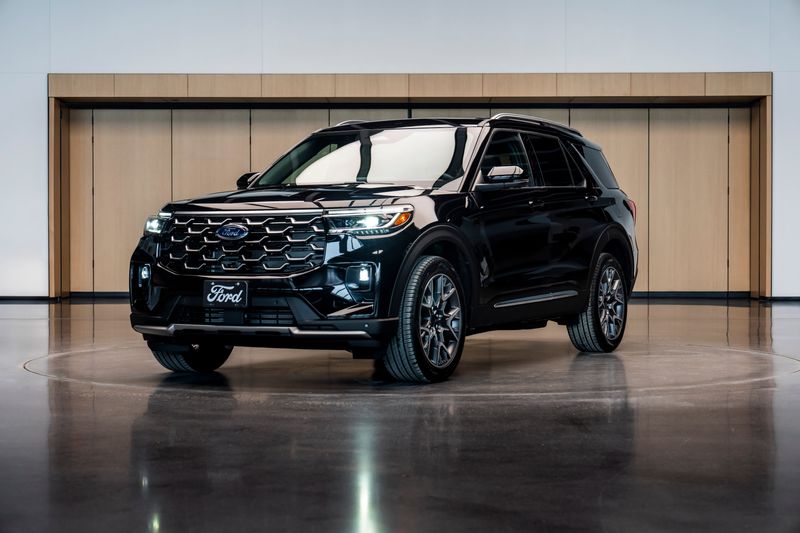
Recently, Pope Leo XIV was in the news when Ford Motor Chicago Assembly plant workers built a special 2026 Ford Explorer Platinum AWD Hybrid SUV for him. Ford CEO Jim Farley and his wife, both devout Catholics, personally paid for the car and went to Rome to deliver the gift to the pope.
Farley told the Detroit Free Press the pope took the Explorer for a spin and that he is a good driver. It turned out that before Leo XIV was elected pope, back when he lived in Chicago and was known as the Rev. Robert Prevost, he drove a Ford Fusion with a six-speed manual transmission. A car guy.
Farley, a car guy himself, flashes a photo from his phone to a Detroit Free Press reporter showing a photo of the pope, Farley and the Explorer together in Vatican City. Farley remains a bit star-struck over the experience with the pope.
“Here’s the pope with the Explorer that I donated in the Vatican, and then here’s me showing him the car,” Farley said with glee. “Oh, my God. Is that crazy or what? Oh, my God.”
A history of Vatican cars
It is a moment of awe from one car guy to another. But for nearly 100 years the various popes have amassed a car collection that even Jay Leno might envy.
According to historian Jed Rapoport, who is project manager of the NB Center for American Automotive Heritage in Allentown, Pennsylvania, since the early 1920s, popes were given cars as gifts and eventually started buying custom vehicles. The NB Center for American Automotive Heritage is a private campus founded by Nicola Bulgari to preserve mid-20th century American cars. It has a collection of 12 vehicles once owned by the Vatican, all stored in Italy.
In the early 20th century, because of a dispute with Italy over the status of Vatican City, the popes did not leave Vatican City.
So in 1922, and again in 1926, two vehicles by Italian automaker Bianchi were donated to Pope Benedict XV, Rapoport said. But the pope never used them because he was confined to Vatican City, which is easily walkable given it comprises less than a quarter of mile.
But in 1929, when the Lateran Treaty was signed and Italy recognized Vatican City as an independent sovereign state, the pope could finally leave Vatican City and put his wheels to use. It was then when the global carmakers began to compete to get their best vehicles to popes. But even then, most popes did not drive themselves until the modern era, Rapopart said.
“In the 1980s, the men becoming pope had lives before they became pope and they knew how to drive,” Rapopart said. “Pope Francis was into living a life of poverty. I read he drove some small econobox car.”
Yes. According to a 2015 article in The Guardian, Pope Francis drove a Ford Focus around Rome.
“When he became pope in 2013, Francis told priests to choose more humble vehicles, according to press reports at the time, and to focus more on the poor. His old blue Ford — which is believed to be a 2008 model — could not be more different from the wheels of his German predecessor, who enjoyed the comfort of a Mercedes Popemobile,” the article stated.
An American limo for the pope
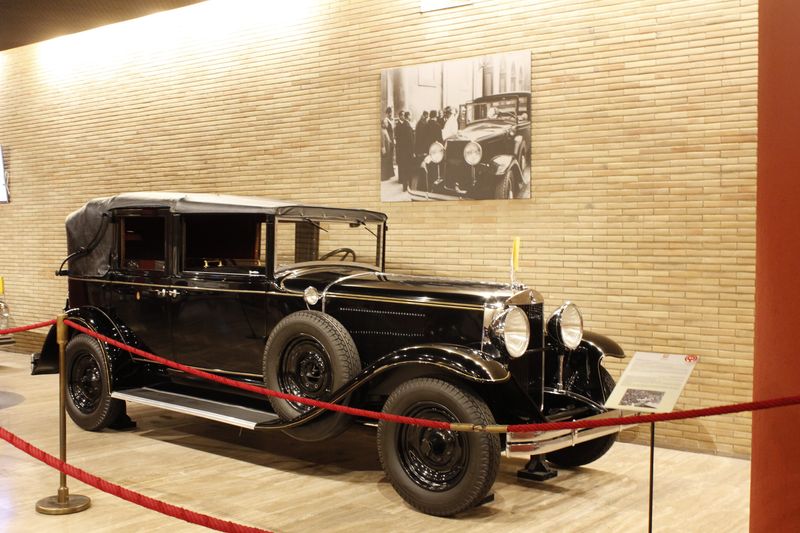
Rapoport said the first car given to the pope for use outside of the Vatican was an American-made car: a 1929 Graham Paige Model 837, which sits in the Vatican car museum called Padiglione delle Carrozze (Carriage Pavilion).
The Graham Paige Model 837 was given to Pope Pius XI in November 1929 by brothers Joseph, Robert and Ray Graham to mark the Lateran Treaty. The brothers, who had risen up through the auto industry to head Dodge’s truck assembly plant, decided to branch out on their own and in 1927 purchased the faltering Paige Motor Company, according to The State Journal-Register. The article states that first Graham car — Graham Paige — was released in 1928. It continued through 1941, although the Paige badge disappeared in 1931.
Rapoport said this gift is parallel to Farley’s gift because Farley said he had intended to keep it private, but news got out about it through a Vatican media release.
“The (Graham brothers) donated it for the use of the pope and they wanted no publicity,” Rapoport said. “But they did it through the Graham representative in Rome and when the car arrived there, the Graham representative publicized it against the wishes of the Graham brothers.”
Reports show that Pius XI used the Graham Paige Model 837 for his first trip to the Basilica of St. John Lateran, which is about 4½ miles east of Vatican City, in December 1929. That car was later used by Pope Pius XII and remained in service until 1946.
“It was a version called the Landolay that was given to Pope Pius XI,” Rapoport said. “He was given other cars, but he only used the Graham.”
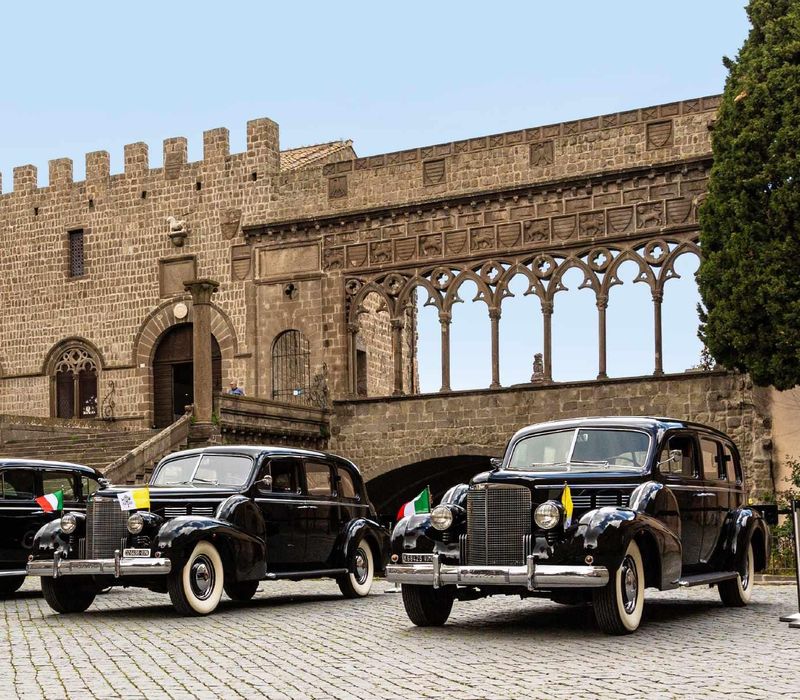
There were other American-made cars used by the Vatican, too, in later years, such as the 1938 Buick 90L Limited Limousine. A pair of these cars was delivered to the Vatican in the spring of 1938 and used as transport for guests and important officials, Rapoport said. After the Vatican sold these cars, they both ended up in a movie production rental fleet. They are now part of the NB Center’s Vatican limousine collection in Rome.
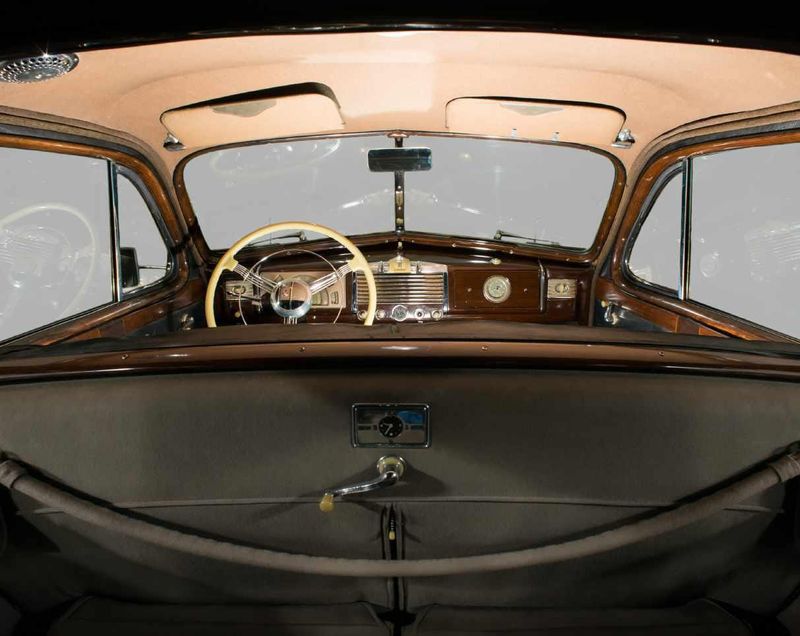
In 1946, the Vatican decided it was time to upgrade, so it ordered a Cadillac from General Motors: the 1947 Cadillac 75 Imperial Touring Limousine, Rapoport said. The Vatican had specific modifications it wanted made to the car so GM sent the car to custom coach builder Derham Body Company of Philadelphia, Rapoport said. For example, it had special accommodations, likely a speaker or microphone, for the pope to talk to the driver and it had a “throne seat” in place of the rear passenger seat with cabinetry on either side of it.
“A throne seat kind of reminded me of a chair from your grandma’s living room,” Rapoport said. “It was a cushy piece of furniture. The car had a metal sunroof installed over the back seat so that they could open it and the Pope could stand up through the sunroof and wave.”
The car served Popes Pius XII and John XXIII as part the Vatican fleet until the mid-1960s when it was sold, Rapoport said. The Vatican purposely removed nearly all the custom features on the vehicle, even welding the sunroof shut, prior to selling it out of concern that keeping it intact could turn the car into a religious icon, Rapoport said. The Cadillac 75 has since reclaimed its spot in the NB Center Vatican Limousine collection museum.
A missing Chrysler limo
In the midst of all this, in 1953 a heavily modified Chrysler was delivered to Pope Pius XII, Rapoport said, noting that the car remains in Italy today, “but the owner is very secretive about it and it’s kind of squirreled away somewhere.”
According to Italian coach builder Carrozzieri Italiani’s website, the car was a 1954 Chrysler Imperial Limousine, designed by legendary Italian design firm Ghia. It was a custom-bodied design that drew from an earlier K-310 experimental model.
“This particular vehicle was part of a limited production effort by Chrysler to create a prestige saloon intended for high-profile clients, with bodywork that reflected advanced styling cues developed during the early 1950s,” Carrozzieri Italiani’s article wrote. “The front treatment adopted a grille configuration influenced by the K-310, characterized by a broad, horizontal layout and integrated headlamp housings, which would later inform Chrysler’s design language in production models. The example prepared for the Vatican was adapted for formal use, with a raised roofline to facilitate ease of access and increased interior headroom.”
The interior used high-grade upholstery and fittings designed to accommodate the needs of papal service. The car retained the standard Chrysler Imperial underpinnings of that time such as a V8 engine and automatic transmission.
The patterns of Popemobiles
Rapoport said until Pope John Paul II became pope in 1978, “it appears they didn’t really keep the cars. If you go to the Vatican Museum now, there is the Graham and nothing until you get the Popemobile they made for John Paul.”
Indeed, the Vatican website lists its fleet of automobiles beyond the Graham as: the Mercedes 300 Sel; the Fiat Campagnola, linked to the assassination attempt against John Paul II in St. Peter’s Square in 1981, and three Popemobiles (Land Rover, Toyota and Mercedes 230 GE), which were designed with bulletproof glass to protect the pope as he waved to people. The website also said the museum has the last Beetle produced by Volkswagen in Mexico in 2003 and the Renault 4 donated to Pope Francis in 2013.
Rapoport said there is a pattern he has noticed about popes, the Vatican and their cars. First, until you get to the 1980s, the official color of all car vehicles at the Vatican was black because it was the most respectable color.
“They weren’t going to do anything loud,” Rapoport said. “It had to be dignified and black was a very common color on cars in that period. But in 1980s, 1990s and 2000s, the official color became white.”
Also, Rapoport said the cars seem to reflect the feelings of the pope.
“When the pope feels the job comes with a level of majesty and status, the cars tend to reflect that,” Rapoport said. “In the 1960s and 1970s, the cars switched from Cadillac to Mercedes, which reflects that … but when popes want to look like regular people, then they become Fords.”
Pope’s license plate number is 1
Rapoport said most people are surprised to learn the Vatican keeps a fleet of cars but, “they are running a small country there and you have to ferry around people.”
The Vatican issues its own license plates and the number on that plate indicates the status of the car in the fleet, Rapoport said.
“The car of the pope gets a 1 followed by ‘SCV.’ That’s always the pope’s car. SCV is Italian for Vatican state,” Rapoport said. “Usually, No. 2 is the Pope’s backup car. We have a 1949 Cadillac that was the pope’s backup car and it carried the No. 2 plate.”
That No. 2 car might also have been used to drive important dignitaries, he said. For example, the NB Center in Rome owns two 1938 Cadillac 75 Imperial touring sedans, one of which carried former British Prime Minister Neville Chamberlain to the Vatican in 1939.
Meanwhile, Rapoport said he suspects the Explorer that Farley gave Pope Leo is in the Vatican garage, which is dubbed the “Noble Garage.” But it’s not just sitting in there. Ford spokesman Mark Truby said the pope drove it to the airport recently as he departed for his trip to Africa.
Another car from Ford and blessings
Farley told the Detroit Free Press in an interview in April that he is having another special Ford vehicle made for a friend of the pope who is a priest.
After handing over the keys to the pope, Farley got what many carmakers would envy: a private meeting with the pontiff, who offered wisdom and blessings.
“He asked me all about the factory workers. He wanted to know what their life was like. Do we treat them right? What do we do with our profits? Do we invest them in the community? He gave me lots of advice about AI as a leader,” Farley said. “I asked him to reflect on those that have died and gone before us, that had given us our faith: Parents, and others, and we said a prayer together in his office, and then he gave us some rosaries that I’m gonna give to the factory workers.”
He added, “Then I stuffed my pockets with a bunch of rosaries for people that I know would appreciate them. I asked him to bless me and bless the rosaries. It was just a beautiful event.”
Jamie L. LaReau is the senior autos writer for USA TODAY Co. who covers Ford Motor Co. for the Detroit Free Press. Contact Jamie at jlareau@freepress.com. Follow her on Twitter @jlareauan. To sign up for our autos newsletter. Become a subscriber.
This article originally appeared on Detroit Free Press: Jim Farley’s gift to Pope Leo is one of many cars popes have collected
Reporting by Jamie L. LaReau, Detroit Free Press / Detroit Free Press
USA TODAY Network via Reuters Connect