State officials are asking Michiganders venturing outside this spring to be on the lookout for an invasive groundcover that could crowd out native plants.
Lesser celandine, sometimes known as fig buttercup, is a short, perennial plant that is spreading in the Midwest, the Michigan Department of Natural Resources said, and is a watch list species in Michigan, meaning it has a limited known distribution in the state.

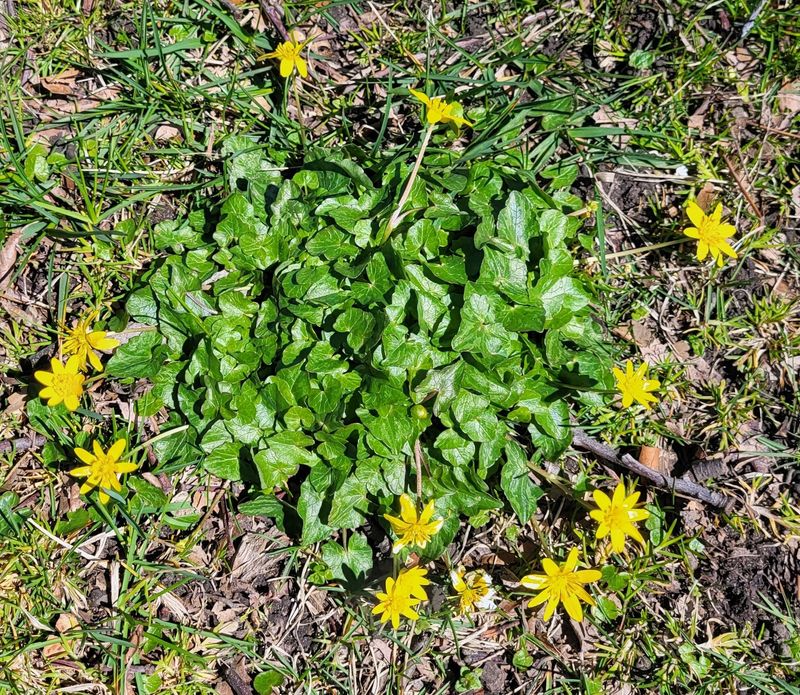
The plants have shiny, dark green, heart-shaped leaves and small, bright yellow flowers.
Officials are asking people to be particularly vigilant now because the plant is known as a “spring ephemeral,” meaning it emerges in March and April, then dies back as trees leaf out.
“There is only a short window of time when lesser celandine has emerged and is identifiable, so it’s critical to be on the lookout for this plant now” Michelle Beloskur, director of the Midwest Invasive Plant Network, said.
The Ohio State University calls the plant “aggressive.”
“The weed’s hide-and-seek life cycle makes detecting and evaluating the extent of spread a time-sensitive endeavor,” OSU said.
“How rapidly a broad expanse of lesser celandine can completely vanish is amazing. Unfortunately, this natural plant collapse may lead some to believe that an herbicide application was highly effective. However, the weed is not gone; it’s just biding its time in the form of recharged tubers that will support ever-expanding colonies next season,” Ohio State added.
Here’s what to know about the threat to Michigan.
Where does lesser celandine grow?
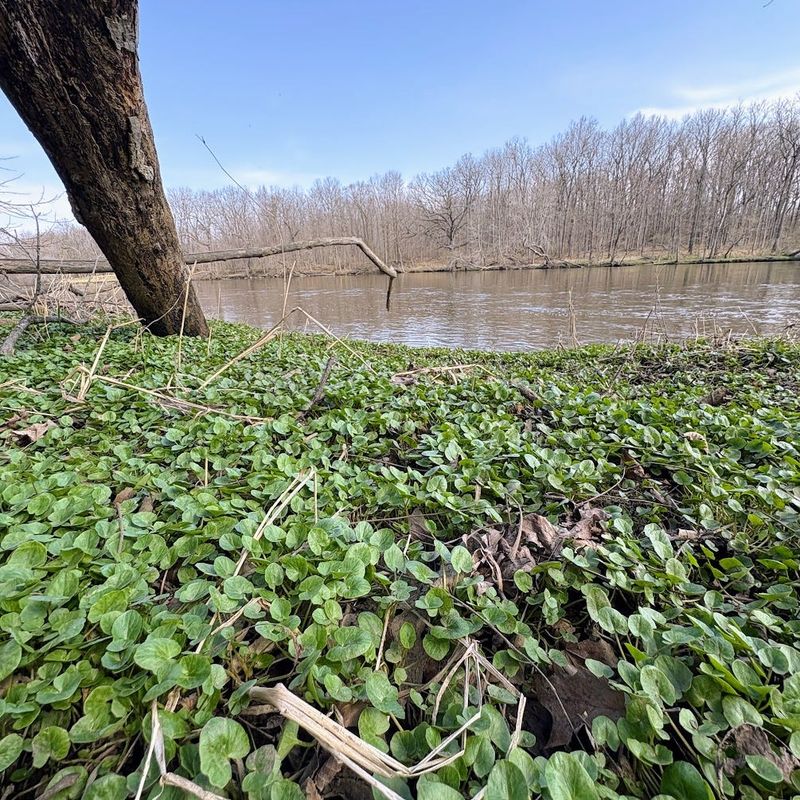
Lesser celandine thrives in moist, lowland environments including forest floors, riverbanks and floodplains. It also is hardy enough to spread into lawns and other upland areas.
“Its early emergence allows it to expand as a groundcover and outcompete native spring wildflowers such as mayapple, spring beauty, Dutchman’s breeches and trout lily,” the DNR said.
What does lesser celandine look like?
Native to central Europe, North Africa and the Caucasus Mountains, the plant covers forest grounds like a carpet. It has shiny, dark-green leaves that are heart-shaped.
Lesser celandine is a short herbaceous perennial, 4 to 12 inches tall and forms small, yellow flowers with 8-12 petals. Leaves fan out close to the ground.
Lesser celandine creates a stockpile of underground tubers produced in the spring that are used to store carbohydrates shipped down from the leaves during their brief spring appearance, OSU says. The cycle reverses the following spring with the tubers supporting new leaf growth. Tubers also serve as a foundation for new infestations if they are moved around in contaminated soil.
In addition to growing via tubers, lesser celandine can produce up to 70 seeds per plant.
Where can you find the invasive plant in Michigan?
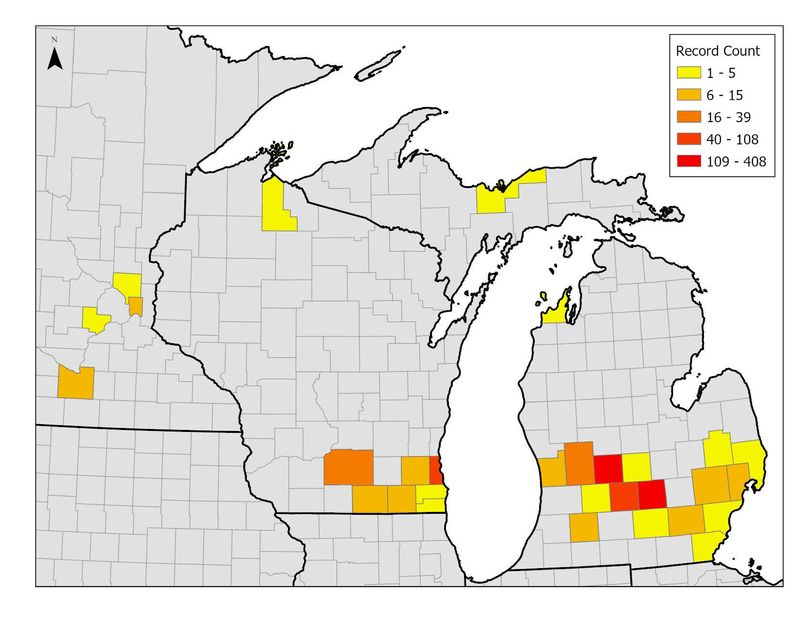
The DNR says is actively spreading in southern Michigan.
“At this point, the information we have indicates that lesser celandine is mostly concentrated in mid-Michigan, but the plant’s short growing season means we can’t be sure,” said Katie Grzesiak, terrestrial invasive species coordinator for the Michigan DNR. “Reports from people who are out in the spring, particularly in the Upper Peninsula, northern Lower Peninsula, and outside of the Grand River corridor are critical to understanding this plant’s range.”
According to a “heat” map of locations, Ingham and Ionia counties in the Lower Peninsula are among the most infested areas. Southeast Michigan also has identified populations.
Confirmed in Clinton County in 1982, and now found in the Grand River watershed in mid-Michigan.
What’s being done in Michigan?
Several initiatives are underway to increase awareness of lesser celandine, monitor for new introductions and develop best practices for controlling its spread, the DNR said.
In Michigan, the Eyes on the Forest Priority Plant Patrol is training community scientist volunteers to monitor and report lesser celandine.
In addition, partner organizations have formed the Michigan Lesser Celandine Coalition. The Coalition is educating the public and recruiting volunteers to assess the spread of lesser celandine, particularly along the Grand River corridor, where the plant is already widely established.
Elsewhere in Michigan, lesser celandine’s populations are largely unknown.
This article originally appeared on Lansing State Journal: Invasive plant is blooming now, DNR asks Michiganders to look for it
Reporting by Dan Basso, Lansing State Journal / Lansing State Journal
USA TODAY Network via Reuters Connect