

Driving into the sunset may sound great for a Hollywood movie scene, but every experienced driver knows that being blinded by the light is a nightmare.
Headed to a meeting in Metro Detroit recently, I realized that I would avoid living in certain communities that required me to drive east in the early light of morning or west toward dusk. Being on the road during these times of day is dangerous. If your windshield isn’t clean, the dirt and smudges scatter lights and make glare worse.

But a new car visor design, made by a company in Zeeland, will actually help drivers battling sun glare. Praise the Lord.
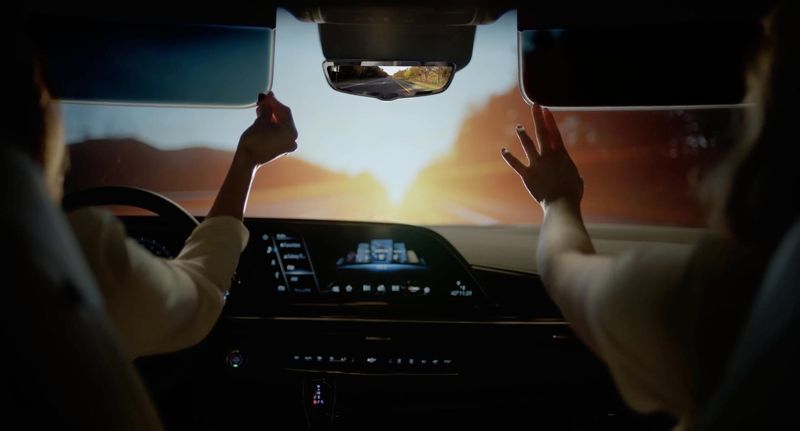
Right now, when you pull down the car visor to block light, it also blocks forward view. After much research, Gentex — a global tech company known for its automatic-dimming rearview mirrors that dominate the auto and aerospace industries — has designed a see-through dimmable visor. It’s scheduled to start shipping to its first global client next year.
This visor allows drivers to keep their eyes on the road while, at the same time, preventing muscles in the iris from shrinking the pupil to protect the retina. Bright light strains the eye. Sun glare may even cause momentary blindness, according to a 2023 study from Beijing University of Technology published by ScienceDirect.
Impaired vision from sunrise or sunset plays a role in a majority of glare-related car accidents in the U.S., according to crash data analyzed by the Insurance Institute for Highway Safety.
“Based on our research of crash reports that cite glare as a factor, we do know that sun glare is a larger issue than headlight glare,” said Joe Young, spokesman for IIHS. “Anything that can help reduce glare so that you can see down the road, especially when the sun is low in the sky, could be beneficial.”
His team looked at 24 million crashes in 11 states. While glare is implicated in a relatively small number of crashes, the issue is most problematic when the sun is low during sunset or sunrise.
These glare-reduction visors will likely be used by customers for headlight glare too.
Gentex — which considers among its top clients Toyota Motor Corp., BMW AG and General Motors Co. — declined to say which global company is first to order the see-through visors.
“Today’s visor, when you flip it down, it blocks the sun but it also blocks your forward vision,” Craig Piersma, Gentex vice president of marketing, told me. “We are introducing a clear panel that darkens on demand. So you can eliminate that glare coming from the sun but yet still see through it to see the roadway, observe traffic, read traffic signs.”
Consumers in the U.S., Canada and worldwide complain about glare. More than 380,000 drivers flooded Transport Canada with feedback last year, urging the government to take action on glare.
While lighting technology has made forward visibility better, it has also increased glare issues and awareness of glare risk.
And as costs of car production increase, automakers are looking to “de-content” vehicles or take features away. Auto-dimming mirrors on the passenger side are one of the first targeted for elimination, Piersma said.
When you look at consumer attitudes, glare reduction remains a top priority.
“The thing that drives people nuts is that they’re feeling gaslit. They don’t feel listened to,” Piersma said. “The driving public believes that glare is of epidemic proportions today. It’s like, ‘Holy cow, the situation is worse than ever.’”
New headlight technology does make visibility better but drivers consistently say they’re unhappy. AAA released a study in March saying that six of every 10 drivers struggles with headlight glare. People who wear prescription glasses have the worst issue and even 41% of pickup truck drivers, who sit above some of the glare from oncoming headlights, say the issue is top of mind.
In 2022, General Motors recalled 740,581 GMC Terrain SUVs (2010-17 model years) because the headlights were too bright. Federal safety officials turned down a request from the automaker to avoid the recall, citing the crash risk.
In 2026, Ford Motor Co. recalled 35,772 Explorer SUVs (2025-26 model years) because of a faulty pivot beam headlight that blinded oncoming drivers on curves.
In 2025, the United Kingdom released results of a major study that showed 33% of drivers said they stopped driving at night or drove less because of headlight glare — and another 22% said they would drive less if they could.
A group on Reddit called f—yourheadlights has 61,574 members. They post the latest research, regulations and anger management strategies.
As of this week, change.org had collected more than 80,000 signatures supporting a ban on bright vehicle lights.
Gentex cites these key issues: Modern LED headlamp technology is 300% bright than halogen, 200% brighter over the last decade with a bluish hue; vehicle size means higher-mounted headlights on trucks and SUVs; misaligned headlights and removal of auto-dimming mirrors increase glare.
For nearly two decades, drivers have filed complaints about glare with the National Highway Traffic Safety Administration.
Gentex is studying night glare and looking to specifically create a nighttime mode for the visor to “help attenuate oncoming headlight glare,” Piersman said. “It’s pretty exciting.”
Eventually, this new dimmable visor will make it into all vehicles, he predicted.
“We have our first customer but we’re working with many others,” Piersma said. “This is a topic of concern among drivers in virtually every market around the world. It’s not something unique to the U.S.”
Phoebe Wall Howard’s car culture column runs every other week in The Detroit News. She also writes a weekly “Shifting Gears” column on Substack at phoebewallhoward.substack.com. Contact her at phoebe@phoebehoward.com.
This article originally appeared on The Detroit News: Howard: Blinded by the light? See-through visor cuts glare for drivers
Reporting by Phoebe Wall Howard, Special to The Detroit News / The Detroit News
USA TODAY Network via Reuters Connect
By Phoebe Wall Howard, Special to The Detroit News | USA TODAY Network
