While national politics traditionally earn the most attention, state and local politics are often more impactful to our readers. For that reason, The Daily is piloting a monthly article outlining bills sponsored by your local representatives in Lansing, as well as bills that could impact families in Livingston County.
Here are the most recent bills primarily sponsored by your local officials:

State Rep. Jason Woolford
State Rep. Jason Woolford represents the 50th District, which covers most of Livingston County. So far in 2026, Woolford has primarily sponsored two bills:
Woolford has co-sponsored 16 bills in 2026, including the recently introduced HB5456, which would establish a hyperbaric oxygen therapy grant and pilot program for veterans with traumatic brain injuries or PTSD. The bill was introduced Jan. 15 and referred to the Committee on Families and Veterans.
Woolford also co-sponsored HB5574, which would make it a misdemeanor to approach a first responder “engaged in the lawful performance of a legal duty” with the intent of impeding or interfering, threatening the responder with physical harm or harassment after receiving a verbal warning. The charge would become a felony if the responder is injured or killed, punishable by up to 15 years in prison. The bill was introduced Feb. 24 and referred to the Committee on Judiciary.
See his full list of primarily sponsored legislation at tinyurl.com/2h75vmdc and co-sponsored legislation at tinyurl.com/6p8u2hxk.
State Rep. Ann Bollin
State Rep. Ann Bollin represents the 49th District, which covers parts of Livingston County and Oakland County, including Brighton, Brighton Township and Green Oak Township. So far in 2026, Bollin has primarily sponsored and co-sponsored numerous bills, most of which designated fiscal appropriations for 2026-27.
Bollin also sponsored House Resolution No. 249, which allows representatives to remove their name as co-sponsor of a bill by submitting a written request to the clerk. The measure was adopted at the end of February.
See her full list of primarily sponsored legislation at tinyurl.com/yjatt798 and co-sponsored legislation at tinyurl.com/bdzys5wx.
State Rep. Jennifer Conlin
State Rep. Jennifer Conlin represents the 48th District, which includes Ann Arbor and parts of Livingston County (Putnam Township, Genoa Township and Hamburg Township). Conlin hasn’t primarily sponsored any legislation so far in 2026.
Conlin has co-sponsored 15 bills in 2026, including a resolution urging the Trump-Vance Administration to cease threats toward Denmark relating to Greenland; a bill that would allow 17-year-olds to apply for a medical first responder license; and bills that impact students and social media and hyperbaric chamber regulations.
See her full list of primarily sponsored legislation at tinyurl.com/yc55656j and co-sponsored legislation at tinyurl.com/468wdnjw.
State Senator Lana Theis
State Senator Lana Theis represents the 22nd District, which includes all of Livingston County and parts of Genesee County, Ingham County, Oakland County and Shiawassee County.
In 2026, Theis introduced Senate Bill 798, which would would amend the Revised School Code to align vaccine requirements with recommendations from Department of Health and Human Services. The bill was introduced Feb. 24 and referred to the Committee on Government Operations.
Theis has co-sponsored five bills so far in 2026, including a bill protecting racetracks from nuisance actions if the complainant purchased or built on their nearby property after the racetrack was established.
See her full list of primarily sponsored legislation at tinyurl.com/2bud84th and co-sponsored legislation at tinyurl.com/mr49z25n.
What other bills could affect Livingston County?
Prohibiting the requirement of students to have social media platforms
HB5589 would amend the revised school code by prohibiting school personnel from requiring students to use a social media platform for school-related activities. The bill was introduced Feb. 26 and referred to the Committee on Education and Workforce. It was primarily sponsored by Rep. Carol Glanville and introduced with 18 others, including Conlin.
Heftier regulations for the licensing and permitting of hyperbaric chambers
HB5590 would add nine sections to the public health code that regulate licensing and permitting for hyperbaric oxygen chambers. The bill would tighten requirements to qualify for a permit, mandate that certifications be prominently displayed, and require facilities be operated by someone who’s completed a 40-hour training course and received approval from one of several medical boards — among other rules.
The bill was introduced Feb. 26 by Rep. Sharon MacDonell and referred to the Committee on Regulatory Reform. One of the bill’s co-sponsors is Conlin.
HB5590 is part of a package that includes HB5591, HB5592 and HB5593, which would see funds gathered from hyperbaric chamber licensing fees deposited in a special inspection fund.
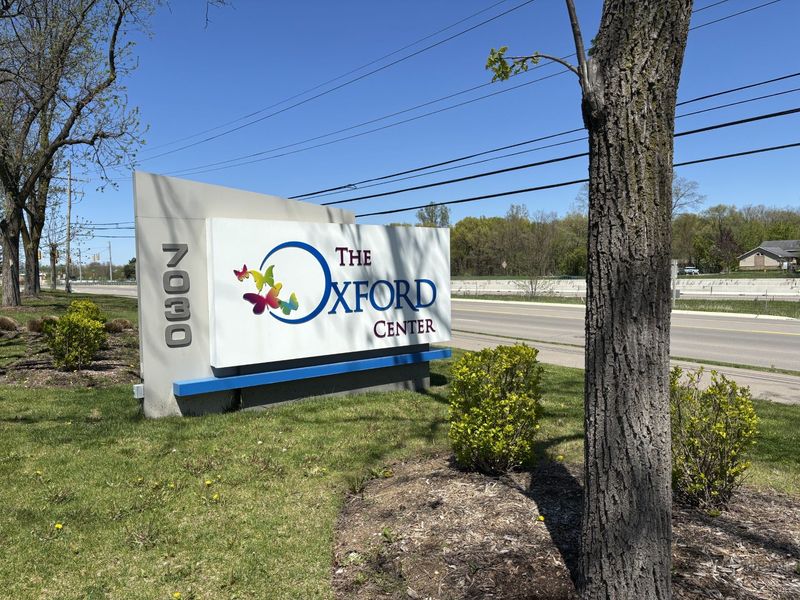
The proposal comes just over a year after 5-year-old Thomas Cooper died in a hyperbaric chamber that caught fire at the Oxford Center in Troy, which also had a location in Brighton. Four staffers, including the organization’s CEO, have been charged in his death.
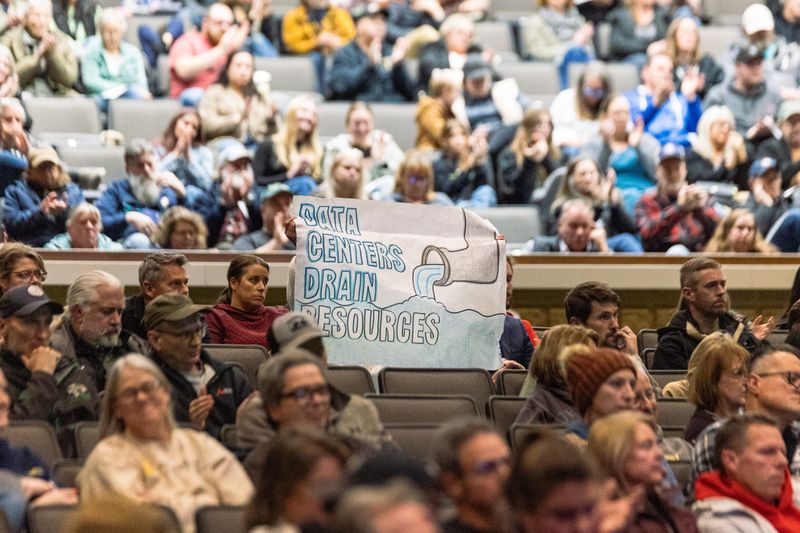
A statewide data center moratorium
HB5594 would prohibit authorizations or operation launches for data centers for “a designated time,” giving state and local governments an opportunity to “prescribe civil sanctions and provide remedies.”
The moratorium would end April 1, 2027.
The bill was introduced by Rep. Jennifer Wortz on Feb. 26 and referred to the Committee on Government Operations.
HB5594 is part of a package that aims to prevent the Michigan Public Service Commission from approving a contract, tariff, discount or rate between an electric utility and a qualified data center until April 1, 2027 (HB5595) and amend the Michigan Zoning Enabling Act to be subject to the Data Center Regulation Act (HB5596).
Several municipalities in Livingston County, including Howell Township, have passed data center moratoriums in light of increasing proposals across the state.
A boost in tariff transparency
HB5637 would amend the Michigan Consumer Protection Act by adding a section requiring anyone selling goods or services to publicly disclose price adjustments caused by tariffs, in-country or otherwise.
The bill was introduced by Rep. Noah Arbit on Feb. 26 and referred to the Committee on Government Operations.
Arbit also introduced HB5638, which would require the Michigan Department of Technology, Management and Budget to prepare a statewide tariff response plan for executive branch departments and agencies.
HB5639 would require the state treasury to develop an online tariff calculator, where residents can input their ZIP code, household income, spending habits and other metrics to estimate the total cost and impact of tariffs on their finances.
HB5640 would require the state treasury to publish a monthly report on tariffs imposed on the state and their economic impact.
HB5641 would create the Michigan International Trade Commission within the Department of Labor and Economic Opportunity. The commission would provide analysis and information on international trade and competitiveness relating to state industries, inform the public on the competitiveness of state businesses in international markets, provide the legislature with a quarterly analysis on the trade impact of tariffs on state industries, and make recommendations as to how the state can improve global economic competitiveness.
How does a bill become a law in Michigan?
The process of adopting law in Michigan is long, beginning with the introduction of a bill in the State House of Representatives or Senate, referral to a standing committee, leaving committee, going to the floor for debate, then being passed or defeated. The bill must then pass through the remaining chamber for approval before heading to the governor’s desk for their signature.
At various points during this process, a bill can languish and die. A standing committee may hold public hearings, discussion and debate, followed by reporting the bill (referring it back to the full chamber) with or without amendments, voting not to report the bill, or taking no action at all.
Lawmakers can “discharge” the committee from consideration of the bill, but a majority of the full chamber must vote in favor. If they do, the bill is referred for floor action. In total, a bill must be read three times before passing. The first reading takes place just after introduction. The second comes after the bill returns to the full chamber.
At this point, any elected member may offer amendments to the bill. In the State Senate, a simple majority of present members can recommend adoption of amendments and advance the bill to a third reading. In the State House of Representatives, amendments must be adopted by a majority of those serving. A majority of those voting can advance the bill to a third reading.
During the third reading, amendments must be approved by a majority vote of those serving. At the conclusion of the reading, the bill is passed or defeated by a roll call vote, or another option is exercised: (1) the bill is returned to committee (2) consideration of the bill is indefinitely postponed (3) consideration is postponed to a specified date or (4) the bill is tabled.
If a bill is passed in a different form by the second chamber, it must return to the “house of origin” for reacceptance.
A bill cannot take effect until 90 days have passed since enactment, unless immediate effect is approved by a two-thirds vote of the members serving in each chamber. The governor has fourteen days to consider each bill that reaches their desk, at which point they can sign, veto, or decline to do either.
If the governor fails to sign or veto, the bill may become law after fourteen days, depending on whether the current legislative session has ended. After a bill is vetoed, the legislature can override by a two-thirds vote of the members serving in each chamber.
Learn more at legislature.mi.gov/publications/howbillbecomeslaw.pdf.
The Livingston Daily is providing this coverage for free as a public service. Please take a moment to support local journalism by subscribing.
— Contact reporter Tess Ware at tware@livingstondaily.com.
This article originally appeared on Livingston Daily: What recent statehouse bills mean for families in Livingston County
Reporting by Tess Ware, Livingston Daily / Livingston Daily
USA TODAY Network via Reuters Connect