A new study analyzing vehicle recalls shows that in the past 12 months, Ford Motor Co. recalled 19.6 million vehicles, more vehicles than the rest of the auto industry combined, and showed that many vehicles made by Ford and its luxury brand, Lincoln, have a high number of recalls during their lifespan.
It’s no secret that Ford has had a lot of recalls in recent years, even setting a record in 2025 with 152 recalls, according to the National Highway Safety Traffic Administration.

Now, a study by iSeeCars.com, published on April 8, shows that Ford had both the highest number of recalled vehicles and its vehicles made up nearly half of the top 25 models with the most projected lifetime recalls based on data analyzed from April 1, 2025, through March 31, 2026.
On the flip side, Mercedes-Benz models dominated the list of vehicles that had the fewest recalls. Electric-vehicle maker Tesla had the biggest improvement in recalls. It dropped to 83,265 vehicles recalled between April 2025 to March 2026 compared with 3.4 million recalled in same period a year earlier.
That change is likely due to Tesla being able to do more over-the-air fixes and not having to physically recall a vehicle to a repair facility, Karl Brauer, executive analyst at iSeeCars, told the Detroit Free Press.
Ford tops the list
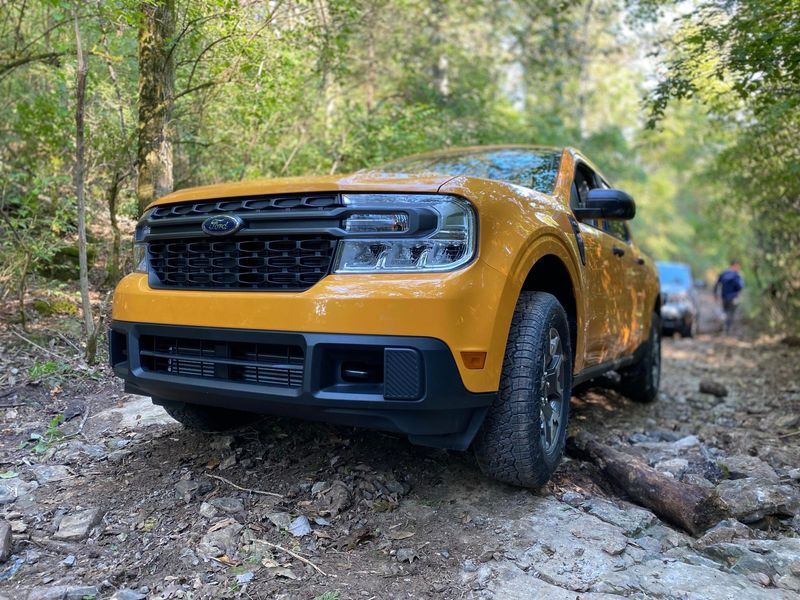
Ford is the main story in the study. The study showed the Lincoln Aviator, Lincoln Corsair, Ford Maverick and Ford Bronco make up four of the top five models with the most projected recalls.
“It doesn’t reflect well on a premium brand to be in that group,” Brauer said. “It further proves that, under the skin, which is where recalls happen, there are as many Lincolns as Ford branded vehicles being recalled. You have genuine quality problems, whether it’s in the engine or the quality of manufacturing or software.”
Ford leaders say many of those recalls reflect older Ford models and the automaker’s quality ratings on its more recently launched vehicles has been improving. Also, during that April 2025 to March 2026 period, 15 recalls were responsible for approximately 75% of the vehicle volume, or about 15 million vehicles. For example, the February software recall for Ford’s Integrated Trailer Control Module impacted nearly 4 million vehicles. In that recall, the vehicle’s integrated trailer module could lose communication with the car, causing “a loss of brake and turn signal lights, or a loss of brake function.”
As the Detroit Free Press reported last summer, Ford has implemented several new quality control processes to address a high number of recalls. These changes include stricter vehicle launch procedures, hiring manufacturing and engineering specialists, and benchmarking Toyota’s manufacturing practices to implement the “lean manufacturing” process across Ford’s plants to catch defects early and fix them before a vehicle leaves the factory.
Josh Halliburton, Ford’s executive director of quality told the Detroit Free Press on April 20 that 90% of the recalls it had in the past 12 months involve vehicle model years 2015 to 2022, vehicles that were engineered between 2013 to 2020. He said the automaker continues to put in a lot of work to identify any past errors so as to fix them quickly for customers and added: “The quality of what we’re producing today — what is leaving our factories today — is improving.”
“We are making meaningful and measurable progress improving vehicle quality that has become clear over the last 12 months,” Halliburton said. “Earning four spots on the J.D. Power Initial Quality Study, combined with two of Consumer Reports’ Top 10 Picks in New Cars and our best reliability finish in 15 years this past fall, shows we are moving in the right direction.”
Halliburton said the initial quality improvement is helping Ford trim costs, noting that warranty costs dropped by $500 million in 2025 compared with the year prior.
“For us one recall is one recall too many and our goal is zero,” Halliburton said. “If you look at this year, January to now, it’s about 9.75 million vehicles recalled to date and 80% of that we can fix with software. So we’re using over-the-air or mobile repair … to make it as pain-free as possible.”
The best and the worst
Brauer told the Detroit Free Press the team did this study to help car shoppers because recalls are a time-consuming inconvenience and could pose a safety risk.
“We just think it’s helpful to consumers to get a view of what’s out there and these are the cars and brands that do the best in terms of recalls, and these are the ones who do the worst,” Brauer said.
For the study, iSeeCars analyzed vehicle safety recall campaigns as of April 2, 2026, from NHTSA for model years 2017-2025. The number of recalls for each model was aggregated and projected for an expected 30-year lifespan, taking into account the overall behavior of the automaker and when each recall campaign was issued in the car’s lifetime. The team took the resulting estimates and used them to rank models with the fewest and most expected safety recalls. It did not include heavy-duty vehicles, low-volume models, and models discontinued prior to the 2020 model year.
Top 25 models with the most predicted safety recalls
Top 10 models with the fewest predicted recalls
(The list of all 25 can be seen on Iseecars.com’s website):
What’s driving recalls
For the full year 2025, Ford issued 152 recalls affecting 12.96 million vehicles, Brauer said. But, in the last 12 months between April 2025 to March 2026, Ford recalled 19.6 million vehicles, more than all of the 22 other automakers on the list combined.
Toyota was in second place for the most recalls with 4.1 million vehicles. Stellantis, which makes Chrysler, Dodge, Jeep, RAM and Fiat brands, was in third place with 3.4 million vehicles and General Motors was in seventh place with 1.2 million vehicles, the iSeeCars.com study showed.
Brauer noted that some of Ford’s recalls are happening in conjunction with a consent order, or settlement, that NHTSA and Ford agreed to in November 2024. It required Ford to look back at all of its vehicle recalls over the last three years to make sure Ford covered the right number of affected vehicles, and if not, expand the scope of recalls to include more vehicles.
Some safety experts have said that the consent order’s requirement is partly driving Ford’s high recall number. NHTSA data showed that Ford has led in the most vehicle recalls each year going back to 2020.
Brauer said regulators have been applying pressure and closer scrutiny across the board on all automakers, which is why some are more proactive in recalling vehicles than others.
“My sense is that every car company is going to have actual recalls and some wobblers, things that could go either way,” Brauer said. “There are also technical service bulletins, which is not a recall per se, and manufacturers would rather have a technical service bulletin. It goes to the dealer and says, ‘If a customer complains about this or a car comes in and you want to check this, you should.’ “
Ford’s recall costs
For automakers, recalls are expensive. According to publication Warranty Week, Ford’s warranty accrual rate hit a record high of 4.5% in the first quarter last year, but came down to 4.1% by the second quarter. The accrual percentage rate represents the portion of revenue from each sale that a company sets aside for expected warranty claims. A higher accrual rate often reflects quality challenges. For comparison, General Motors’ warranty accrual rate in early 2025 was 2.3% to 3.2%.
Ford paid $1.5 billion in warranty claims in the first quarter of 2025, and $1.3 billion in the second quarter of 2025, Warranty Week data showed. GM paid $1.2 billion in warranty claims in the first quarter of 2025 and Tesla paid $392 million.
In the fourth quarter 2024, Ford spent $500 million less in warranty costs than in the third quarter, Ford’s CFO Sherry House said at the time. For all of 2025, Ford was able to take another $500 million out of its warranty costs.
Still, Brauer said, the high number of recalls beg the questions: “What’s the nature of these recalls? Are they supplier parts? Are they due to manufacturing, where certain bolts weren’t tightened correctly?”
He noted that most suppliers don’t have a single customer. As a hypothetical example, Lear doesn’t just make seats for only Ford, so why doesn’t another automaker have seat problems, too?
“Even if the problem is a part that was assembled and built by a supplier, it could be related to the original automaker’s engineering,” Brauer said.
What to consider as a consumer
Brauer said just because a vehicle might have a history of recalls does not mean a person shouldn’t buy it if it is what they want and it has other benefits.
“If I’m a consumer my attitude would be: I’d consider how much I want the car. If I’m a huge Bronco fan and it’s in the top 10 of most recalls, but there’s nothing else like a Bronco and I want it, buy it,” Brauer said. “But now you have to do regular recall checks on the NHTSA website (www.nhtsa.gov) because it’s much better if the owner can be proactive. So, if you embrace that as part of your ownership duties … there you go.”
But he said if a consumer is giving equal consideration to two different vehicles, he would steer towards one that is not on the recall list. Another solution is to consider the brands and models that are most likely to get a fix through a convenient over-the-air update in your own garage.
“Recalls resolved through over-the-air (OTA) updates are still critical safety issues to address, but the process can be nearly invisible to vehicle owners,” Brauer said. “For buyers interested in electric and/or high-tech models, OTA technology can substantially improve the ownership experience.”
Jamie L. LaReau is the senior autos writer for USA TODAY Co. She covers Ford Motor Co. for the Detroit Free Press. Contact Jamie at jlareau@freepress.com. Follow her on Twitter @jlareauan. To sign up for our autos newsletter. Become a subscriber
This article originally appeared on Detroit Free Press: Ford faces recall problem unmatched by other automakers, study shows
Reporting by Jamie L. LaReau, Detroit Free Press / Detroit Free Press
USA TODAY Network via Reuters Connect