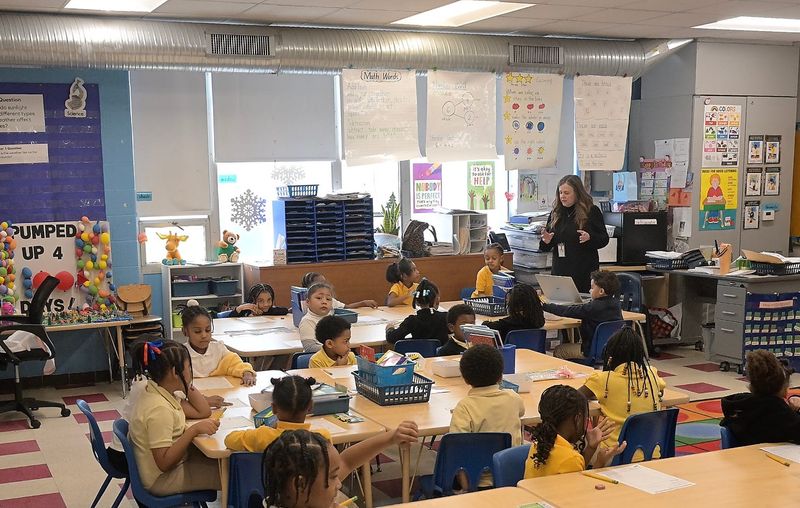
In 2025, Congress enacted the One Big Beautiful Bill Act, establishing a permanent Education Freedom tax incentive. This federal law allows individuals to receive up to $1,700 in tax deductions for donations to qualified, nonprofit scholarship-granting organizations (SGOs). These private nonprofits, in turn, provide scholarships directly to families — empowering parents with meaningful educational choices for their children.
Now Michigan faces a pivotal decision: Will it allow families to benefit from these opportunities, or will state officials stand in the way?

The Michigan State Board of Education is currently considering a resolution opposing the availability of these scholarships to Michigan students. Its argument rests on two claims: first, that public education requires “sustained investment,” and second, that Article VIII, Section 2 of the Michigan Constitution prohibits public funding of private education.
Both claims miss the mark.
This program does not involve public funding. It does not appropriate taxpayer dollars. It does not redirect state resources. Instead, it relies entirely on private donations to private nonprofit organizations, which then provide private scholarships to families. The constitutional prohibition cited by the board simply does not apply.
The distinction is not subtle — it is fundamental.
Michigan’s Constitution restricts government action, not private generosity. Just as individuals may receive tax benefits for donating to churches, charities or community foundations, so too may they support educational scholarships. The federal government’s decision to incentivize charitable giving does not convert private funds into public money.
To suggest otherwise is not merely mistaken — it is a misreading of both law and logic.
More importantly, the Board’s position ignores the real-world impact on families.
These scholarships are not abstract policy tools; they are practical resources that meet real needs. A public school student struggling with dyslexia could receive specialized tutoring. A dual-enrolled student could access technology necessary for advanced coursework. A family could offset the cost of private school tuition. A child could have access to transportation to a charter school better suited to their academic interests.
In each case, the common thread is simple: parents, not bureaucracies, are empowered to make decisions tailored to their child’s needs. That is what educational freedom looks like.
At its core, this debate is not about funding formulas or institutional preferences. It is about first principles. Who decides what is best for a child, the family or the state?
Michigan’s public education system, by many measures, continues to struggle. Persisting in the same policies while denying families additional options does not serve students, it protects a system at their expense.
Educational opportunity should not be limited by geography. Michigan families deserve the same access to resources and flexibility that families in other states enjoy.
And beyond policy, there is a deeper truth: Parents possess a natural, fundamental right to direct the education of their children. Government exists to protect that right, not to constrain it.
The State Board of Education’s proposed resolution does the opposite. It elevates government control over parental authority and restricts opportunity where it should be expanded.
Michigan can do better.
This is not a choice between supporting public schools and empowering families. It is a choice between monopoly and opportunity, between centralized control and parental freedom.
It is time to reject false constitutional claims, set aside institutional defensiveness, and put Michigan families first.
Katherine Bussard serves as the COO and executive director of Salt & Light Global and as a trustee on her local public school board of education. Prior to these roles, she worked in private K-12 instruction and administration.
This article originally appeared on The Detroit News: Michigan State Board of Education shouldn’t block school choice | Opinion
Reporting by Katherine Bussard / The Detroit News
USA TODAY Network via Reuters Connect