

Warren — Privacy concerns are prompting a growing number of Metro Detroit communities to part ways with a leading technology company that provides license plate readers to help solve crimes, even as proponents said the cameras have been a “game-changer” in law enforcement.
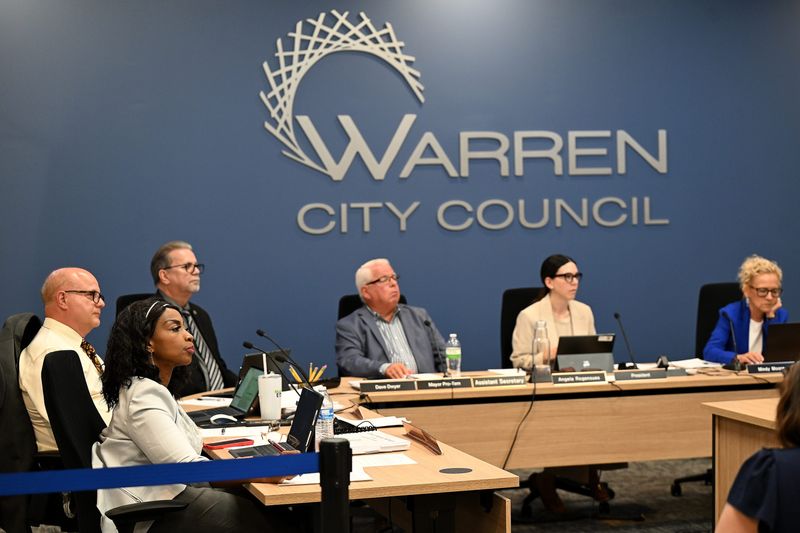
At least four Detroit area communities have canceled their contracts with Flock Safety, an Atlanta-based technology company most known for its network of automatic license plate readers, or ALPRs, since November last year, often after contentious public debate. Warren City Council reconsidered its $132,000 Flock contract this week before it narrowly voted 4-3 to renew it.

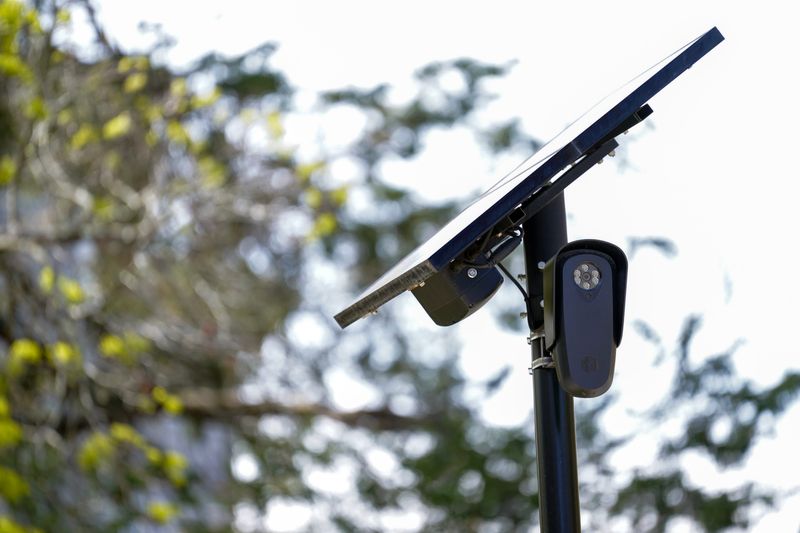
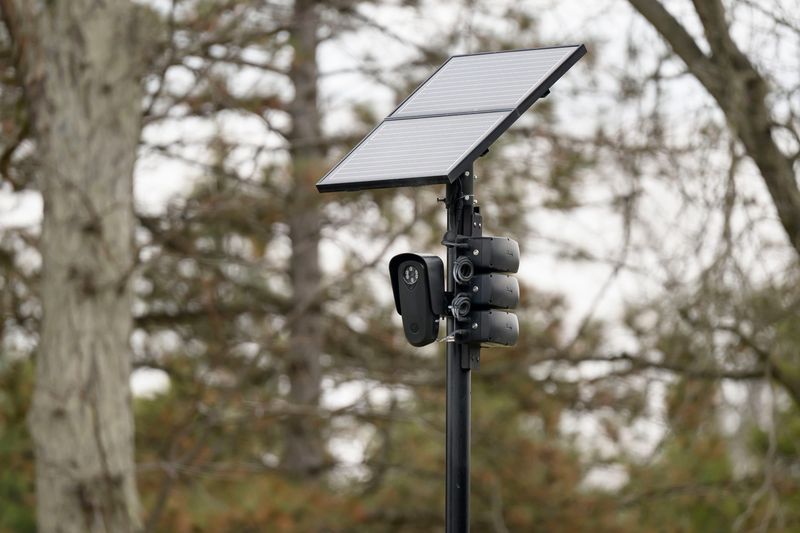
For Laura Slowinski, one of three Clawson council members who voted in May not to renew the city’s contract with Flock, she said she understands the cameras “do a lot of good work.” The mounted cameras are often placed at key intersections in the communities where they’re used.
But “the concern was, at the end of the day, we’re not going to be able to control what Flock does with its data,” said Slowinski, who wasn’t fully convinced residents’ privacy would be respected.
Some public officials have specifically pointed out changes in Flock’s terms and conditions, differences between how the product functions and how company representatives portray it, and other law enforcement agencies’ access.
“Communities are now becoming more aware of how these technologies are being deployed in their neighborhood, and they’re realizing they don’t want them surveilling them 100% of the time,” said Gabrielle Dresner, a policy strategist with the American Civil Liberties Union’s Michigan chapter. Dresner is working with state lawmakers on an effort to regulate license plate readers in Michigan.
But company representatives and proponents of the technology countered that there are guardrails to ensure the data the cameras obtain is used responsibly.
Flock spokesperson Paris Lewbel said the company does not hold on to the data its cameras obtain, which he said most law enforcement agencies delete after 30 days. Lewbel also said police departments that use the software may opt out of letting other agencies access their data.
Proponents said they also make a positive difference in solving crimes, everything from missing persons cases to burglaries.
Ron Wiles, executive director of the Michigan Chiefs of Police, a group of police chiefs designed to improve police administration and practices across the state, said he doesn’t have a position on Flock, but said license plate readers are “a valuable investigative tool.”
“It’s proven itself time and time again across the state and across the country,” Wiles said.
Is the video data a ‘great value’ or ‘unchecked power’?
More than 180 law enforcement agencies throughout Michigan use Flock license plate readers — nearly one in every three agencies in the state, according to Lewbel.
Flock said its technology assisted in 20% of closed criminal cases in jurisdictions that contract with the company in 2025. The company also said it’s helped locate more than 10,000 missing people in that time.
“When a tool that’s actively used to solve violent crimes is removed, public safety has real consequences,” Flock’s Lewbel said. “Cases will take longer to solve, organized retail theft will operate with fewer obstacles, and an amber alert may not be returned home. Overall, victims may wait longer for justice.”
The tension between privacy concerns and potential safety benefits was evident Tuesday night in Warren, where city council members narrowly voted to renew the $132,000 police department’s contract with the company. Most public commenters opposed the ultimate decision regarding the contract.
“Our founders warned against giving governments this kind of unchecked power,” said Warren resident Brad Gibbons, 30. “The mass tracking of everyone’s movements crosses that line 10 times over.”
Asked what he thought of the pushback, Warren Police Commissioner Eric Hawkins said he’s “very respectful of their concerns.” He acknowledged that some of the commenters made compelling arguments against the technology.
“But I still maintain that this technology is something that has great value to law enforcement,” Hawkins said. “We’re committed to using this technology in a legal and reasonable way.”
A handful of Warren residents supported the council’s decision to renew the Flock contract. Resident Garry Watts, 70, said the Flock cameras are “one of the best tools the police department has received lately.”
Flock out of Ferndale
Ferndale, a liberal enclave in Oakland County’s south end on Detroit’s border, was one of the first cities in the region to distance itself from Flock. Ferndale Police Chief Dennis Emmi canceled the city’s Flock contract without a vote from council in November.
Emmi’s decision came after a push from Councilwoman Laura Mikulski, who said the first issue she noticed was that the city’s contract with Flock said the company could use other companies for services like web interface or cloud storage. Mikulski said the salespeople told council that “nobody could access the data except us if we made sure we had a locked-down profile.”
The councilwoman also said there were discrepancies in what the council was told about data sharing.
“Ferndale found out that our data was being shared nationally despite our ALPR policy explicitly stating that we would only share with cities that had an ALPR policy with the same core tenets as ours and had a (memorandum of understanding) on file with us,” Mikulski said in a statement to The Detroit News.
The council member also was concerned when she received an audit log detailing who had searched Ferndale’s Flock network from September 2024-September 2025. Dallas and Houston police were the top searchers of Ferndale’s ALPR system, followed by Michigan State Police.
Houston police routinely accessed Ferndale’s Flock data more than 10,000 times per month; Ferndale accessed it more than 1,000 times in a month only once in the audited time period.
Mikulski said Ferndale’s license plate reader policy required outside agencies to state a specific reason for accessing the city’s data. While “investigation” and “inv” were the top reasons agencies listed for searching the city’s data, the reasons included “asdfasdf,” “Because,” “police,” “Why,” “ice” and “NONE,” according to data from the audit log provided to The Detroit News.
“It just proved out the point that anybody could access the data if they were part of the Flock ecosystem,” Mikulski said. “They could access it for any reason.”
Mikulski also said federal agencies were able to search Ferndale’s network through June 2025. The audit log showed Customs and Border Protection, Homeland Security and two regional Alcohol, Tobacco, Firearms and Explosives offices accessed the network during that time period.
Asked about the federal access, Flock’s Lewbel said the company conducted a pilot program with Homeland Security and CBP in 2025 specifically focused on human trafficking and fentanyl trafficking. The program has since been stopped, he said.
Lewbel also said local police are in charge of who sees their data.
“Those decisions on sharing are 100% made by the agencies, and then those decisions can be revoked at any time” by the agencies, he said.
Ferndale police briefly looked at Axon as a license plate reader vendor before abandoning their search. The decision to not explore alternatives came after lots of public pushback, Mikulski said.
Currently, Ferndale police aren’t looking for a Flock replacement, Mikulski said. Chief Emmi did not respond to a request for comment.
“We’re happily content to trust our police to do good work that they do and solve crimes like they always have,” Mikulski said.
Concerns arise after Flock’s terms and conditions change
Since Ferndale, three more cities have voted to cancel their Flock contracts since the beginning of May: Clawson, Milford and Westland.
In Clawson, Slowinski voted against the renewal, but acknowledged it was difficult for her to weigh both sides of the issue.
“(The police) use the Flock cameras to do a lot of good work, but I felt like they’re so passionate about their jobs, they could have been emotional about it,” Slowinski said. “I don’t want to speculate about how they felt, but I could imagine if that was me, maybe I would feel a little bit of disappointment.”
In Milford, the council voted unanimously in June against renewing a contract for five Flock cameras in the village. The village has another contract for 10 cameras that’s up for renewal in November.
Councilman Jim Kovach said he’s concerned that Flock continues “to move their terms and conditions toward a position of letting them keep data more and store data more.” The ACLU pointed out in April that Flock had removed language from its terms and conditions that said the company doesn’t own or sell customer data.
“Our police department does a great job with it. I’m not concerned about them misusing it in any way, shape or form. I’m concerned about what Flock eventually wants to do with the data,” Kovach said.
Milford Police Chief Scott Tarasiewicz said he would not speak on the Flock cameras until the contract debate “is fully resolved.”
Lewbel said the terms and conditions were updated “to simplify the language, standardize key definitions, and address misunderstandings that surface in public conversations.”
“These updates don’t change the fundamental relationships between Flock and our customers,” he said.
In Westland, Police Chief Kyle Dawley declined to bring his department’s expiring Flock contract before the City Council for renewal. The city will not have the cameras by the end of July, according to a statement from Dawley.
As in Clawson, Dawley said the council is “deeply split” on the matter.
“Thank you to everyone who took the time to stay informed, contact your council members, and participate in the discussion,” Westland Councilwoman Melissa Sampey said in a statement. “This is a reminder that resident voices matter, and when our community gets involved, we can help shape the decisions that affect Westland.”
An unregulated state
Local officials are weighing the decisions to cancel or renew their Flock contracts at a time when Michigan doesn’t regulate license plate readers. But some advocates and state officials would like to change the situation.
The ACLU’s Dresner said the state needs to get ahead of the technology with new rules.
“The response to, ‘Oh, this is just modern policing, we have to accept it’ — I don’t see it as a very strong argument, because policing is and has been regulated for a very long time,” Dresner said.
A bipartisan bill introduced in January by Republican state Rep. Doug Wozniak of Shelby Township would require police agencies to publish their ALPR logs. The latest version of the bill would also require agencies to delete the cameras’ data after 30 days unless a judge says they can hold onto the data longer for investigative purposes.
Wozniak said the ACLU and the Michigan Sheriff’s Association are at an impasse over the stipulation that the agencies would have to go to a judge to hold the data for longer. He said the two groups will likely meet in August to work out a solution.
“Both parties realize the perception in the public will dictate what the act will do,” Wozniak said.
The legislation faces uncertain prospects in the Legislature, where Democrats control the Senate and Republicans lead the House.
Wozniak said he’s not against ALPR technology. Like the Police Chiefs Association’s Wiles, he said license plate readers are a useful tool for law enforcement. But he wants the public to feel comfortable with their use, which is the motivation behind his bill.
Wiles acknowledged local governments may do what they wish on ALPR technology, but he hopes any decision about the technology is made judiciously.
“I would urge any municipality that is talking about ALPR technology to make sure they have the facts, to make sure they’re evaluating their decision based on those facts, and not just some information that is heard through social media or through the grapevine,” Wiles said.
mbryan@detroitnews.com
This article originally appeared on The Detroit News: Flock police contract cancellations gain steam in Metro Detroit
Reporting by Max Bryan, The Detroit News / The Detroit News
USA TODAY Network via Reuters Connect

By Max Bryan, The Detroit News | USA TODAY Network
