Bipartisan support is growing for infrastructure permitting reform, but changes cannot come soon enough. Policymakers should remain committed to meaningful reform, advancing proposed legislation and supporting President Donald Trump in his attempt to fix the broken system.
Lawmakers are advancing several proposals aimed at streamlining environmental reviews under the National Environmental Policy Act (NEPA) and reducing litigation delays in the permitting process.

The One Big Beautiful Bill includes a provision to speed up the environmental review process. In Congress, House Natural Resources Committee Chairman Bruce Westerman, R-Arkansas, and Rep. Jared Golden, D-Maine, proposed the bipartisan SPEED Act, aimed at limiting those who can sue under NEPA.
NEPA is the most litigated environmental statute in the country. What was intended to ensure a cleaner, safer environment has become a tool for activist organizations to slow American progress. The result is infrastructure delays, national security concerns, and significant cost burdens.
The current system sees federal agencies funneling large projects into years-long Environmental Assessments (EAs) or Environmental Impact Statements (EISs). Developers then navigate notices of intent, expansive scoping requirements, environmental studies, draft reports, public comment periods, final reports and mandatory responses to thousands of often duplicative and boilerplate comments. Only after completing this process do they face what has become an unavoidable next step: litigation.
Career plaintiffs, often well-resourced activist groups, have gained outsized influence over the permitting system. A report by the Breakthrough Institute found that just 10 organizations initiated more than a third of all NEPA challenges. They don’t need to win in court to stall development — simply prolonging litigation can derail timelines and funding.
One study found the average timeline to complete the NEPA process is over 4.5 years, while a 2020 report by the Council on Environmental Quality states the average draft EIS is 575 pages. Even after clearing NEPA, developers must still comply with other overlapping federal statutes, including the Clean Water Act, Clean Air Act, and Endangered Species Act, each opening additional avenues for litigation.
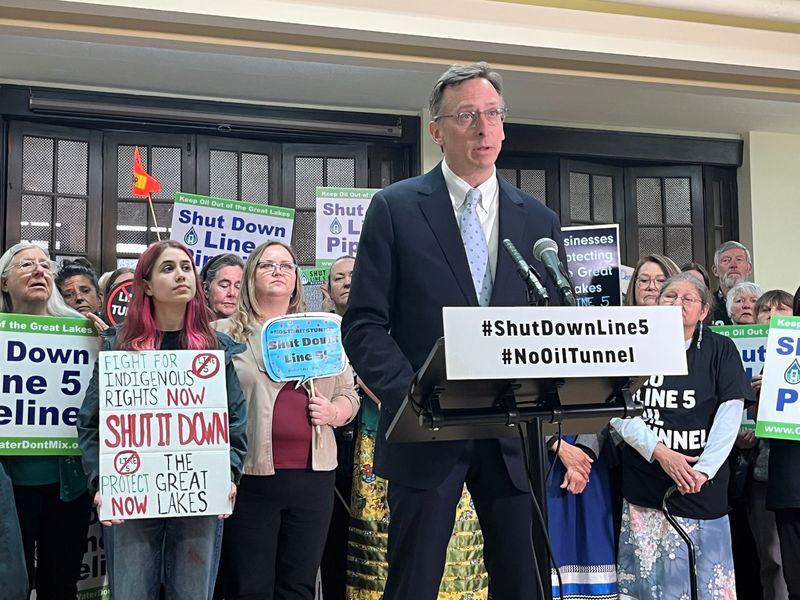
These cases rarely hinge on actual environmental harm. Instead, they go after the painstaking procedural work the company submitted. In Michigan, the Enbridge Line 5 Tunnel at the Straits of Mackinac was set to replace an exposed pipeline with a concrete-lined tunnel bored 100 feet beneath the lakebed.
The project prioritizes safety, virtually eliminating the chances of an oil leak and protecting a critical energy corridor responsible for $5.4 billion in annual regional economic output. Opponents of the project have often not argued that the tunnel would damage the environment. Instead, they challenged whether the Michigan Public Service Commission allowed sufficient time for a full administrative hearing and consideration of evidence.
Again, they do not need to win the case to succeed. Procedural challenges like this can slow timelines, reduce funding and ultimately jeopardize the project. With permits submitted in April 2020, the project is still pending approval amid the lawsuits. Instead of energy being transmitted under the lakebed through a new, safer concrete tunnel, activist organizations choose the status quo of pumping crude oil on the surface of a lakebed in a 72-year-old pipeline. The logic defies common sense.
Our country was once defined by our ability to get things done. For decades following World War II, the United States had the world’s fastest-growing major economy. We built factories, energy systems, highways and homes at record speed. Now, that notion fades at the hands of litigators and outdated permitting systems. American Clean Power estimates reform failures risk $100 billion of lost investment and 150,000 lost American jobs.
NEPA was intended to inform decisions, not stop them. A Bipartisan Policy Center survey found more than 60% of voters support expediting permitting reform, while just 13% opposed. If there is such widespread support, why are lawmakers in D.C. taking so long to pass a bill?
It’s time to slip out of the grip litigators have on our development and reform our permitting systems.
Palmer Schoening is the President of the Family Business Coalition
This article originally appeared on The Detroit News: Fix broken permitting rules holding up Line 5 | Opinion
Reporting by Palmer Schoening / The Detroit News
USA TODAY Network via Reuters Connect