As bad as incivility is for our politics, it’s perhaps more harmful for business.
There’s an economic cost to not being able to work together to solve problems, talk with each other constructively about shared challenges or move past old grievances.

We have said the same thing about racism ― looking beyond the moral imperative of equality, and considering it as a bottom-line issue. The business community is healthier and more productive when it learns to conquer the hatred that is too often inspired by our disagreements.
That’s why we’re pleased with the Detroit Regional Chamber’s chosen theme for this year’s Mackinac Policy Conference, “A Quest for Common Ground.”
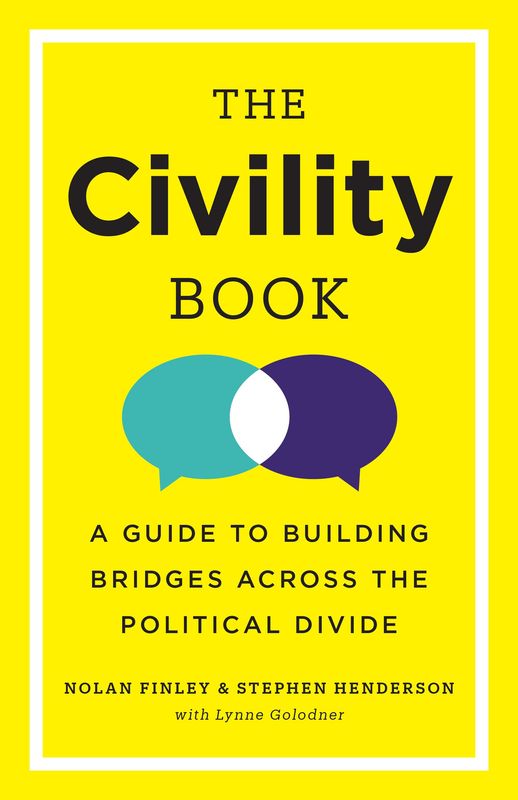
As co-founders of the Great Lakes Civility Project and co-authors of The Civility Book, we have worked with the Chamber for several years to promote civil, respectful dialogue as a cornerstone of politics, business, social and all other interactions.
Our mission, however, has never been about bringing people to absolute agreement on every issue, or to the forced, and sometimes phony, idea of agreeing to disagree. Instead, we encourage finding value in genuine disagreement and using positive engagement to better understand how and why our differences exist.
At the bourbon parties we have hosted to close out the Mackinac conference each year for more than a decade, we encourage guests to engage with someone they’d normally be reluctant to approach ― not to argue about politics, but to discover how and why they come to the opinions they hold, and how those opinions influence their thinking and decision-making. That replacement of assumptions with knowledge is the central premise of our book, and we find it an almost fool-proof way to build the respect that’s the essential building block of civility.
So how does that work? First, ask questions. Be curious, rather than suspicious. Listen deeply, and honestly, with an authentic ear invested in what someone else is saying, and thinking.
Set reasonable expectations about the outcome. A conversation is not a competition. The moment you find yourself trying to humiliate or vanquish the person you’re talking with, you’ve lost the opportunity for common ground.
If your goal is to convert the other person to your way of thinking, give it up.
The two of us have been arguing on every major and minor issue that has come to the forefront in the last 20 years, and we have rarely come to a space of agreement. If we did, we would probably call on the good Lord to take us on home.
We’ve also never walked away from our extended disagreements, nor have we ever avoided a subject — race, religion, immigration or any contentious subject. But we’ve always walked away better for the exchange, and more appreciative of opposing arguments. That’s a necessary step toward problem-solving conversations. The biggest revelation we’ve gained is that, on many issues, we want the same outcomes. We want a fairer, more equitable society. We want more prosperous communities. We want a better future and opportunity for our children and everyone else’s.
Our tension lies not in the pursuit of those goals, but in the paths we would take to get there. Understanding that is the value of civil conversation, and is critical to finding common ground.
For those coming to the conference wondering how they fit into this theme, our advice is to take a chance. Pick someone from among the crowd whom you otherwise wouldn’t approach because of your assumptions and start talking.
Common ground is not easy to find, but it’s absolutely worth it when you do.
Nolan Finley is editorial page editor of The Detroit News. Stephen Henderson is executive editor of BridgeDetroit.
This article originally appeared on The Detroit News: Finley, Henderson: Quest for common ground starts with civility
Reporting by Nolan Finley, The Detroit News / The Detroit News
USA TODAY Network via Reuters Connect