Candidates who refuse to stand on a public stage with their opponents to define and defend their positions have no right to expect voters to support them.
Likewise, voters should carefully weigh whether someone who lacks the courage and confidence to meet their foes face-to-face deserves their vote.

Debates are a democratic tradition that has played a vital role in American politics.
The Lincoln-Douglas debates before the Civil War helped make the moral case against slavery. The Nixon-Kennedy debate in 1960 exposed a sweaty, nervous Nixon as not ready for the new televised age of politics.
Debates test a candidate’s ability to handle pressure and reveal a good deal about his or her temperament.
But in Michigan, debates are becoming extinct. The last two election cycles with a U.S. Senate seat or the governor’s office at stake featured just two debates each, and those largely came late in the season after early voting had started.
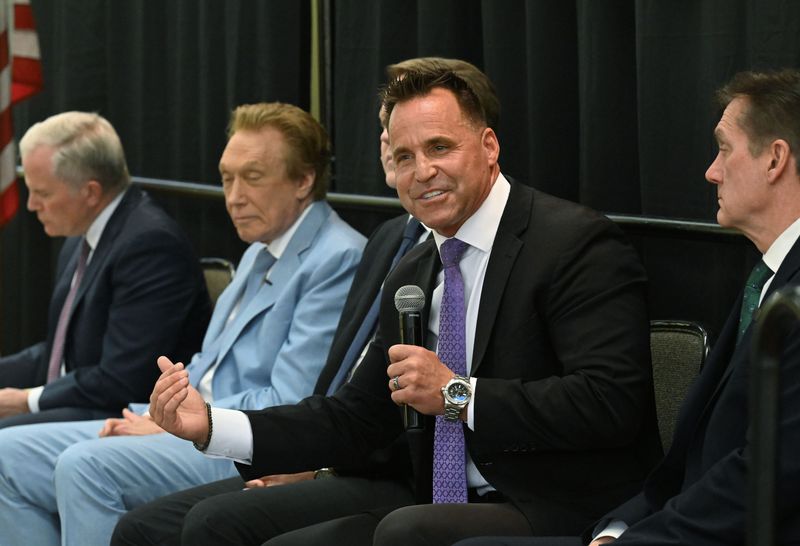
This year, two organizations formed in 2024 with the hopes of rejuvenating debate culture in Michigan are merging to bring more clout to the tough job of encouraging candidates to participate in the face-offs.
The Michigan Debate Task Force, a joint effort by the Detroit Economic Club and Oakland University, is teaming with a coalition of media outlets to create a new entity known as The Michigan Debate Commission.
The MDC will produce televised Senate and gubernatorial debates hosted by the Detroit Regional Chamber’s Mackinac Policy Conference later this month. They hope they will be the first of multiple debates this year. Details will be announced next week.
“Anyone who says debates don’t matter anymore is forgetting what happened in the 2024 presidential election when Joe Biden’s reelection campaign ended before our eyes on the debate stage on June 27 of that year,” says Dave Dulio, chair of the Center for Civic Engagement at OU. “The purpose of the Michigan Debate Commission, however, is not to create viral moments. Rather, we want to help elevate the discourse during campaigns so that voters can make well-informed decisions before casting a ballot.”
Journalist Stephen Henderson, who headed the media group, says the hope is to enlist every major media outlet in Michigan to collaborate on staging the debates.
“It matters that so many media, civic and academic organizations are working together on this,” Henderson says. “For years, the competition between these organizations has meant no debates in some big races, or debates where the candidates have the power to demand favorable rules or format because they can force organizations to compete for a debate. “
Voters are best served, he says, with structured, well-managed debates in which candidates answer thoughtful questions from vetted moderators.
Many candidates prefer to limit their public exposure to controlled settings where they will face no surprises and no questions they aren’t fully rehearsed to answer. A professional, independent debate should make candidates uncomfortable. And they should provide those candidates with an opportunity to demonstrate their ability to navigate an uncomfortable situation.
One reason the caliber of our political leadership class is on the decline is that voters don’t always do the due diligence necessary to ensure the best people end up in office.
“For the business community, debates are not just political theater — they are critical opportunities to assess stability, vision and decision-making, says Steve Grigorian, president and CEO of the Economic Club. “Civil discourse drives better outcomes for markets and communities alike.”
Too many candidates are too risk-averse to stand on a debate stage and give voters an unfiltered look at what they stand for. Those are the candidates voters should pass by on the ballot.
Sign up for the Nolan Out Loud report.
This article originally appeared on The Detroit News: Finley: Debates matter. Michigan can’t let them go extinct
Reporting by Nolan Finley, The Detroit News / The Detroit News
USA TODAY Network via Reuters Connect