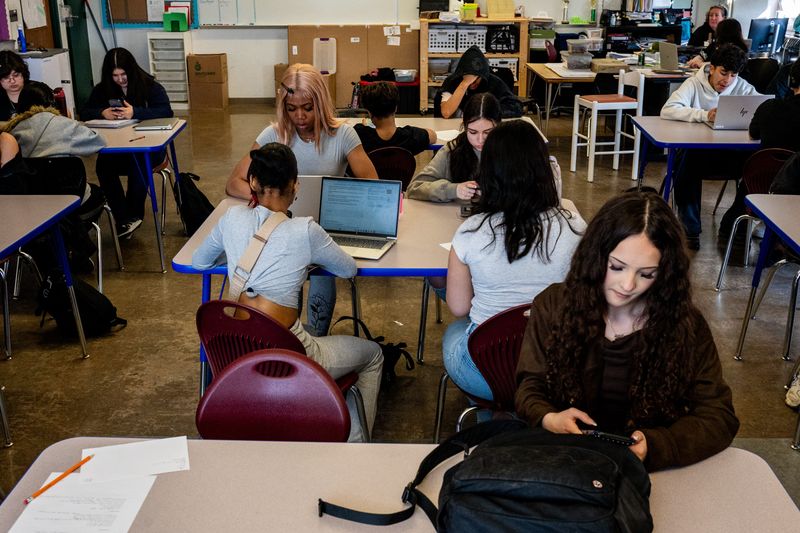
Detroit — In a second-floor classroom at Western International High School on a recent Friday morning, a group of ninth graders were asked what comes to mind when they think of college.
“Degree,” one said. “Stressful,” said another.

Their teacher, Lizette Natividad, asked them to draw a quick sketch of what a college campus might look like. On the board, she had a list of factors that might play into a college decision, including the size of the campus, the location, the degrees offered and the extracurricular activities.
“You do not need to decide your future today,” Natividad said. “But this lesson is more about exploring options, asking questions and learning what environments may fit you best.”
The lesson she wanted them to understand, that “your future is your choice,” is at the heart of what the Detroit Public Schools Community District is hoping to better convey to students through a new approach to high school that is set to begin this fall.
High School Redesign seeks to make school more relevant
Detroit’s school system in August is undertaking a massive overhaul of the high school experience, encouraging students to start thinking earlier about their paths after graduation and taking more advanced classes and career education.
A year after the school board approved the “High School Redesign” plan, the overhaul will roll out over the next five years, starting this fall with ninth graders in the district’s 11 neighborhood high schools.
In addition to their regular, state-required coursework, starting in 10th grade, students will choose a pathway toward a secondary district-awarded diploma by focusing on advanced coursework, the arts or technical education. Students who choose a technical or arts track can still take dual enrollment or advanced coursework throughout high school, and those who choose advanced coursework can still take a career tech course.
Additional support will be provided for college and career counseling, as well as for ninth-grade students, who will now all take a “freshman seminar” course — the class Natividad was teaching at Western — to ease their transition into high school, keep them on track and plant the seeds of what college or a career could look like for them.
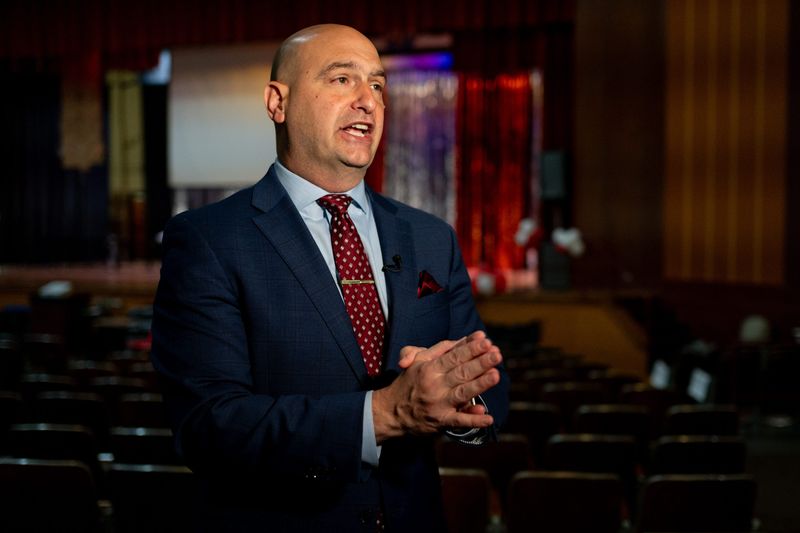
Superintendent Nikolai Vitti has been talking about a version of this redesign for the last few years, including in his State of the Schools speech in January 2025. Two high schools ― Western International and the East English Village Preparatory Academy at Finney ― have piloted parts of the plan for the last two years, and the board approved the plan last summer.
In an interview, Vitti said the district has to do more than just get kids to graduation, even though the district has improved its on-time, four-year graduation rate from 64.5% in 2021 to 83.2% in 2025. The district has many student post-graduate success stories, he said, but they need to be scaled across the city.
“It’s got to be 100% of our graduates know where they’re going after high school,” Vitti said. “They’re excited, they’re confident and they’re prepared to do that, whether it’s college or the world of work.”
By providing students with a path and a purpose, district leaders are also hoping to create excitement for coming to school, leading to boosts in attendance and reductions in chronic absenteeism.
The district has already experienced a minor decline in chronic absenteeism ― when a student misses 10% or more of school days or 18 days or more in Michigan ― from 66.1% in 2022-23 to 60.5% in 2024-25. The target rate for 2027 is 43%, according to the plan.
But Detroit’s rate remains much higher than the 38.6% for the Wayne RESA intermediate school district average and twice as high as the state average of 27.9% in 2024-25.
“How do we create the 11-12 experience to be more intentional about what their talents and interests are, so they wake up and say, ‘I gotta go to school’?” Vitti said.
Detroit set to offer four additional diplomas
Starting this fall, the school day at the 11 affected buildings will have eight periods instead of seven to allow for the addition of the freshman seminar class, as well as additional career-focused or advanced classes. The district’s plan does not indicate a specific number of AP or dual enrollment classes to be added. The district currently offers 29 AP classes “across our high schools” in the subjects of social studies, computer science, math and science, English and the humanities and world languages and arts, according to the district’s website.
The extra class period will also give students a chance to recover missed credits earlier in their high school journeys, allowing them to focus their later years on electives that support their goals.
In addition to the traditional Michigan diploma, which will continue to be the requirement to graduate, the district will offer four additional diplomas students can earn:
Students who don’t meet requirements to earn one of the new diplomas but meet state requirements for graduation will still earn what the district will now dub the “Michigan Merit” diploma.
Vitti noted the district has spent significant efforts over the last nine years overhauling instruction and offerings at the elementary and middle school levels, including implementing the science of reading approach to improve literacy rates. But less attention has been paid to the neighborhood high schools, he said, and the district’s strongest students often attend magnet schools like Cass Tech High and Renaissance High.
Vitti said he wants to see schools like Western International, one of the schools that piloted some of the redesign elements, compete to keep those kinds of students.
“We have a neighborhood high school where you’re offering careers and dual enrollment, but you’re not getting the vast majority of kids because they’re so consumed about course recovery,” Vitti said, indicating many students are behind on their courses to graduate. “That I think, is what thinking differently about ninth and 10th grade can be about.”
Western principal sees need for exposing kids to more career pathways
Western Principal Angel Garcia graduated from the same high school he now leads. But at the time he left school, he said, he didn’t know what he wanted to do with his life.
“I did not like school,” Garcia said. “My senior year, I didn’t know what I was going to do. It was really important for me to find out who I was, and I don’t think I realized that until I was older.”
Since piloting elements of the redesign over the last two years, such as adding the freshman class seminar as well as more counseling and advising of older students, Garcia said conversations are happening earlier with all students about what they will do after high school and how they will get there.
“We’ve always needed to do a better job of exposing students to what’s out there earlier,” he said. “And I think this high school redesign really just kind of emphasized and highlighted the need to do that at an earlier time.”
By building cohorts of students and teachers who stick with them, Garcia said the school has built better relationships with students, and it’s having a ripple effect across the school.
“That’s when we saw an improvement in the on-track to graduate rate for freshmen,” he said. “And just overall, disciplinary issues and attendance also sort of improved along with that as we got to know our kids better.”
They haven’t started the eight-period schedule yet, he said, but will move to that with the rest of the district next fall. Some classes, he said, will be able to be held as double periods to make sure they have enough time. AP Biology, for example, will require a block of two classes to hold both the lesson and the lab. Western currently offers 21 AP classes, according to district data, the most of any neighborhood high school in the district, according to district data.
But Garcia said even just the conversations and exposure to more off-campus opportunities would have made his transition to the real world much smoother.
“I wish when I was a senior … I had an hour in a day where I could talk to somebody about what I’m thinking about, or, get on this bus, let’s go to (University of Michigan), Ann Arbor,” he said. “That would have been transformational for me. I had not seen a college campus until I went to a college campus to actually take classes.”
Western students see value in the freshman seminar class
Anderson Rodriguez Diaz is a junior at Western, but said he already knows he wants to be a business owner and an auto mechanic.
This is his second year at Western, he said, after moving to Detroit from Florida.
“They want to help us, help me figure out what I want to do in my future,” he said.
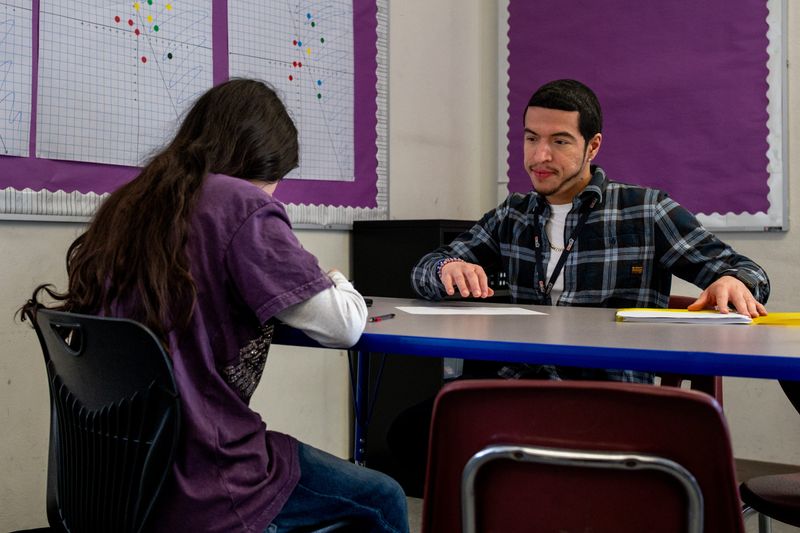
Anderson, who was once behind on credits due to struggling with science classes, is now participating in dual enrollment, taking a class at the University of Michigan-Dearborn. Next year, he’ll spend about half of his day on the campus taking college classes.
“Time goes fast,” Anderson said. “And if you don’t know what you’re doing, you’re going to get lost.”
Freshman Jonathan Chavez said his transition from eighth grade to high school was made easier by the redesign, because freshmen move through classes together as a group, much like they would have in middle school.
“So it was really easy to get into that routine,” Jonathan said.
The freshman seminar class is “not only trying to get you prepared for college, but it’s also trying to get you prepared for life,” he said.
“It teaches you different life skills like budgeting, taxes and everything,” Jonathan said. “So we’re learning about life skills that we’re going to use in the future that are actually necessary. And it also tells us about college.”
Freshman Melissa Zapata Duran said her seminar teacher “encourages us to follow our dreams and to make sure that what we want fits our lifestyle.”
Freshman Rahaf Yaseen said she thought she wanted to be a nurse, but she’s thinking more now about being a business owner. Either way, she said, having any plan at all is “actually so much support and motivation.”
Initially, she said, she wasn’t too keen on high school.
“But now I feel like it’s OK,” Rahaf said. “I love school. I love having my friends with me in school.”
Costs to be covered by district, but donors sought for long-term support
Of the lessons learned at Western, Vitti said, the value of the eight-period day and the need for extra supports for students were evident.
All of that requires extra funding. The cost of the redesign is estimated at $13.5 million per year.
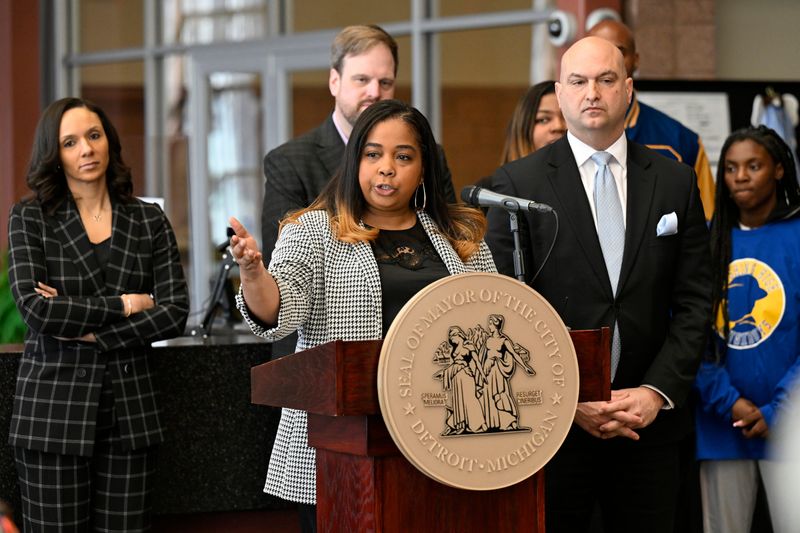
Board President LaTrice McClendon said the board has approved spending that money from the district’s general fund, but the hope is that the Detroit Public Schools Community Foundation will help fundraise to offset the costs moving forward.
McClendon said the district “can’t afford not to invest in our students.” She expects to see a return on investment, not just for the district but for the city.
“When they don’t graduate prepared, the city bears the cost of that,” she said.
McClendon said the board will seek to hold Vitti accountable with several metrics that were laid out in the original plan, including lowering chronic absenteeism and increasing the rate of students enrolled in advanced classes.
The board also raised questions about how the district will make sure it doesn’t create a version of what’s known as “tracking,” where a student who has previously struggled or is a member of an underrepresented group gets put into lower-level classes or technical education as a default, she said.
“These are issues we raised with the superintendent, and our plan to hold them accountable to ensure our students have options, right? And that they’re not pigeonholed,” McClendon said. “So these are definitely conversations we had at the board table.”
In order for the redesign to work, leaders said, it’s going to take a large buy-in from both the local colleges and the community.
“From the philanthropic community to the industries, everyone that I’ve talked to have been extremely supportive of the project and leaning more so into, ‘How can I help?” DPSCD Foundation President and CEO Kerrie Mitchell said.
The foundation hosted its annual gala Saturday, unveiling the full redesign to donors, and hopes to create more enthusiasm to take the pressure off the district to fund the additional supports for students.
Mitchell said the redesign is “the way to reach the kids that have a little bit more difficulty finding their way.”
“Because sometimes you don’t really know other career paths are out there,” she said. “You only know what you see.”
jpignolet@detroitnews.com
This article originally appeared on The Detroit News: Detroit wants to overhaul high school. Here’s what it will look like
Reporting by Jennifer Pignolet, The Detroit News / The Detroit News
USA TODAY Network via Reuters Connect