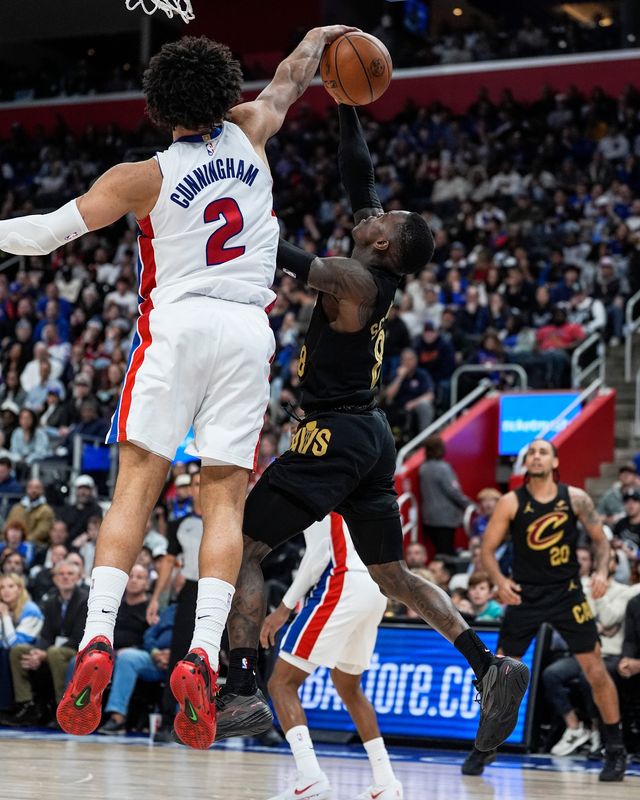
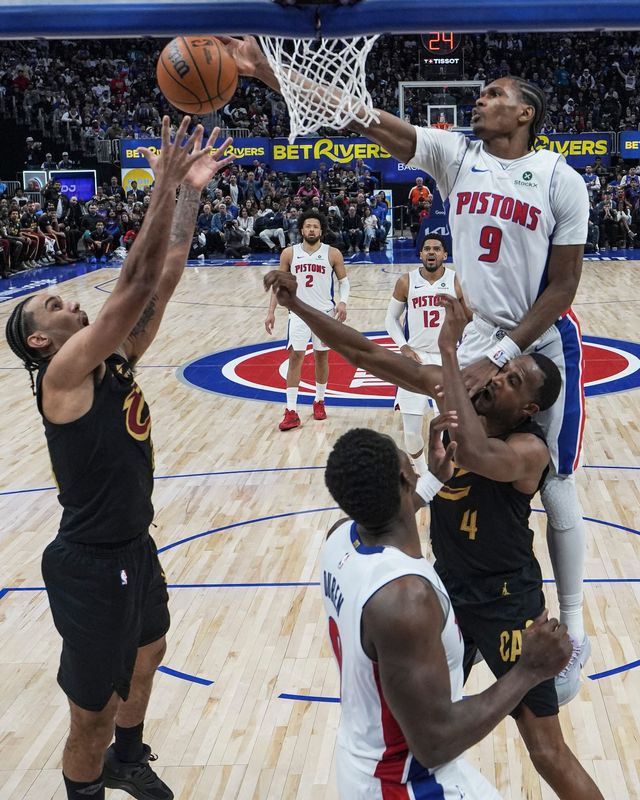
They’re dogs, the lot of them. Actually, they’re dawgs, if you’re into the parlance thing. And in the ever-shifting – and evolving – style of the National Basketball Association, that’s a pretty good thing to be.
Offense is down; defense is up. Suddenly, the Detroit Pistons are in vogue. Their roster is ahead of the curve.

No, really, it is.
Oh, there will be offseason tweaks and more strategies to keep developing the youngsters and a push for more offensive versatility. But the identity is set. The blueprint is working. And the Pistons are part of a revolution.
Yes, 3-point shooting still matters, but most of the best 3-point shooting teams – by volume – are done for the season. Of the NBA’s top 10 teams in 3-point attempts per 100 possessions, only the New York Knicks (ninth, at 39.3 3s per 100 possessions) and Cleveland Cavaliers (seventh, at 39.7) remain.
Teams with title aspirations must make shots, of course, and the Pistons (who were 29th in 3PA/100, at 30.9) are making their share right now. Save for the first half of the Orlando series, they’ve been making 3-pointers for a while, mostly under the radar.
Did you know, for example, that the Pistons shot 37.2% beyond the arc over 18 games in March and 40.4% over six games in April – when they went 5-1 to close the regular season? In all, after the All-Star break, the Pistons shot 37% on 3s.
That’s worth noting. It’s also not a tiny sample size. Orlando’s defense was partly responsible for the dip in shooting – 27.5% as the Pistons fell behind, 3-1 – during the first round. So was inexperience. (Mr. Daniss Jenkins, anyone?).
The Pistons don’t escape the Magic without finding their range late in the series – 39.8% in their final three wins. Nor are they leading Cleveland 2-0 without making shots; they made 14 3-pointers in Game 2 – half of their 28 attempts.
A 50% clip isn’t sustainable for the rest of the playoffs, obviously. Yet it doesn’t need to be, because the Pistons are winning with defense. In their three losses to Orlando, they also couldn’t get stops.
Mud and muck works for Pistons
Detroit isn’t leading this back-to-the-future revolt. The Oklahoma City Thunder deserve credit for that, if you can see past the foul-baiting. The Thunder won the title last year with shot-making, yes, but also with the NBA’s best defense.
They had the best defense in the regular season again this year. No surprise that the Western Conference’s second-best team – San Antonio – is its own kind of swarming juggernaut, as the Spurs showed Detroiters up-close what that looks like.
What the Spurs did to the Pistons at Little Caesars Arena back in late February is what the Pistons have done to the Cavaliers here in early May (and did to the Magic in the final three games of the first round). For long stretches of Thursday’s Game 2, the Pistons strung together defensive possessions the way Mozart strung together notes: In structure, in harmony, in balance, in focus.
Then again, even Mozart couldn’t account for the otherworldly stylings of Ausar Thompson. The ultimate acknowledgement of Thompson’s instincts and gifts on that end came from his twin brother, Amen, who sat near courtside for Game 1.
Ausar had just sprinted almost the length of the court to block Keon Ellis’ layup attempt on the glass, sending a high-wattage jolt through the arena. Amen clapped as he rose to his feet and shook his head as he sat back down.
Even he couldn’t believe what he’d just seen.
Thompson may not have set out to be on a breakout tour these playoffs, but his play is gathering attention with every improbable shutdown, every emphatic block. He is unique and is starting to force some observers to rethink what they mean when they assess teams’ true talent.
Yes, traditionally and on paper, Cleveland has more talent, which means that the 0-2 hole they find themselves is being viewed – at least nationally – through a lens of Cavaliers failings, instead of Pistons successes.
That’s understandable. The revolution is just beginning. Still, there are those that are taking stock of the shift in the style of play, and of the math that is backing up what we’re seeing.
Think of it this way: The Charlotte Hornets’ midseason turnaround that earned them a berth in the play-in tournament made for fun League Pass watching and a cute story, as they led the league in 3-point makes. They also got blitzed in their second play-in game by a team that gets stops – the same Magic that kept dragging Detroit back into the mud.
The Pistons like the mud, of course. And have rattled off five straight wins because they can pull themselves from the mud, or at least pull others into it with them.
Ausar Thompson arrives at just the right time
So, yeah: defense. It’s back. Sanctioned by the league. Catching on with officials. Welcomed by fans.
It’s not coincidental that ratings were up in the first round, even as scoring was down. Nobody wants to go back to the early 2000s and its final scores in the 60s – well, except for maybe a few nostalgic Pistons fans who remember the “Goin’ to Work” teams.
None of this is to say the league has solved its existential crises. The return of physicality and defense, however, is a start, and a boon to one of the most physical and athletic teams in the NBA.
The Pistons’ previous roster-builder, Troy Weaver, foresaw the shift, or maybe he tried to draft it into existence because he romanticized Detroit’s basketball past.
Whatever it was, and whatever we say about his team building – and given the results under him, it’s best to say very little – Weaver could scout. Here’s what he said after drafting Thompson:
“When you see something different, something elite, you know it.”
He knew, famously using a line about Halle Berry as an analogy for those questioning Thompson’s lack of traditional offensive skill.
You get the idea. And you’ve seen what that “idea” looks like on a basketball court, and now in the playoffs, with Thompson as disruptive and in control as Cunningham is on the other side of the floor. Thompson is a force multiplier, like Cunningham, and he has come along at the right time, just as the NBA begins to shift its stylistic priorities.
The league and its tastemakers get no flowers here; they’ve been slow to adapt to the outcry for the last half decade. Yet they finally seem to be listening: Defense is on the way back.
The Pistons are doing their best to take advantage.
Contact Shawn Windsor: swindsor@freepress.com. Follow him @shawnwindsor.
This article originally appeared on Detroit Free Press: Detroit Pistons driving revolution in the NBA; league is better for it
Reporting by Shawn Windsor, Detroit Free Press / Detroit Free Press
USA TODAY Network via Reuters Connect