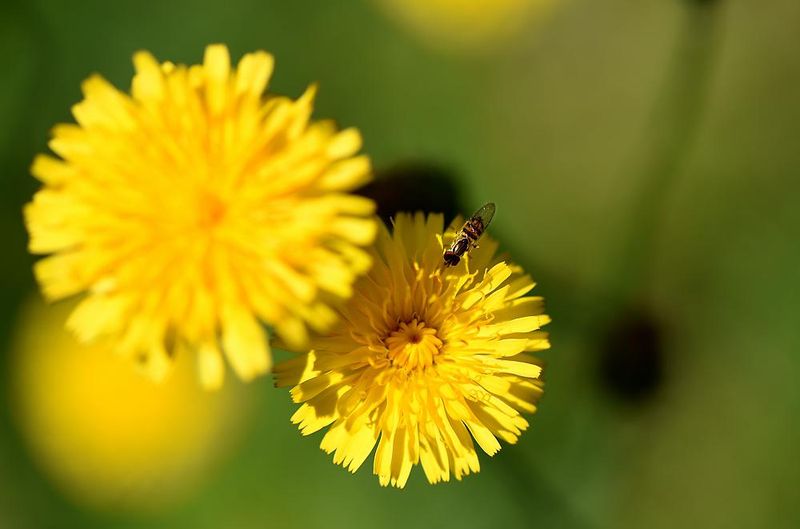
Spring is in full swing, and a sure sign in Michigan is yards as far as the eye can see painted in bright yellow dandelions.
Dandelions, regardless of how common they are in Michigan, are not a native species, Michigan State University says, but they’ve been part of the North American landscape so long it seems that they are.

Dandelions often leave those in search of a perfect lawn vexed when they bloom, and again when they go to seed — scattering floating white seeds far and wide.
Here’s how you can rid your yard of them, as well as why you might not want to.
What is a dandelion?
According to the University of Georgia, the dandelion is a deeply tap-rooted, stemless perennial.
The seeds are brown, long, and stalked with a parachute of hairs forming a “globe.” It reproduces by seed and can form new plants from fragments of broken taproots.
MSU says all leaves originate from a basal rosette. Leaves are oblong to spatula-shaped, ranging from 2 to 10 inches long with deep, backward-pointing lobes. Leaves remain green year round and exude a milky sap when damaged.
An average of 15,000 seeds is produced per dandelion plant. There are usually 150-200 seeds per flower and up to 10 flowers per plant.
Where did dandelions come from?
A Eurasian species, according to the University of Michigan Herbarium, collected by the First Survey of Michigan in 1838 (Kalamazoo County) and now thoroughly naturalized in most habitats except the wettest, including lawns, roadsides, railroads, fields, dunes; forests, especially disturbed areas; often on dry sand or rock outcrops; occasionally in wet ground; meadows, river banks, shores.
Native to temperate regions of Europe and Asia, dandelions can now be found on every continent except Antarctica, the Brooklyn Botanic Garden said. The perennial was first introduced to North America in the 17th century by European settlers, who planted it in their kitchen gardens as a potherb and tonic.
How to get rid of dandelions (with and without chemicals)
Broadleaf plants such as dandelions are easy to control with selective herbicides, which kill the plants without hurting grass. A “weed ‘n’ feed” fertilizer, however, is often not recommended.
Unlike granular herbicides or weed ‘n’ feed mixes, liquid herbicide is said to be more effective since it’s used on the weeds and not the grass. Ready-to-use selective dandelion herbicides come in both liquid and non-liquid forms and can be purchased at most home improvement stores.
Hand-pulling dandelions provides a more natural approach, but may require several attempts over several months to remove the entire root system, according to the Northwest Center for Alternatives to Pesticides. Other options include cutting, flame weeding, or carefully spraying vinegar directly onto the weed.
Either way, experts recommend allowing weeds to flower first before removing them.
Soil conditions also can discourage dandelions from growing, MSU says.
“Dandelion plants thrive on soils rich in nitrogen and potassium. It prefers soils low in calcium or where there is poor decay of organic matter. Also, dandelion does not grow well on soils high in phosphorus,” according to MSU.
Are dandelions good for your yard?
While dandelions are non-native and may look like nuisance plants among green grass in a manicured lawn, they’re actually beneficial.
Here are three reasons why you should keep them:
Can you eat dandelions?
Dandelions aren’t just edible, but nutritious. The plants are high in antioxidants, vitamins A and C, calcium and potassium, and are safe for both pets and humans to consume.
Georgia Wildlife says their seeds and foliage are eaten by at least 33 species. A powerful diuretic, dandelions have been used to treat constipation as well, according to the Cleveland Clinic.
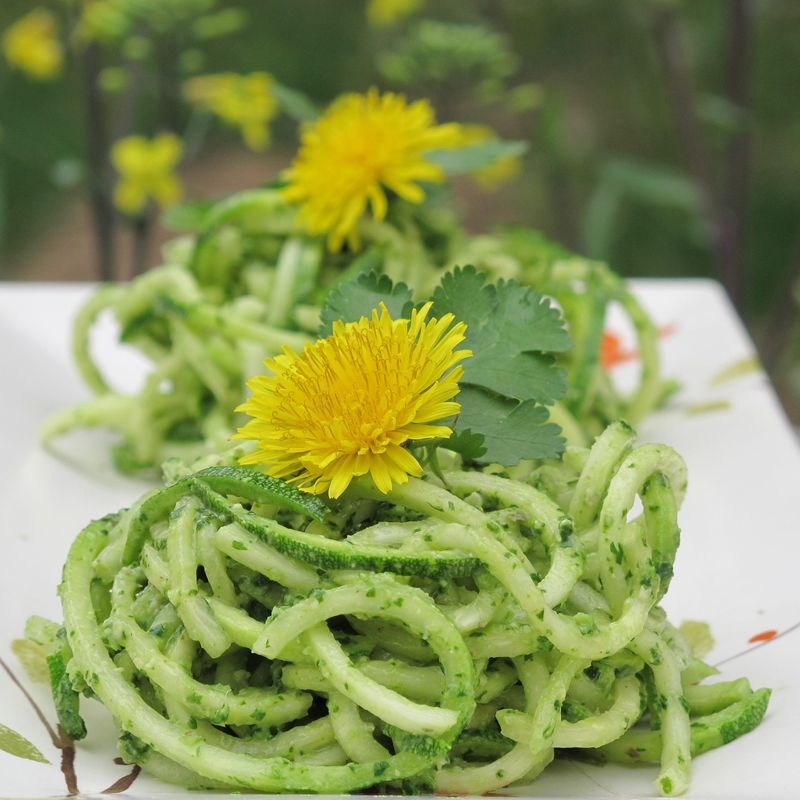
Both dandelions’ yellow flowers and green leaves can be added to dishes like salads, while the flowers can be used to make dandelion tea or dandelion wine.
However do not eat dandelions that have been treated with pesticides.
This article originally appeared on Detroit Free Press: Dandelions are blooming in Michigan. Should I let them grow?
Reporting by Miguel Legoas, Alex Perry and Jalen Williams, Detroit Free Press / Detroit Free Press
USA TODAY Network via Reuters Connect