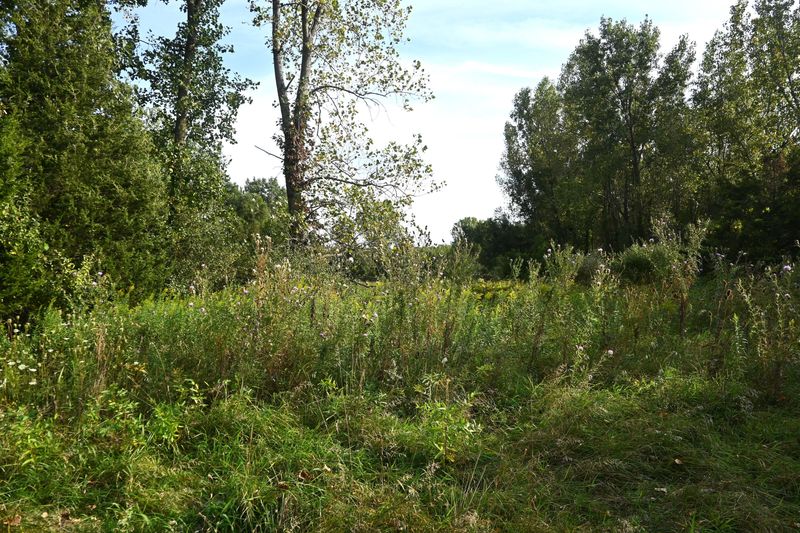
COLDWATER, MI — Branch County commissioners agreed Thursday. April 2 to pursue a long-term lease with Michigan State University to create a teaching and research forest on 162 acres of county-owned land on Bater Road.
The proposed agreement will next be reviewed by MSU’s legal staff and Batavia Township, which must approve a special land-use permit for educational purposes.

The plan calls for an initial nine-year lease with an optional nine-year extension, allowing sufficient time for forest management efforts to mature and produce meaningful research data.
“The purpose of the additional time frame is to allow their tree management program to develop and provide sufficient research results,” Commissioner Jon Walsh wrote.
MSU would not pay rent. For the county, the benefit is that an educational lease clearly establishes a public purpose, allowing the land to remain tax-exempt.
Under Michigan law, county-owned property is tax-exempt only if it is used primarily for a public purpose.
The Bater Road property, purchased in the 1970s for a potential landfill, was placed on the tax rolls last year after the county was found to be leasing roughly a quarter of it for farming.
As a result, the county paid more than $30,000 in back taxes for 2024 and 2025.
An MSU Outdoor Classroom
Dr. Rich Kobe, chair of MSU’s Department of Forestry, presented the proposal during a Feb. 2 commission work session.
Under the plan, MSU would manage approximately 120 acres of forest and 40 acres of tillable land as a hands-on learning site for undergraduate forestry students.
Courses in silviculture, forest measurements, ecology, and field studies would regularly use the site.
Kobe said it would be the only non-wetland forestry research property in southern Michigan with easy access to MSU’s Lansing campus.
The land, he said, is well-suited for education because it has been heavily “high-graded” in the past, leaving lower-value trees and little commercially valuable timber.
“That makes it a great place to teach restoration,” Kobe said, noting it offers students a chance to learn how degraded woodlots can be improved over time.
During the first two years, students would inventory and map the forest and develop a management plan.
Long-term efforts would focus on improving forest health by removing low-value trees, favoring higher-quality species such as hickory and walnut, and planting trees where natural regeneration is lacking.
Tillable acreage could be used for research plots, including oak and cherry plantings, sugar maple regeneration trials, and potential agroforestry studies.
Long-Term Benefits
MSU envisions a 25-year restoration timeline. Any commercial timber harvest would occur only after 20 to 25 years and only if forest conditions allow.
Kobe emphasized that any revenue would be reinvested in student learning rather than treated as a source of profit.
“This is not about short-term profit,” he said. “It’s about education and stewardship.”
Public access would remain a county decision, ranging from student-only use to a demonstration forest with signage and guided tours.
County officials said the partnership could restore a degraded forest, strengthen educational ties, and reinforce the property’s tax-exempt status by clearly establishing a public purpose.
The land would not be operated as a public park.
If approved by the county, MSU, and Batavia Township, the site could become a long-term outdoor classroom for future foresters. Commissioners previously rejected selling the property.
Contact Don Reid, dReid@USATodayCo.Com
This article originally appeared on Coldwater Daily Reporter: County, MSU come to agreement on Bater Road property
Reporting by Don Reid, Coldwater Daily Reporter / Coldwater Daily Reporter
USA TODAY Network via Reuters Connect