The water level at the Cheboygan Lock and Dam Complex dropped almost three-eighths of an inch on Monday as state officials were optimistic the dam has adequate safeguards against a breach, even though the Cheboygan River’s water level remained stubbornly high through the weekend.
The river was 7.92 inches below the top of the dam at 12 p.m. and 4 p.m. Monday, lower than the 7.56 inches at 10 p.m. Sunday. State officials said in a Monday update that conditions continue to improve with no rain in the forecast, but they reminded the public that the situation remains fluid.

“The monumental and successful efforts by DNR staff and cooperators will continue,” Richard Hill, co-leader of the DNR Incident Management Team, said in a Monday statement. “It’s important to keep in mind there are nearby lakes with high water levels and that water will need somewhere to go.”
DNR officials said the Tower and Kleber dams, which are further upstream from the Cheboygan Dam than the Alverno Dam is, are working normally and being operated by their owners. But state officials are prepared to give aid at those dams if needed.
The dam operation efforts are like “links on a chain,” Hill said, so when one link is affected, it impacts the others.
Under the state’s “Ready, Set, Go” system, the current Cheboygan Dam reading means nearby residents should be ready to evacuate if ordered ― if the river level reaches an inch or less of cresting the dam.
Michelle Crook, a senior engineer with Michigan’s Department of Natural Resources, said modeling indicates flooding wouldn’t occur until water reaches at least a foot over the top of the dam because of sandbagging and other measures put in place to keep water at bay.
The agency has been calculating what it considers a worst-case scenario: Failures of the Alverno Dam, immediately upstream on the Black River, followed by the Cheboygan Dam.
“Not a very likely scenario. Alverno should not fail Cheboygan. But we wanted to play that scenario out to provide what those impacts are,” Crook said.
Across Michigan, snowmelt and rain caused rivers and lakes across northern Michigan to overflow their banks last week. In Cheboygan County alone, the sheriff’s office said nearly every waterway in the county had flooded, including Black Lake, Burt Lake and Mullet Lake.
“Our hearts are with every family affected by this flooding.,” said Sheriff Todd Flood in a post on Facebook. “We know many of you are facing significant damage to your homes and property, and the emotional toll that comes with it.”
The Cheboygan River’s fluctuating levels have had residents on edge for more than a week. The level in the dam reached 18 inches below the top and triggered a state of emergency declaration on April 10 by Gov. Gretchen Whitmer.
The water moved to less than 5 inches from the top at its peak late last week, but some relief came Friday with the restarting of a former hydroelectric dam at the Cheboygan Lock and Dam Complex that had been offline for three years. It has increased water passing through the dam up to 30% from putting the turbines back online.
Michigan State Police credited the turbines with a 2-inch drop in the river level by Friday afternoon.
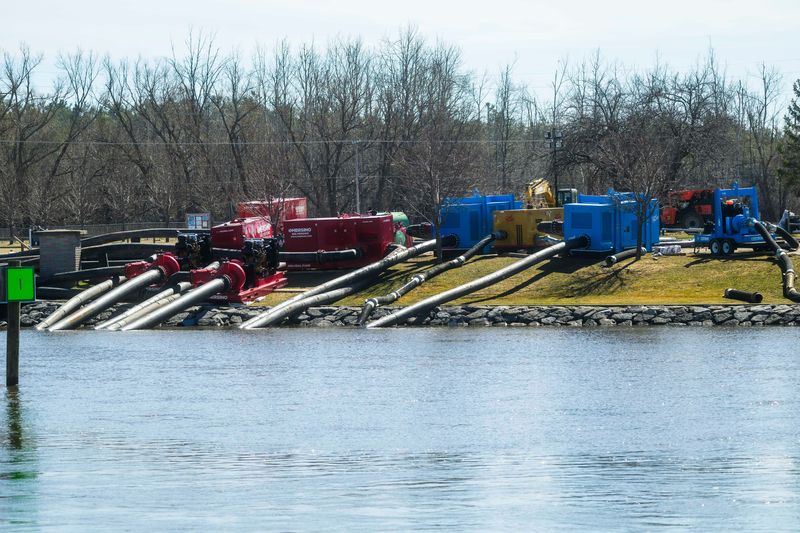
Nate Stearns, the operations section chief for the DNR’s Cheboygan Dam incident management team, said Sunday that 17 pumps at the site have been pumping 188,500 gallons of water every minute around the spillway, amounting to more than 271 million gallons every 24 hours.
“This is a monumental pump operation that we’ve set up here at the boat launch,” Stearns said. “That’s, I think, saved our bacon here recently.”
jcardi@detroitnews.com
This article originally appeared on The Detroit News: Cheboygan Dam’s water level drops to nearly 8 inches from top
Reporting by Julia Cardi, The Detroit News / The Detroit News
USA TODAY Network via Reuters Connect