Communities across Michigan are gathering to celebrate the state’s Indigenous roots this month as November marks Native American Heritage Month nationwide.
Present-day Michigan is the ancestral homeland of the Ojibwe, Odawa and Potawatomi, Anishinaabe peoples forming the historic Council of Three Fires alliance, with the Indigenous presence pre-dating European settlements by more than 10,000 years.

“In the 1600s, the relationship the Anishinaabek had with their homelands drastically changed with the arrival of Europeans to the Great Lakes. Diseases, wars, and the efforts to remove the Anishinaabek from Michigan continued for centuries. Despite this, the Anishinaabek fought to remain,” Sleeping Bear Dunes National Lakeshore’s website says.
The state is now home to 12 federally recognized tribes across both peninsulas, with more than 240,000 Native American or Alaska Native residents statewide, 2.4% of Michigan’s population, according to the 2020 U.S. Census.
Gov. Gretchen Whitmer and Lt. Governor Garlin Gilchrist declared November 2025 as Native American Heritage Month in Michigan in a Nov. 1 proclamation.
“We recognize and honor the achievements of Tribal governments and Native Americans and continue our efforts to ensure the State of Michigan recognizes, upholds, and honors Tribal sovereignty and collaborates fully with Tribal governments,” the proclamation read in part.
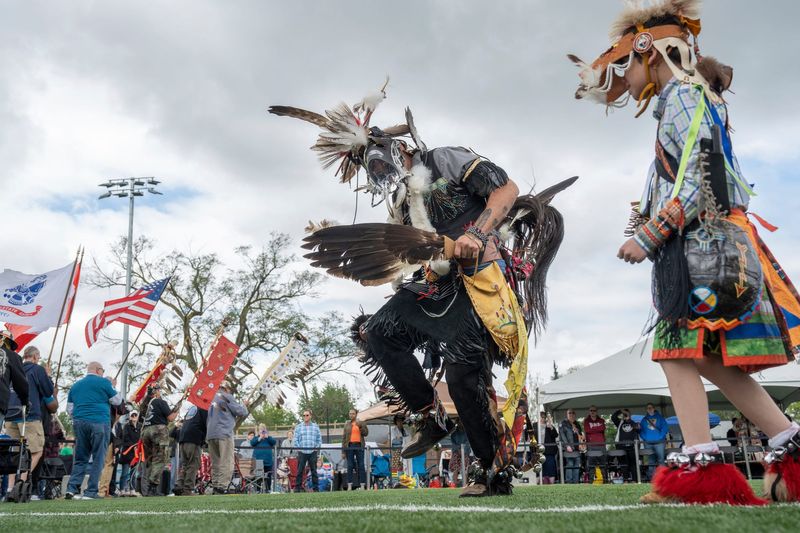
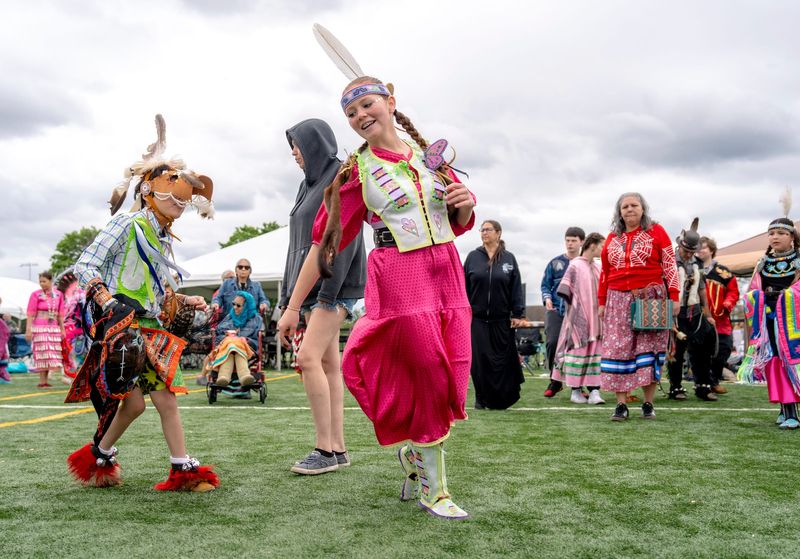
During the month, institutions throughout the state are celebrating with activities, discussions, feasts and a powwow.
Here’s what to know this Native American Heritage Month.
How is Michigan celebrating Native American Heritage Month?
Michigan is recognizing Native American Heritage Month, with festivities and commemorative events planned across the state.
Michiganders should take this time to discover local Indigenous history, including historical and contemporary injustices, and uplift Indigenous customs, Whitmer and Gilchrist said in their proclamation.
“We celebrate the rich, diverse cultures, traditions, and histories of Native Americans, while acknowledging the significant contributions they make to government, education, economics, art, science, literature, and more in Michigan and the United States,” the proclamation read.
Here are some upcoming events to mark the month:
Is Michigan a Native American name?
Yes, Michigan is of Native American origin.
The name of the state is attributed to the Algonquin word “Mishigamaw,” meaning “big lake” or “great water,” deriving its name from the lake of the same name. It’s also said to be from “Michi” meaning “great” and “Gama” meaning “water,” the Bureau of Indian Affairs says.
Who are Michigan’s Native American tribes?
Indigenous communities in Michigan include the following 12 federally recognized tribes:
When is Native American Heritage Month?
Native American Heritage Month is in November.
How did Native American Heritage Month come about?
Efforts to recognize Native Americans began with American Indian Day in 1915, according to the Library of Congress. Decades later, President George H.W. Bush designated November as National American Indian Heritage Month in 1990.
Where can you discover Michigan’s Indigenous origins?
In mid-Michigan’s Mount Pleasant, the Ziibiwing Center of Anishinaabe Culture & Lifeways features exhibits, a research center of historical archives, museum tours, meeting spaces, gift shop, events and more. The museum and cultural center is run by the Saginaw Chippewa Indian Tribe of Michigan and highlights the tribe’s history and culture, along with other Great Lakes Anishinabek peoples, per the center.
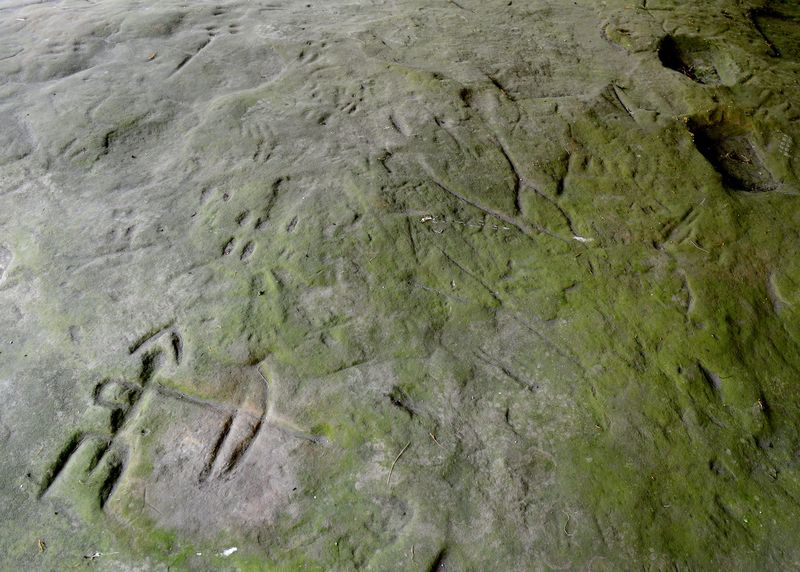
Sanilac Petroglyphs Historic State Park in Cass City in the Thumb offers a glimpse of ancient Native American rock carvings known as petroglyphs. The 240-acre park also includes a 1-mile walking trail, remains of a 19th century logging camp and a 110-year-old white pine tree, according to the Michigan History Center.
In the western Upper Peninsula, the Potawatomi Heritage Center in Wilson, part of the Hannahville Indian Community, showcases the Potawatomi tribe’s culture and history, including with photos and historic artifacts. The museum is open 8 a.m. to 4 p.m. Mondays to Fridays.
At the UP’s eastern edge in Sault Ste. Marie, the Baaweting Anishinaabe Interpretive Center and Resource Library of the Sault Ste. Marie Tribe of Chippewa Indians displays cultural artifacts contributed by tribal members along with interpretations of the objects’ significance. The center doesn’t yet have set hours of operation.
Additional museums displaying Indigenous history can be found across Michigan.
How can you celebrate this month?
If you’re looking to explore your Native American roots or simply learn more, here are some ways to start this month:
Contact Jenna Prestininzi: jprestininzi@freepress.com.
This article originally appeared on Detroit Free Press: Celebrating Native American history. What to know in November
Reporting by Jenna Prestininzi, Detroit Free Press / Detroit Free Press
USA TODAY Network via Reuters Connect