While car batteries are more likely die in the winter, the excessive heat of summer is harsher on car batteries, contributing to shorter battery life, according to Firestone.
And with Michigan expected expected to see hot and humid weather this summer, according to long-range forecasts from both the Old Farmer’s Almanac and the Farmers’ Almanac, your car battery’s life could be at risk.

AAA says drivers need to be aware that it isn’t just the outside temperature that affects batteries; the interior of a vehicle parked outside can be much warmer than the air temperature.
“After 90 minutes, the inside of a parked car can be 48 degrees hotter than the outside air. The same process plays out under the hood, but things can get even hotter,” AAA says. “The engine generates its own heat while driving. When sun-baked metal is added to the mix, temperatures can climb, exceeding 150 degrees in some parts of the country.”
Car batteries usually last three to five years, and are the heart of your vehicle’s electric system: It gives power to essential systems like the ignition, lights, onboard electronics and air conditioning, acting as a stabilizer to all the components.
Ignoring signs of a failing battery could lead to vehicle performance issues, which is why knowing when to change your battery is crucial.
Here’s what to know about battery replacement in Michigan:
How do I know if my car battery is dying?
Symptoms of a dying car battery include:
How often do car batteries need to be replaced?
Car batteries should be replaced every three to five years, Firestone says.
Disposing car batteries in Michigan
Michigan law requires retailers and auto repair shops that sell batteries to provide recycling options for customers, the state website says.
What voltage should my battery show?
According to Jiffy Lube, a 12-volt battery can range anywhere from 12.6 to 14.4 volts.
What causes damage to batteries?
The “most common failure mode in lead-acid vehicle batteries is grid corrosion, where the internal metal grids that support the active material in the battery plates slowly degrade over time,” according to Joseph Liedhegner, a director of engineering at battery maker Clarios.
“Over time, this leads to reduced battery capacity, diminished starting power, and ultimately failure,” Liedhegner says.
How can I make my battery last longer?
To keep your battery lasting longer, experts say:
Are electric vehicle batteries affected by heat?
EVs typically have two batteries: a standard 12-volt, lead-acid one that powers accessories, security functions, and startup, and a larger lithium-ion battery that powers the motor. Both are vulnerable because heat also takes a toll on lithium-ion batteries.
EVs often have more advanced thermal management systems than traditional vehicles, Liedhegner says.
Lithium-ion batteries are at their best within the same temperature range that is comfortable for humans, according to Green Cars. If it is too hot or too cold outside for you, it is likely not good for your EV. Park your car in the shade on hot days and in the garage when it is cold.
Here are some ways to increase battery life:
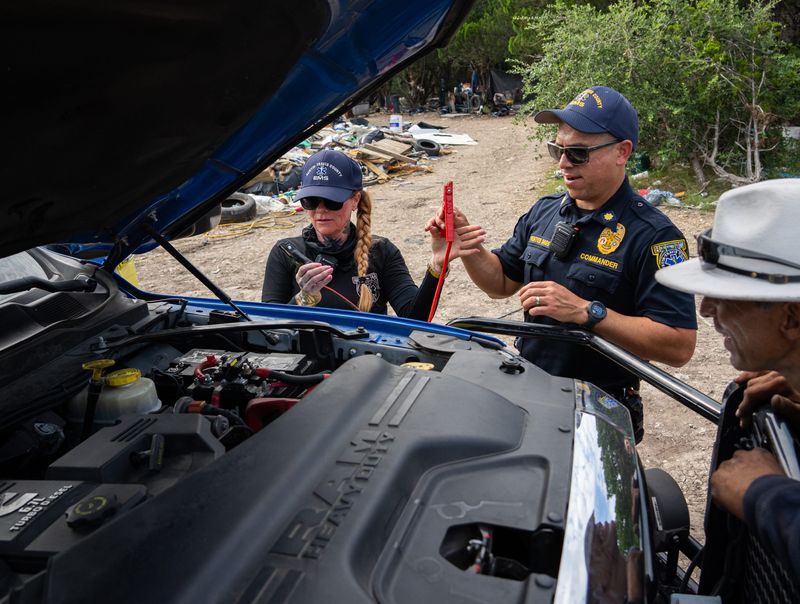
My car battery died, how do I jump-start it?
No matter how well you plan, or how good you think your battery is, at some point you likely will end up stuck and need a jump-start. Here’s how to jump-start a car:
Jalen Williams is a trending reporter at the Detroit Free Press. Contact him at jawilliams1@freepress.com.
This article originally appeared on Detroit Free Press: Car slow to start? It may be time for a new battery. What you should know
Reporting by Jalen Williams, Detroit Free Press / Detroit Free Press
USA TODAY Network via Reuters Connect