Detroit — Businesses and commercial fleet operators are seeking ways to reduce fuel costs as prices spike, but unlike previous hikes, software technologies offer a greater opportunity for automakers to capitalize on those needs.
Fuel costs for some companies have close to doubled over the past couple of months amid the blockage of the Strait of Hormuz, through which roughly 20% of the world’s oil passes. Although fuel efficiency is always a goal for many businesses, the sudden surge has created additional incentives for companies to look at leveraging data that often can already be collected on a vehicle to operate a fleet with more efficient drivers, less idling and a greater eye on improper use.

That’s an opportunity for companies like Ford Motor Co. and its thick-margin software offerings.
“I’ve had some wins recently where customers have said no for a long time,” said Troy Bauman, a digital solutions manager for the Dearborn automaker’s Ford Pro commercial vehicle division, “but this fuel price escalation is so severe, so fast, that they’re looking for help now.”
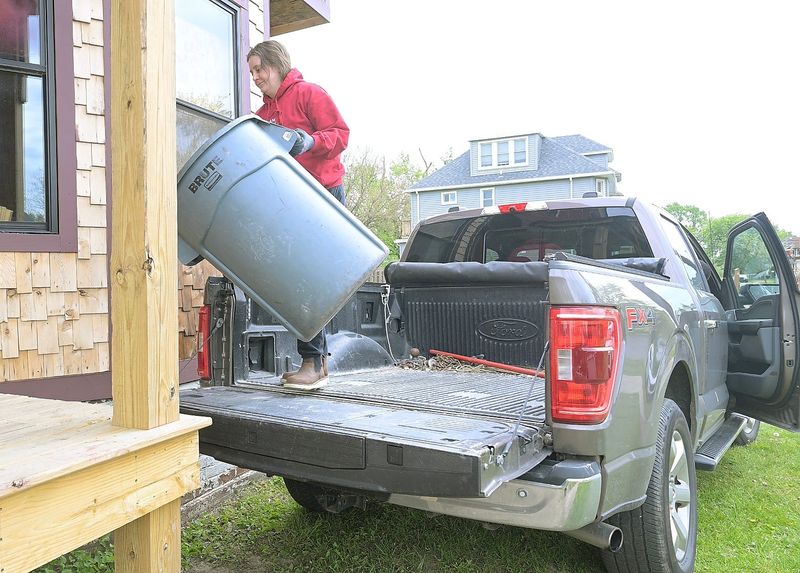
Jordan Yagiela is one example of a small business operator seeing the crunch of higher fuel prices. She owns Team Yagiela, a construction company in Detroit. It cost her almost $125 to fill up her F-150 last week, when in the past she wouldn’t break $100. She worries what greater demand this summer from lawn mowers, road construction, road trips and other uses will do to the price she has to pay.
“The reality for me is, and I know I’m privileged to be in this position, but I still need to go,” she said. “I don’t have a choice. I can’t not go to a job site and go to work. It’s obscene that it’s so expensive. Something needs to be figured out.”
National gas prices on Friday were $4.53 per gallon, according to the American Automobile Association, up 42% year-over-year. In Michigan, the average price was $4.88. Although that raises questions about demand for the gas-guzzling trucks and SUVs the Detroit Three automakers rely on for profits if high prices persist, many fleet operators can’t easily pivot to sippier vehicles since they rely on vans and pickups to haul and tow.
“In some cases, in the past, we have seen customers defer purchases for a short time, seeking more certainty in the market,” Dave Sowers, director of Stellantis NV’s Ram Professional operation, said in a statement. “We have not seen that happening in the current market yet.”
For large fleets, the impact of higher fuel prices is multiplied. Bauman mentioned he’s seen customers that spend $8,000 each month on fuel from vehicles just idling. Ford Pro Telematics, a software platform that helps fleet managers track location, maintenance and other information on their vehicles, has helped companies reduce idling time as much as 40%, Bauman said. Although some basic telematics features come with the vehicle, subscriptions for Pro Telematics start at $20 per vehicle per month.
Ford began installing modems in its vehicles in 2019 to connect them to the internet and transmit data. Since then, technologies around coaching driving behavior and artificial intelligence tools have been added to the platform. Executives have cited software as a contributor to Ford Pro’s 11% operating profit margin in the first quarter, when subscriptions increased 30% year-over-year to 879,000.
“Because of fleet management tools in the past 10 years, business operators and CEOs and fleet managers are much clearer on how much it costs them to run a fleet and what specific factors like fuel prices that they often can’t control have on their budget,” said Karl Brauer, executive analyst at auto search engine iSeeCars.com. “If you are a purveyor of fleet software and fleet management that can identify the efficiency or lack thereof, that only becomes more desirable in a high-fuel price environment.”
Bauman said Ford’s software can help fleet fuel efficiency in a few ways. Fleet managers can compare fuel use with how much they spend on each vehicle. This can help identify whether a vehicle needs repairs or whether certain drivers are engaging in less-efficient behaviors, such as speeding or hard braking and acceleration, that can be corrected. In other cases, it’s helped identify fuel theft: One customer, Bauman said, recently fired 14 people for systemic fuel theft after catching them with the help of telematics.
“People start doing irrational things because inflation is so severe,” Bauman said. “Customers will look at our solution, because we have very good fuel data on the vehicle. They want to compare: What’s that truck actually burning? But also, I have 20 Transit vans, they should all be within 2 miles per gallon of each other. So do we have a vehicle that’s out of good health? Is there something wrong with it that we don’t know, which is causing the fuel (use) to come up?”
Geofencing and location tracking help ensure vehicles and employees are where they are supposed to be, even in off-hours. Fleet managers can see when a vehicle isn’t in an employee’s driveway on the weekend, or get alerts if a company vehicle is turned on outside work hours.
“Our type of technology lets the owner or the management ride shotgun with the driver,” Bauman said. “It’s more than just Big Brother and a dot on the map, because if you show a customer value through a Ford-branded product, they’re very loyal to the Ford Motor Co.”
The technology also helps restrict how fast vehicles can go. For example, if a driver exceeds the speed limit by 10 mph, they can be sent alerts via the dashboard, text and email. The radio volume can also be turned off and a digital voice called Samantha can instruct the driver to slow down.
“She’s very annoying and very persistent and very effective,” Bauman said.
Telematics has also helped some companies find that idling accounts for half of their vehicles’ engine time. In cold months, idling keeps the vehicle warm, and in hot months, the air conditioning keeps the cabin cool. But this can go on for hours — even 250 hours a month, Bauman said, burning a gallon an hour.
“If I’m burning 250 gallons a month of idling, and I can cut that back by 25% or 30% or 40% — our solution is less than $1 a day,” he said. “The math is pretty easy.”
Reductions there also save on maintenance and downtime, since idling can add wear to an engine that’s not tracked by the odometer.
Amid the higher-gas-price environment, Ford earlier this month also launched employee discount pricing for all customers on select vehicles, including commercial products, through July 6. Ford Pro’s campaign is called “Employee Pricing: From Our Business to Yours.”
“Affordability is critical,” Ford Pro President Alicia Boler Davis said earlier this month at an event where it debuted a co-branded Super Duty truck alongside workwear manufacturer Carhartt Inc. “It’s the difference between getting ahead and just getting by.”
Across town, General Motors Co.’s fleet division is focused on “giving customers choice and practical tools that can help improve day-to-day efficiency” as they keep an eye on their operating costs, spokesperson Katie Miner said in a statement.
OnStar Fleet Basics is included with most model year 2025 or newer GM vehicles, giving customers access to built-in diagnostics and telematics without additional installation. Additional subscriptions include features like fuel and charging reports and idle-time reporting. Other options can incorporate GM vehicle data into other fleet management software for larger operators.
At Stellantis, Tamara Bazoun, vice president of small business sales, said the company has “competitive offerings across our commercial lineup,” and targeted incentive programs like “On-The-Job” for small business customers.
“These programs help dealers and businesses work together to optimize total cost of ownership and find the right vehicle for their business needs,” Bazoun said in a statement. “Also, as May is Small Business Month, our field teams are actively partnering with dealers to better engage local communities — celebrating and supporting the small businesses that keep our communities running.”
Beyond telematics and incentives, workers who drive for the job have taken other measures to conserve on fuel costs. Jacob Bialowicz, a 21-year-old electrician from Milford, says he leaves earlier in the mornings to avoid rush hour traffic and its backups on his way to a job site in Detroit.
“I can travel at a consistent speed, and not worry about being late,” he said.
Meanwhile, Jim Stewart, 66, of Dearborn is a warehouse driver for a company that delivers construction materials in southeast Michigan. The company has sought opportunities to optimize routes, including grouping deliveries as much as possible.
“If there are two north, we’ll see if we can get multiple on the same truck,” he said. “That can be difficult, though, because there are several pallets, but sometimes it can work out that way.”
bnoble@detroitnews.com
@BreanaCNoble
This article originally appeared on The Detroit News: Business fuel-saving efforts give automakers software opportunities
Reporting by Breana Noble, The Detroit News / The Detroit News
USA TODAY Network via Reuters Connect