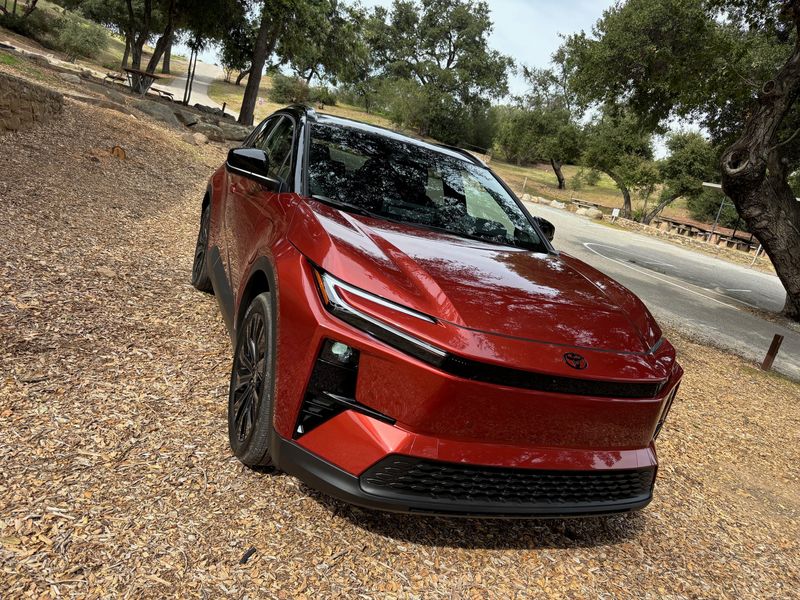
OJAI, CA – The Toyota C-HR is back, but forget everything you knew about the quirky, entry-level subcompact SUV that used to bear that name.
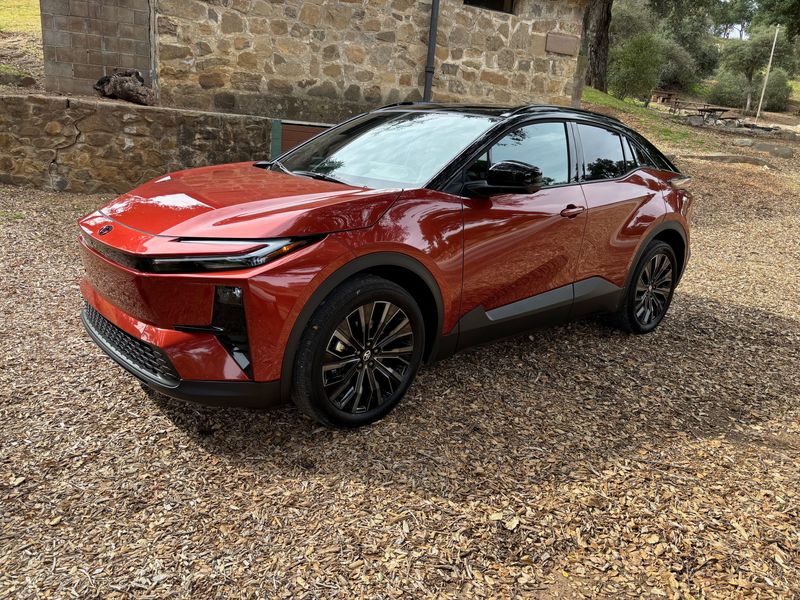
There’s a new 2026 C-HR in town, and it’s intended to be a sporty premium vehicle that is tech-forward with electric power and goodies the entry-level C-HR subcompact Toyota sold from 2016-23 never dreamed of.

I recently drove the 2026 C-HR EV over hills and twisty roads of California’s central coast. It’s so different — and so much better — that comparing it to the slow-selling little internal combustion C-HR of yore is pointless.
For starters, it’s way more expensive. Prices start at $37,000, around 50% more than a new C-HR in 2023.
It’s also way more powerful, with 338 horsepower, versus 144 in 2022. All-wheel drive — unavailable on Gen 1 — is standard. More than 5 inches longer, featuring a habitable rear seat and usable cargo compartment, it’s less C-HR, Gen 2 than CH-R2. Exponentially different.
The 2026 CH-R is arriving in dealerships now.
Toyota and Subaru cooperate on some vehicles, including EVs. Subaru will sell a nearly identical vehicle called the Uncharted. Toyota builds the C-HR and Uncharted in Takaoka, Japan.
2026 Toyota CH-R trim levels and prices
Prices exclude $1,450 destination charge.
Source: Toyota
How big? How powerful? How much?
The 2026 C-HR has an electric motor on each axle for all-wheel drive. Total output is 338 hp and 303 pound-feet of torque. It’s more than enough for a quick start off the line, despite the C-HR’s 4,322-pound base curb weight.
A 74.7 kWh battery scored EPA range estimates of 287 miles with 18-inch wheels, 273 with 20s.
A standard NACS charging port provides access to Tesla’s highly regarded nationwide charging network. Under ideal circumstances, DC fast-charging can take the battery from 10%-80% in 30 minutes.
To Toyota’s considerable credit, an adapter for CCS chargers — the other nationwide fast-charging network — is complimentary. Other automakers charge up to $250 for certified adapters, and when you’re pumping up to 300 volts — even more for EVs with higher capacities than the C-HR — you definitely want an adapter that has been certified to withstand the current’s heat, the elements, being dropped and even run over.
C-HR prices start at $37,000, excluding Toyota’s $1,450 destination charge. That’s at the high end of among the few electric SUVs this size, but not out of line, particularly given the Toyota’s power and standard AWD.
2026 Toyota C-HR key features
Driving impressions
The C-HR is quick and comfortable. The steering was responsive as I tooled around hilly roads inland from California’s central coast.
The front motor has more power, but handling felt balanced. Toyota doesn’t offer one-pedal braking in any of its EVs, so I used the highest level of regeneration. It was satisfactory and the pedal feel allowed for easy modulation.
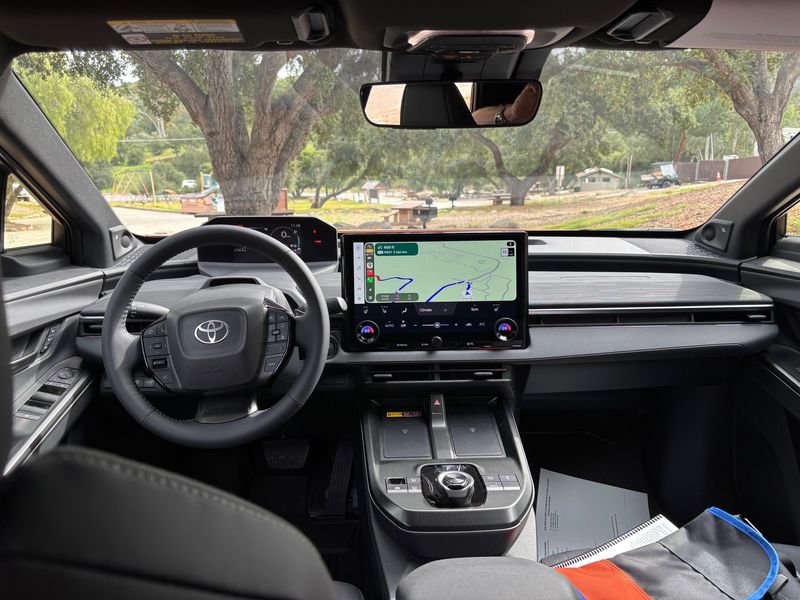
A 14-inch touch screen is standard — and gargantuan in a small vehicle like the C-HR. It responded quickly and was complemented by dials for volume and temperature and steering wheel controls.
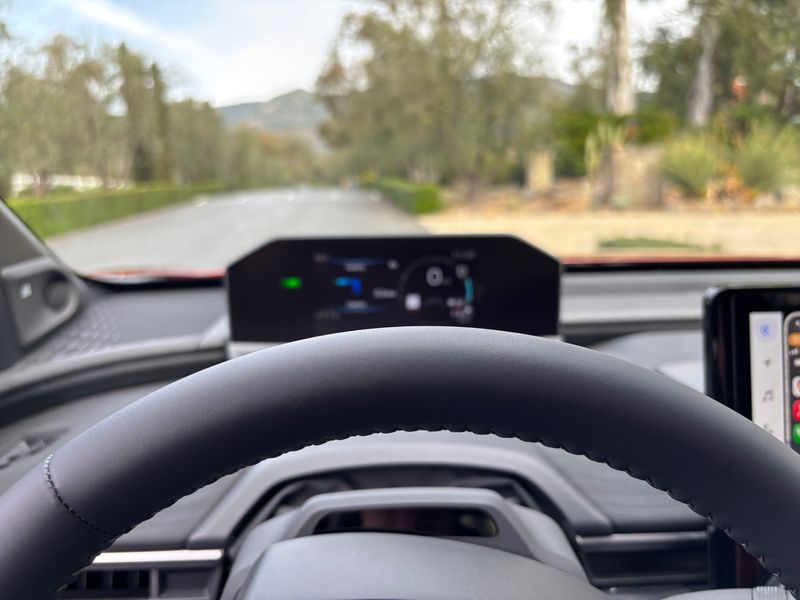
In my preferred driving position, the top of the steering wheel obscured the bottom of the small — 7-inch – instrument cluster.
A handful of fixed touch points below the touch screen’s main display manage fan speed, heated seats and steering wheel, air distribution and the like.
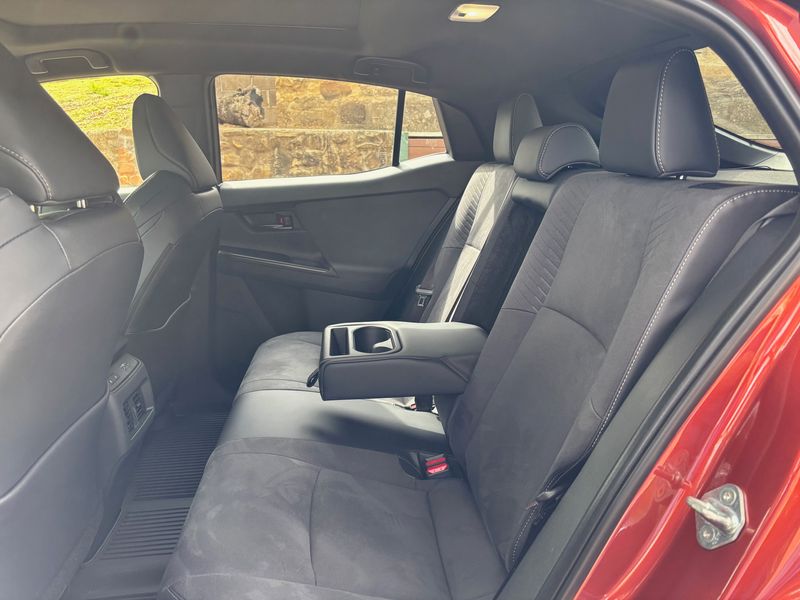
The rear seat is suitable for adults for at least short rides, a vast improvement from the original C-HR. Cargo space also improved notably.
I wouldn’t mind a bit more bolstering in the front seats of a car with aspirations to be an electric interpretation of the classic hot hatchback formula, but the C-HR is a pleasant place to spend time, and credibly quick.
Why buy a 2026 Toyota C-HR?
The 2026 Toyota C-HR’s greatest asset is Toyota’s enviable reputation for quality and reliability in a market where many buyers remain uncertain of EVs. Striking looks, plenty of power and a usable range only complement that standing.
2026 Toyota C-HR at a glance
All-wheel-wheel drive, four-door subcompact electric SUV
Seats: 5
On sale: March 2026
Base price: $37,000. All prices exclude $1,450 destination charge
Model tested: XSE
Price as tested: $39,000
Power: Two electric motors, one on each axle
Output: 338hp; 1,198 pound-feet of torque
Transmission: Single-speed direct drive automatic
EPA estimated range: 338 miles
Battery capacity: 74.7 kWh
Estimated charging time: 10%-80% in 30 minutes at 150kW; 7.5 hours at Level 2 (240v)
0-60 mph: 4.9 seconds
Wheelbase: 108.3 inches
Length: 177.9 inches
Width: 73.6 inches (without mirrors)
Height: 63.8 inches
Ground clearance: 8 inches
Curb weight: 4,322 pounds (ZSE 4,366 pounds)
Passenger volume: 93.6 cubic feet
Cargo: 25.3 cubic feet behind rear seat; 59.5 seat folded
Assembled in Takaoka, Japan
Contact Mark Phelan: mmphelan@freepress.com. Follow him on Twitter @mark_phelan. Read more on autos and sign up for our autos newsletter. Become a subscriber.
This article originally appeared on Detroit Free Press: 2026 Toyota C-HR EV adds room, power, edges into ‘hot hatch’ territory
Reporting by Mark Phelan, Detroit Free Press / Detroit Free Press
USA TODAY Network via Reuters Connect