

By Jim Bloch

You may have missed Governor Gretchen Whitmer signing Public Act 247 of 2023 that made two varieties of manoomin, also known as Michigan wild rice, the state’s official wild grain. The two varieties are Zizania palustris and Zizania aquatica.
“Let it be known that manoomin is a sacred and important component to many wetlands and has a cultural significance to indigenous people of this state,” read the bill, which Whitmer signed six days after Thanksgiving, Nov. 29, 2023. It became effective Feb. 13, 2024.

That was one of several nuggets of information digested by the attendees of the “St. Clair River Symposium: Bridging the Gaps” presented at the Doubletree Hotel in Port Huron, Sept. 25. Friends of the St. Clair River sponsored the event.
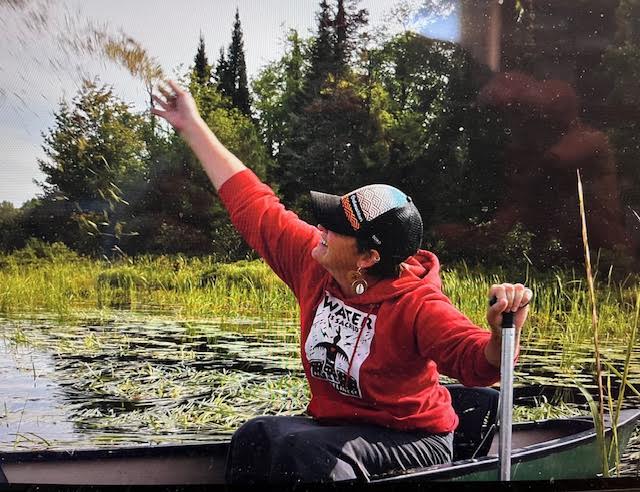
Tori Engler, a natural resources specialist for the Saginaw Chippewa Indian Tribe of Michigan, delivered the keynote address at the conference, “The Importance of Restoring Waterways for Manoomin.”
Manoomin contains about double the protein of white or brown rice, is gluten free and high in dietary fiber. The wild rice is packed with B vitamins, minerals such as phosphorous, magnesium, manganese and zinc, and antioxidants.
“Access to manoomin enabled the Anishinaabe people to thrive and establish a lasting influence in the Great Lakes Region,” according to the Manoomin Stewardship Guide, a publication of the Michigan Wild Rice Initiative. “Manoomin seed provided crucial calories to nurture social cohesion and cultural flourishing through many winters.”
Engler said that there have been 212 recorded historic locations of manoomin beds in Michigan, and likely many more.
“Today, there are 139 remaining,” said Engler.
The decline began with the logging practices of the 19th Century, when forests were cut to the water’s edge and logs were wrangled downstream on the state’s rivers and lakes. Damming, dredging, the hardening of coastlines with seawalls, overharvesting, industrial pollution, agricultural runoff, the propellers of recreational boaters, climate change, and invasive species such as phragmites have taken their tolls on native rice beds.
Along the St. Clair River, the last known manoomin bed on Harsens Island was in 1958; in Sarnia Bay, it was 1914, Engler said.
John Darling, a wildlife tech employed with the Michigan Department of Natural Resources Wildlife Division, who spoke later in the symposium, pointed out that the Krispin Drain habitat restoration project in 2015 on Harsens Island has led to a rebirth of manoomin beds.
The Anishinaabe see manoomin as having personhood. “They offer their gifts of seed to nurture many relatives, both human and non-human, resident and migratory,” according to the stewardship guide. “Manoomin beds provide shelter for winged-ones, fish and other non-human relatives. Because they are foundational for this biodiversity, Manoomin are keystone species.”
Engler said that manoomin, also known as the good berry, is a grass that reseeds itself annually. Their beds, which thrive in shallow, nearshore, slow-moving waters, are known as spirit beds to the Anishnaabe. The ideal depth of the water for the wild rice to flourish is one or two feet. The rice likes a soft, mucky bottom under waters with low turbidity.
The Michigan Wild Rice Initiative is calling for the reestablishment of manoomin beds throughout the state, with laws to protect them.
Engler said that renewal strategies include reseeding wild rice beds in areas that they’ll thrive, enclosing some beds against predators such as carp and manually removing invasive species.
In mid- to late-summer, Engler uses Diver-Assisted Suction Harvesting and hand-pulling to remove the harmful invasive Eurasian water milfoil from Lake Tawas that endangers the wild rice. She surveys the known rice beds in the Saginaw Chippewa ceded territory and manages the tribes wild rice restoration projects.
One of the initiative’s goals is that “Michiganders braid manoomin into their cultural identity, ensuring they care for manoomin across generations, similar to the way the Great Lakes area a common cultural connection to Michigan.”
Jim Bloch is a freelance writer based in St. Clair, Michigan. Contact him at bloch.jim@gmail.com.
