

By Jim Bloch

Enbridge, the oil transportation giant based in Calgary, Alberta, has been running full page ads and radio spots in the Midwest touting the safety and economic value of its proposed tunnel beneath the lakebed of the Straits of Mackinac to house Line 5.
“Natural gas is more than energy. It’s the invisible force that ensures tomorrow is on,” says one spot. “It fuels industry and economic growth… It keeps our lives bright and our homes electrified.”

For opponents, the oil and gas running through Line 5 is more than energy. It’s the visible force that, in the event of a rupture, would ensure the pollution of up to 700 miles of coastline along lakes Huron and Michigan. It would turn the water in much of the world’s largest freshwater system dark, make our cottages unsaleable, and the habitats of fish and wildlife uninhabitable.
In December 2023, the Michigan Public Service Commission granted Enbridge a permit to construct the tunnel, replacing what now are two 20-inch pipelines perched on stanchions on the bottomlands of the straits. The existing pipelines are 72 years old and nearly a quarter-century beyond their design life. A Court of Appeals in February upheld the MPSC’s decision.
On Sept. 19, the Michigan Supreme Court agreed to hear a challenge to the appeals court’s decision by a consortium of environmental groups and tribal nations.
On Nov. 14, the appellants filed their opening brief in the case. The are the Environmental Law & Policy Center, Michigan Climate Action Network, Bay Mills Indian Community, Little Traverse Bay Bands of Odawa Indians, Grand Traverse Band of Ottawa and Chippewa Indians, and the Nottawaseppi Huron Band of the Potawatomi.
“In affirming the Commission’s approval of this tunnel, which will facilitate the flow of oil across the Great Lakes for another 99 years, the lower court applied the incorrect legal standard and overlooked significant flaws in the Commission’s application of the landmark Michigan Environmental Protection Act,” said Timna Axel, a spokesperson for Earthjustice, in the Nov. 14 press release.
The groups contend that the state’s environmental protection act insists that projects such as Enbridge’s tunnel be fully reviewed by state agencies and the courts to protect the Michigan’s natural resources.
“We believe that the Public Service Commission and the Court of Appeals did not properly apply MEPA and consequently approved a project that presents unacceptable environmental risks for Michigan and the Great Lakes,” said David Scott, senior attorney for the Environmental Law and Policy Center, in a statement. “We are grateful for the opportunity to present our positions on the correct application of MEPA to the Michigan Supreme Court.”
The center is representing itself and the Michigan Climate Action Network in the case. Earthjustice and the Native American Rights Fund are representing the tribal nations.
“The Commission approved this project without considering the pollution risk that comes with extending the life of this pipeline for 99 years or the devastation that oil spills can cause to Tribal Nations,” said Adam Ratchenski, senior attorney for Earthjustice. “This isn’t just poor decision-making—it is a violation of Michigan’s bedrock environmental law.”
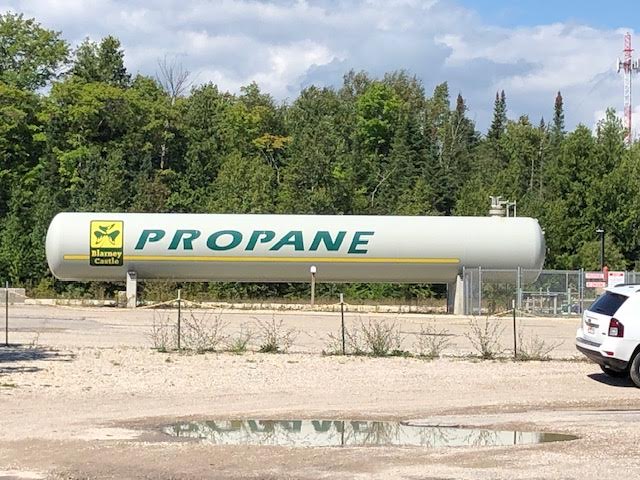
Enbridge argues, among other things, that Michigan residents depend on Line 5 to supply the natural gas liquids that are turned into propane. About eight percent of homes in the state are heated by propane, the highest in the country. In some counties in northern Michigan and the Upper Peninsula, as many as half the homes rely on propane.
Line 5
The 645-mile Line 5 runs across Wisconsin into the Upper Peninsula in a 30-inch pipe that splits into two 20-inch pipes that snake along the bottom of the Straits and recombine in the Lower Peninsula as a single pipe that runs all the way to Marysville and under the St. Clair River to Sarnia’s Chemical Valley. It carries 540 barrels of light crude oil and natural gas liquids per day through the 4.5 miles of twin pipelines.
According to Sierra Club, Line 5 has experienced 29 spills in the past 50 years, releasing 1.1 million gallons of oil into the environment.
The potential impacts of the tunnel extend beyond the dangers of a spill, rupture or explosion.
“Our experts showed that the project will increase carbon emissions by nearly 30 million tons each year, dramatically worsening climate impacts,” said Denise Keele, executive director of the Michigan Climate Action Network.
Negative cultural impacts may also flow from the tunnel.
“Enbridge says the tunnel is a ‘safety improvement’ to the current pipeline, but in reality, it’s too risky and it would desecrate an Anishinaabe sacred place,” said David L. Gover, managing attorney for the Native American Rights Fund. “The Commission approved the tunnel project after silencing Tribal voices who have been in the Straits since time immemorial. The tunnel poses an unacceptable threat to their treaty-protected resources and their way of life.”
Jim Bloch is a freelance writer based in St. Clair, Michigan. Contact him at bloch.jim@gmail.com.
