MDHHS offers advice on how to stay healthy during hazardous conditions
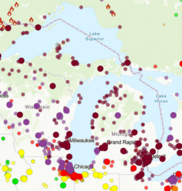
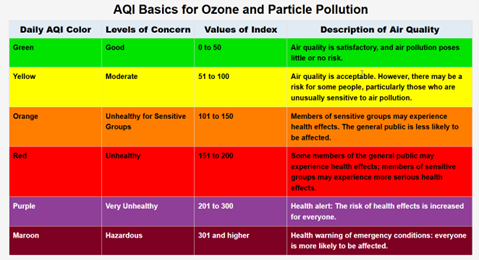
Meteorologists at the Michigan Department of Environment, Great Lakes, and Energy (EGLE) have issued updated air quality alert information for the state of Michigan, upgrading the status for the entire state of Michigan to Hazardous. This is due to elevated levels of fine particulate in the air from wildfire smoke. Smokey conditions are expected to linger into Saturday with the Upper Peninsula bearing the brunt of the impact.
Protecting your health during smoke events:
In light of these changes, the Michigan Department of Health and Human Services (MDHHS) has issued additional guidance, including keeping activity levels low and spending less time outdoors if possible.

“Unhealthy to hazardous air due to wildfire smoke may remain in large parts of the state for several days,” said Dr. Natasha Bagdasarian, chief medical executive. “We urge residents to take protective actions according to the guidance included in Your Health and Wildfire Smoke These recommendations can help Michiganders protect their health, particularly those with asthma, other respiratory conditions or heart conditions.”
While indoors, take action to improve the indoor air quality and do not engage in activities that will make the air quality worse.
- DO: Close windows and minimize the opening of outside doors. If HVAC systems are not equipped with MERV-13 filters or higher, use portable air cleaners to maintain good indoor air quality. If possible, close the outdoor air intake on air conditioners.
- If you don’t have a portable air cleaner, consider creating a DIY Air Cleaner. If you do not already have the materials on hand and must go outside to purchase them, follow masking recommendations below.
- DO NOT: burn candles, use vacuums without a HEPA filter, use gas stoves more than necessary, smoke, spray aerosol products.
- Outdoor activities should be rescheduled or moved inside.
- When possible, make accommodations for employees to work inside with proper HVAC systems and high efficiency air filters. Contact MiOSHA for more information or to file a complaint.
- If you must be outdoors for short periods of time,
- Wear an N95 or P100 respirator marked with “NIOSH.” The respirator should fit tightly, collapse as you breathe in and not let air in from the sides. Instructions for fitting a respirator mask properly are at this link.
- Do not use masks for children under age 2.
- Seek medical care if you or someone else is experiencing these symptoms: shortness of breath, constant or severe coughing, chest pain, dizziness or any type of change in consciousness/confusion or worsening of any chronic conditions.
- MDHHS urges residents to monitor air quality conditions in their area and adjust their level of physical activity and take protective actions according to the guidance at the Your Health and Wildfire Smoke webpage .
EGLE’s Wildfire Smoke page is dedicated to information and resources for the public to use during wildfire smoke events. The webpage houses resources related to how EGLE responds to these events, and details what you can do to learn more, or even to participate in data collection with your own air quality sensor.
MDHHS also recommends seeking shelter elsewhere if you do not have an air conditioner and it is too warm to stay inside with the windows closed. Call or text 211 or contact your local health department to find out if there is a shelter or cooling center nearby. Or consider spending time in an air-conditioned public place such as a library, mall, movie theater, etc.
Sign up for alerts
You can sign up for alerts through the EnviroFlash system. This subscriber lets you choose the area you want to receive alerts for. The system will send the alert directly to your email or send you a text message.
Outdoor burning
Always check to see if burning is permitted in your area before you decide to burn by checking the map and regulations at Michigan.gov/BurnPermit. Always pack safety with you before conducting any type of burning activity.
For more tips on burning and fire safety, visit the DNR’s Fire Management webpage.
Additional helpful resources:
These resources may be helpful to you if you are looking to learn more about air quality in your area, specifically around wildfires and smoke impacts.
- United States Environmental Protection Agency (US EPA) Wildfires and Smoke map
- EGLE’s Wildfire Smoke page
- EGLE MiAir AQI Map and Air Monitoring Information
- US EPA Interactive Map of Air Quality
- US EPA Fires and your health
- US EPA Particle Pollution
- “When smoke is in the air” by AirNow
- Is burning allowed? And Michigan.gov/OpenBurning
Changing weather conditions can impact how and when wildfire smoke may impact the state. The EGLE meteorological team continues to monitor the situation and will issue additional guidance as needed.
The Air Quality Index:
The Air Quality Index, or AQI is the US EPA’s tool for communicating about outdoor air quality and health. The higher the AQI, the worse the air quality and the more cause for concern.
The AQI for particulate matter (PM) is expected to remain high in most of Michigan this week.