

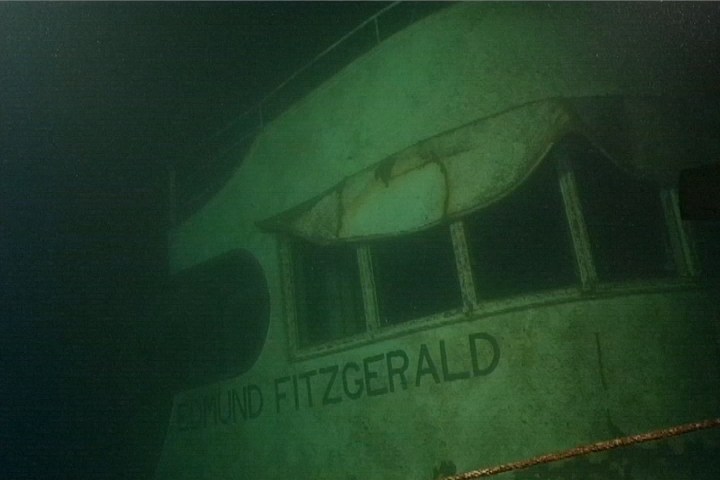
Here’s a Q & A with Shipwreck Historian Ric Mixter
By Barb Pert Templeton

Author, videographer, podcaster and shipwreck historian are among the many titles that have been attached to Ric Mixter over the last 30 -years but it’s storyteller that likely pleases him the most. In fact, sharing tales of the Edmund Fitzgerald, an ore carrier that sunk in Lake Superior during a storm on Nov. 10, 1975, is certainly among his favorites.
Mixter, who’s a native of Marquette, Michigan, will bring those tales with his program, Edmund Fitzgerald Investigates,hosted by the St. Clair County Library Main Branch, to the Don Dodge Auditorium on Wednesday, June 4 at 6 p.m. Reservations are preferred by going to stclaircountylibrary.org and clicking on events. The program is free and the auditorium is located at 200 Grand River Ave, Port Huron

To date, Mixter had written three documentaries on the Edmund Fitzgerald, the first CDROM and a four-hour podcast. “My new 300-page book, “Tattletale Sounds” is recognized as the most in-depth book ever written on the subject,” Mixter said.
He’s also penned four books on shipwrecks, messages in bottles and his latest is “Howling Winds” which tells the story of dog mascots on shipwrecks.
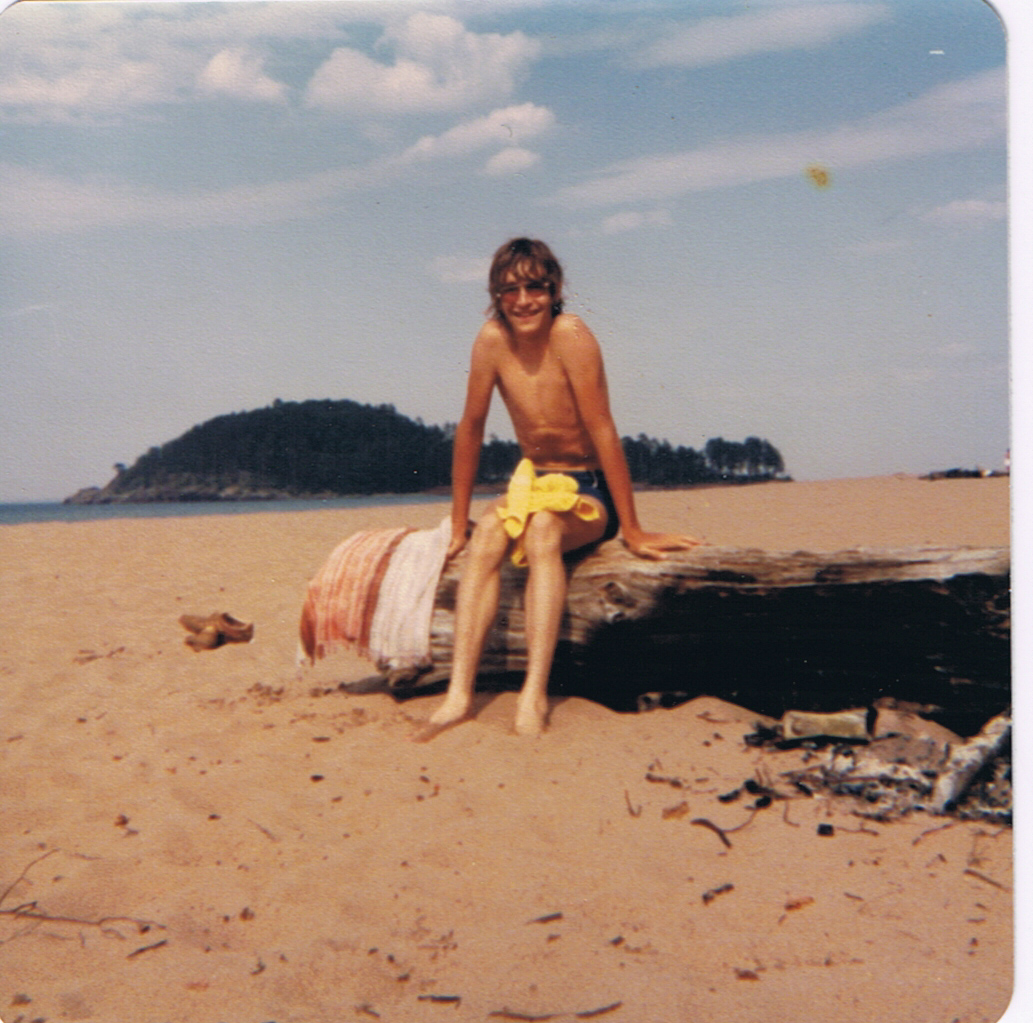
Marquette native Ric Mixter who grew up watching freighters come in from a young age.
“I have written over a dozen articles on maritime history for Michigan History Magazine, and my podcast series is now over 14 episodes, including the largest collection of shipwreck survivors and the men who rescued them,” Mixter said. “It’s fair to say I’ll continue as long as there are stories to tell.”
To date he’s spoken in four states, two countries and even NASA about the Edmund Fitzgerald.
He’s also been president of the Great Lakes Lighthouse Keepers Association, board member with The Association for Great Lakes Maritime History and is currently a board member with the Great Lakes Shipwreck Historical Society (which runs the museum at Whitefish Point).
Blue Water Healthy Living caught up with Mixter via email to learn more about his shipwreck adventures.
Blue Water Healthy Living: How long have you been interested in the Edmund Fitzgerald story?
Shipwreck Historian Ric Mixter: I grew up in Marquette County- so I watched freighters weekly when we would ride our bikes to town and watch them load at Upper Harbor. A frequent stop was the Peter White Library, where shipwreck books were of great interest. I experienced the storm that sank the shipwreck, which went down just over 100 miles from our trailer. The storm was unremarkable compared to a blizzard three years later, which buried our home and closed school. My research really began after my dive in 1994. when I started interviewing people involved in the building, sailing and search for the wreck.
BWHL: When did you decide you needed to actually visit the wreck? Mixter: In July 1994 WNEM TV offered to film and let me write and produce a documentary for the privilege of diving the wreck. I was the third diver in the Delta submersible, spending almost two hours underwater at the site. I was also the only diver to enter the water at the site, recording the submersible as it left the surface for the bottom of Lake Superior.
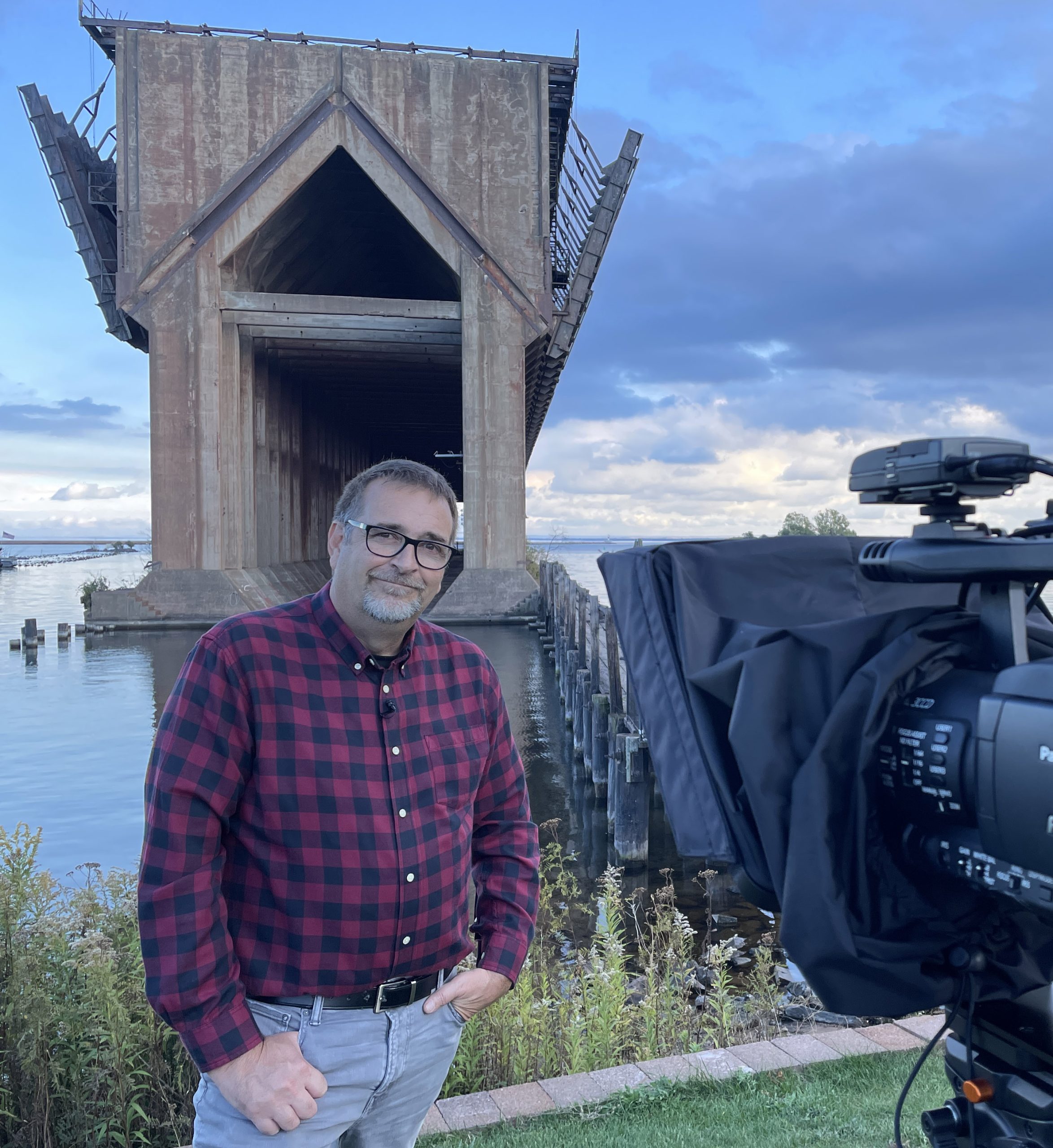
Today, shipwreck historian Ric Mixter continues to share his research, incluidng photos and notes from a dive to the Edmund Fitzgerald’s resting place in Lake Superior.
BWHL: Did you have to do lots of preparations before you did that dive? What did that entail?
Mixter: I trained to become a SCUBA diver in 1991, and I had won some television awards for my coverage of shipwrecks near Thunder Bay (Alpena). I wrote and produced a maritime documentary called “The 1913 Storm”, which also was awarded. Prior to this dive, I had visited twenty or so shipwrecks in the Great Lakes. We had no prior submersible training or any briefing on the Fitzgerald prior to our dives.
BWHL: What are some of the things you did while you were in the submarine viewing the wreckage? Notes, photos?
Mixter: I’m lucky in that all of my life’s adventures have included a video camera- this is part of being a video journalist. I had a hand held Hi-8 camera that recorded close-ups from the port holes of the sub, and the vessel itself had an external video camera that not only recorded the wreck, but also our conversations inside the sub. This was crucial for details in my book “Tattletale Sounds” as I wrote an entire chapter on just my observations on the shipwreck. It’s interesting to note we had an external 35mm camera on the sub and that not a single photo turned out. A still photographer that dove prior to my visit also shot photos but not one of the underwater images turned out.
BWHL: Has the response from the public always been positive and enthusiastic?
Mixter: There are certainly a few people who chat regularly about the Fitzgerald, but none have the interviews with the builders or even comments from former sailors. I have the only interview with the cook who got off the ship a month before it sank- his testimony helped settle lawsuits against the company and continue to make my lectures unique. I’ve never heard of anything but positive feedback from my storytelling on the Fitzgerald, and this year I’m booked to tell the story at major remembrances in Duluth, Manitowoc, Detroit and the National Museum of the Great Lakes in Toledo.
BWHL: What’s your favorite finding related to the Edmund Fitzgerald?
Mixter: I think it’s the incredible voices I’ve recorded from the ship’s history. I recorded three shipyard workers who welded and hoisted pieces of the ship. I’ve sailed with a third mate from the Fitz and even spent a few minutes with Jean Michel Cousteau, who led the first manned dive on the wreck in 1980. Aside from the personalities, I’ve enjoyed discoveries that no one else noted on the ship- including the empty cargo holds, and the hatch coverings that were found near the stern section. Each time the story becomes less hazy and I really like clarifying the truth of
what is down there. Hearing from several other submersible divers has also helped me fill in details that I didn’t see during my dive.
BWHL: Do you think at this point you’ve discovered everything there is to know about the Edmund Fitzgerald?
Mixter: I don’t think we’ll ever know everything. It boils down to a storm that pushed waves to nearly thirty feet tall, and a ship that had structural issues that led to modifications to the keel.
A new survey with improved sonar would show us where the taconite cargo spilled out.. and perhaps some details to where all the hatches and crane are. This would put those final moments into focus. I’d love to go back with the knowledge I now have- I could certainly do a better job that I did in 1994.
