

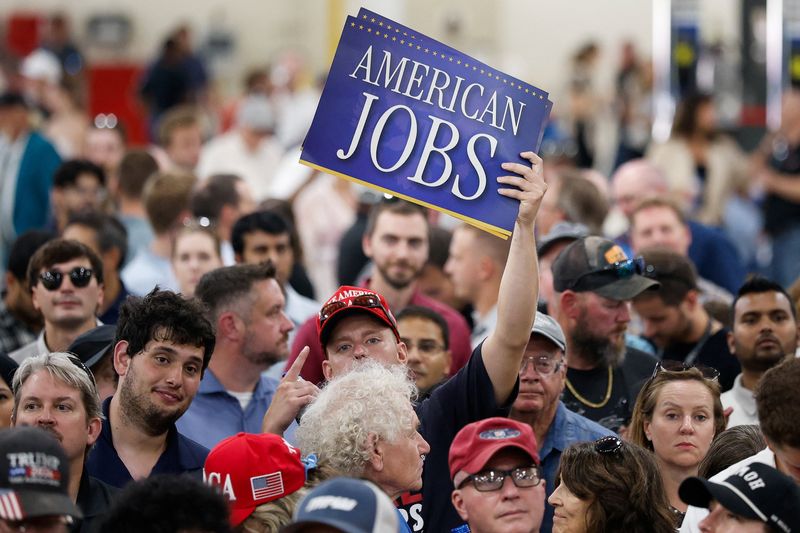
NEW YORK, Aug 7 (Reuters) – The U.S. economy unexpectedly shed jobs in July and nonfarm payrolls for the prior month were revised sharply lower, potentially raising questions about whether the Federal Reserve will increase interest rates next month.
Nonfarm payrolls decreased by 23,000 jobs last month after a downwardly revised 20,000 increase in June, the Labor Department’s Bureau of Labor Statistics said in its closely watched employment report on Friday. Economists polled by Reuters had forecast payrolls rising 80,000 after advancing by a previously reported 57,000 in June. Payrolls have a tendency to be softer in July.

The unemployment rate fell to 4.1% from 4.2% in June as the labor force participation rate declined further.
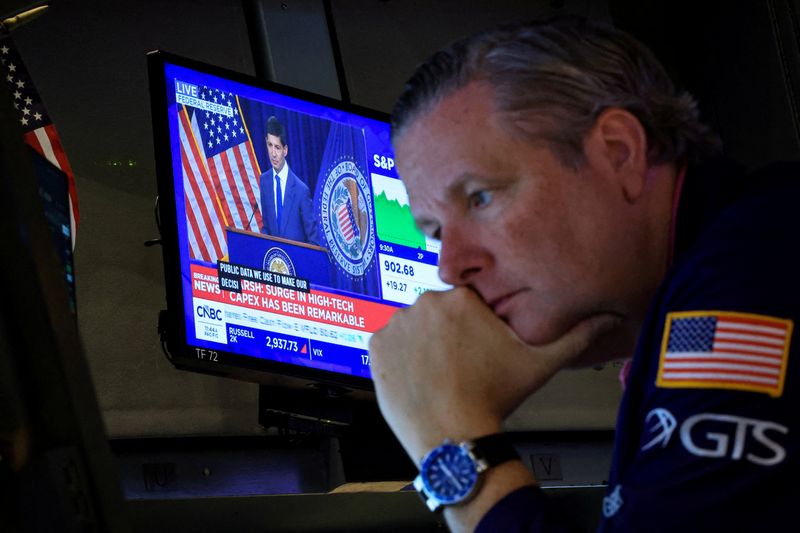
Prior to the report, financial markets anticipated a September interest rate hike from the Fed. The U.S. central bank last week left its benchmark overnight interest rate in the 3.50%-3.75% range. Three members of the Fed’s policy-setting committee dissented, preferring a quarter-percentage-point hike.
MARKET REACTION:
STOCKS: Stocks rose, with the Nasdaq composite up 0.8% and the S&P 500 adding 0.3%.
BONDS: U.S. Treasury yields fell, reflecting a rise in prices as rate-hike expectations ebbed. The 2-year note, most sensitive to Fed policy expectations, fell 8 basis points to 4.16% and the 10-year note dropped 6 basis points to 4.61%.
FOREX: The U.S. dollar index slipped alongside rate expectations, with the lately down 0.5% at 99.43. Among beneficiaries was the yen, which rose to 157.20 after earlier approaching 159, a level that traders said raised the prospect of intervention.
RATES: Fed funds futures were pricing in 40% odds of an interest-rate hike at the Fed’s September meeting, down from 55% before the data.
COMMENTS:
TOM DI GALOMA, MANAGING DIRECTOR, MISCHLER FINANCIAL GROUP, STAMFORD, CONNECTICUT:
“If you look at all the data components, wages, NFP, this is a very weak labor market that’s all of a sudden happened. The only positive thing in this jobs report was the fall in the unemployment rate to 4.1%.
“It takes the Fed off the hiking table.”
CHRIS ZACCARELLI, CHIEF INVESTMENT OFFICER, NORTHLIGHT ASSET MANAGEMENT, CHARLOTTE, NORTH CAROLINA:
“This morning’s report cast some cold water on the idea that the jobs market is as rock solid as people have been talking about. The weak jobs report means the Fed can no longer focus exclusively on inflation. It has to balance price stability against full employment, making it much more likely to stay on hold at its next meeting.
“All things being equal, that’s good for the stock market. This is one of those ‘bad news is good news’ situations: bad news in the labor market could be good news for the stock market because the Fed is going to be on hold.”
GARY SCHLOSSBERG, GLOBAL STRATEGIST, WELLS FARGO INVESTMENT INSTITUTE, SAN FRANCISCO:
“Payrolls were down and the previous months were revised lower. That accentuates the fact that job growth is slowing a bit. The fact that average hourly earnings growth slowed and the year-over-year increase is below inflation means that inflation-adjusted incomes declined in July. That creates an added headwind for consumer spending, particularly lower and middle- income families that are relying more on incomes to drive spending.”
“It’s disappointing. We expected a stronger number consistent with the strength we’re seeing in other activity data, like the purchasing manager reports, the weekly economic data, and the like. The tone of this report is noticeably weaker.”
ANGELO KOURKAFAS, SENIOR GLOBAL INVESTMENT STRATEGIST, EDWARD JONES, ST. LOUIS, MISSOURI:
“Today’s weaker-than-expected jobs report could spark a “bad news is good news” reaction in markets. The economy lost 23,000 jobs in July, versus expectations for an 80,000-job gain, while sizeable downward revisions to the prior two months further underscored labor market softness. Combined with modest wage growth, the report should help ease concerns about inflation pressures and reduce expectations for additional Fed tightening. The drop in bond yields may provide some valuation support for stocks.”
SAM STOVALL, CHIEF INVESTMENT STRATEGIST, CFRA RESEARCH, NEW YORK:
“Investors were anxiously awaiting the jobs report because of the concern that the Fed continues to lean toward a rate hike as its next move and should the employment data support the worry of hot inflation, that would have added to the likelihood that the Fed would be raising rates, not cutting them with their next move.
“However, the jobs report came in much weaker than expected with many negative readings, which sharply pushed lower interest rates. On the surface, it looks as if here is an additional reason for the Fed not to raise rates in the face of a slowing jobs market. However, there’s a possibility that because the hospitality reading was so weak, it may be the result of the temporary help for the World Cup.
“The Fed will be looking at all of the data between now and the next meeting since they have reminded us on multiple occasions that they are data dependent and even though historically every new Fed chair has raised rates as their first move in the past 50 years, the jury is still out as to what this one will do.”
BRET KENWELL, US INVESTMENT ANALYST, ETORO, PETOSKEY, MICHIGAN:
“This is the kind of report that could revive Wall Street’s “bad news is good news” reflex. It was weak enough to take some pressure off the Fed to raise interest rates, but not yet weak enough to signal that the labor market or economy is falling apart. Inflation remains a concern, but today’s data may give policymakers more reason to remain patient — and investors more room to lean into risk.”
FLORIAN IELPO, HEAD OF MACRO, LOMBARD ODIER INVESTMENT MANAGERS, GENEVA:
“The bar was already set low, and the report still came in under it. This is a number at the limit between good for the Fed and bad for the economy: a sign that the US job market is cooling down without doing too badly either. Investors will want to hold those two elements in balance. This report says the job market is still ok (the unemployment rate came in at 4.1%, below the 4.2% expected) and wage inflation is not the problem at all. Good for real yields, good for bonds, excellent for multiples.”
BRIAN JACOBSEN, CHIEF ECONOMIST, ANNEX WEALTH MANAGEMENT, MENOMONEE FALLS, WISCONSIN:
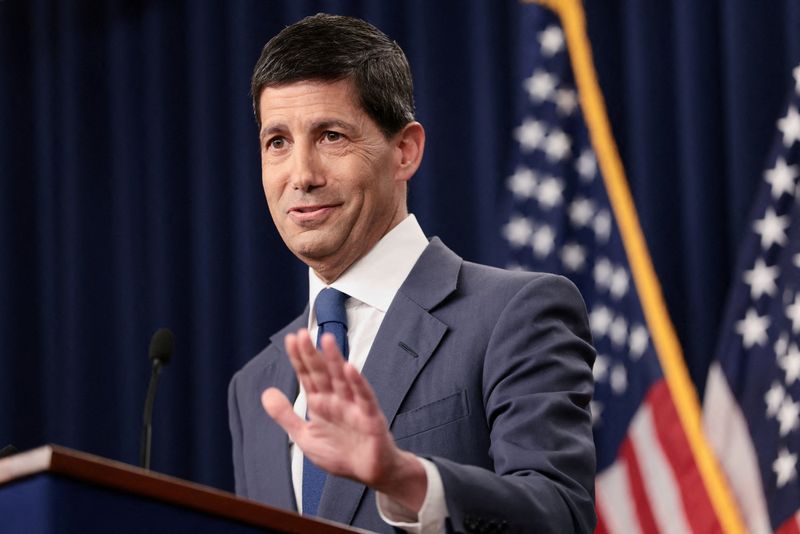
“The Fed will have to tread carefully. Hiking rates hits manufacturing first and more than services. Will choking off a nascent recovery in manufacturing employment really help inflation? Services inflation has been moderating. Goods inflation has been driven more by tariffs and energy than loose money. The cure may be worse than the disease when the disease seems more seasonal than structural. To deal with the structural issues, Warsh will likely advocate for prioritizing shrinking the Fed’s balance sheet instead of hiking rates to deal with structural inflation. The Chair could dissent in September if too many others push for a hike.”
ANTHONY SAGLIMBENE, CHIEF MARKET STRATEGIST, AMERIPRISE FINANCIAL, TROY, MICHIGAN:
“Even with a negative job print, the job market remains healthy. But it gives the Fed some room to pause in September. It has seemed like the Fed is pressing more on the inflation front, but today’s numbers may reframe that conversation a little bit and put the labor side of the mandate in focus.
“One number is not a trend. So I wouldn’t read too much into it. But a weaker employment figure might give the Fed a little bit more reason to think about the impact of potential rate hikes. Our view is that they won’t raise rates in September.”
LINDSAY ROSNER, HEAD OF MULTI SECTOR FIXED INCOME INVESTING, GOLDMAN SACHS ASSET MANAGEMENT, NEW YORK:
“History doesn’t repeat, but sometimes it rhymes. For the third time in as many years, July jobs data saw a mid-summer loss of momentum. While incoming inflation data will be the ultimate arbiter, slowing jobs growth helps support a September hold.”
(Reporting by Lucia Mutikani, Rashika Singh, Chuck Mikolajczak, S. Siddarth, Niket Nishant, Karen Brettell, Sinead Carew, P. Avinash, Ragini Mathur, Tharuniyaa Lakshmi; editing by Colin Barr)
By Reuters | Reuters | © Copyright Thomson Reuters 2026.
