May 4 (Reuters) – Top global investors and executives gathered at the Milken Institute Global Conference in Beverly Hills on Monday to discuss geopolitical tensions, private credit risks and opportunities, shifting capital flows and the economic impact of artificial intelligence.
Here is what they had to say:

JONATHAN GRAY, PRESIDENT AND CHIEF OPERATING OFFICER, BLACKSTONE
“Now we have this war, which the UAE has done an extraordinary job navigating. Through each of those crises, the people in this room, all of us, would have said, ‘Oh, I’m nervous. What’s going to happen?’ And yet the US economy and the global economy powered through, the markets powered through and my expectation is that will continue.”
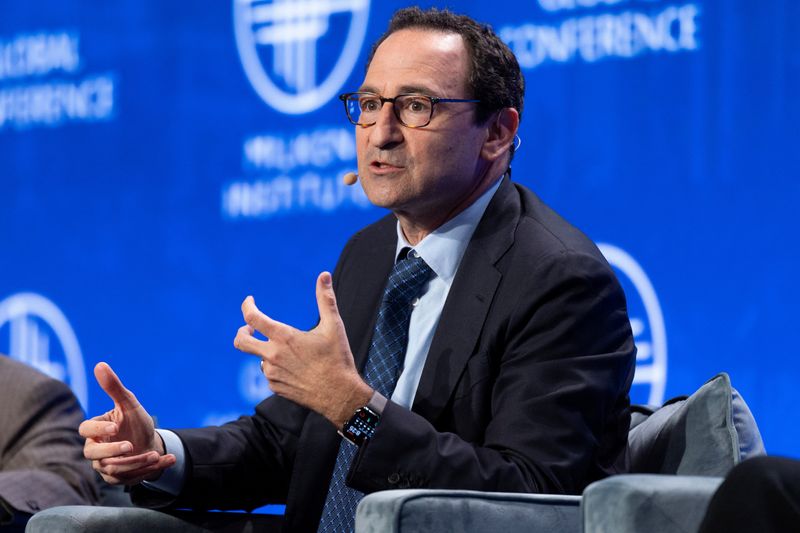
JIM ZELTER, PRESIDENT, APOLLO GLOBAL MANAGEMENT
“It’s going to be a variety of private credit conversations. And so, for a few of us on the stage who have been asked about the private credit issues the last six to eight months, last eight weeks or whatever, it’s such a small area of the BDCs (Business Development Companies).
“It’s really missing the big plot. The big plot is the ocean of private capital in aggregate. And if we ask ourselves, there’s a massive IPO pipeline.
“In the past, you went public because you needed access to capital. Well, the last four or five years have shown us that that’s not the case anymore.”
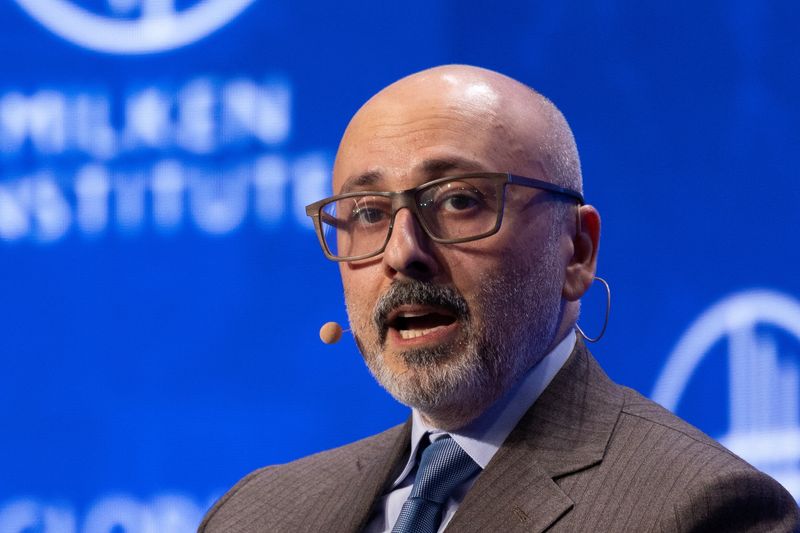
WALEED AL MOKARRAB AL MUHAIRI, DEPUTY GROUP CEO, MUBADALA
“Private credit is really interesting for the reason that it is filling a market need. Now, it may be that you have to design your portfolio a little bit differently. It may be that you want to look at resiliency, but it is inexorable that this asset class is going to grow and that it is doing okay as long as you’re a good picker.”
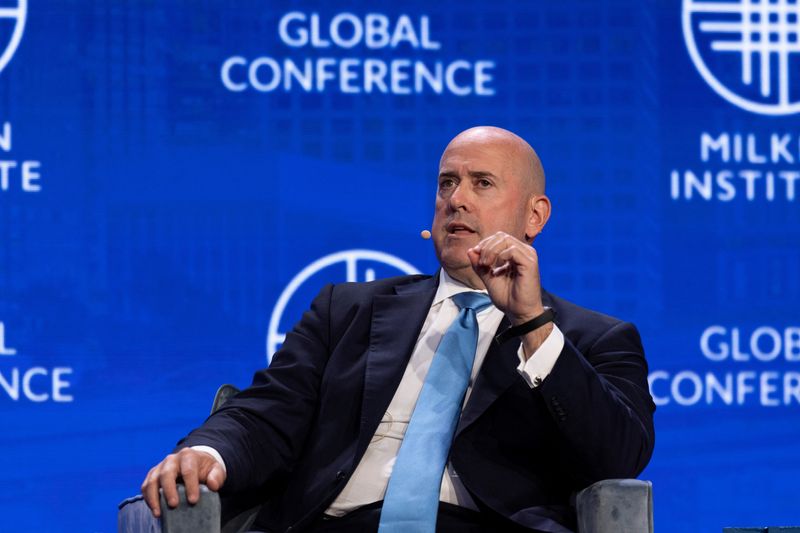
RON O’HANLEY, CEO, STATE STREET
“The Iran war, and what that is triggering now, I believe will be a big realignment of capital flows. There’s $3.2 trillion that the Gulf states and the various sovereign wealth funds have deployed now, and that has been an enormous export of capital to lots of people in this room, really, all over the world.”
HARVEY SCHWARTZ, CEO, CARLYLE
“I think the real win (from AI) is when you see companies delivering better outcomes, innovating faster and actually being more productive. So I’m a buyer of the productivity story.
“I’m not a buyer of the, you know, we have massive unemployment. I just, I’m not an advocate of that scenario.
“There are a number of concerns that I would describe as important but not systemic that are being conflated. And now, there’s this narrative around systemic out there, and I do not think that is right. We are probably seeing a move into a different part of the credit cycle. I would argue that is healthy.
“If you go back to 2008, why the system suffered was that it was banks that were at the center. Banks are concentrators of risk. All that risk was concentrated and a financial crisis turned into an economic crisis. Private credit is exactly the opposite, it is a distributor of risk.”
MARCIE FROST, CEO, CALPERS
“I think (AI is) wonderful, wonderful technology, but it will disrupt these entry-level positions. And then, are there really retraining programs for the gig economy? Probably not. They would have to do that on their own as independent contractors.
“Some of the more recent headlines around software and exposure in the debt markets were partially related to retail investors having access. And were these instruments really set up for the liquidity requirements that would have been necessary, I would have the same concerns about retail investors accessing private equity in the same way.”
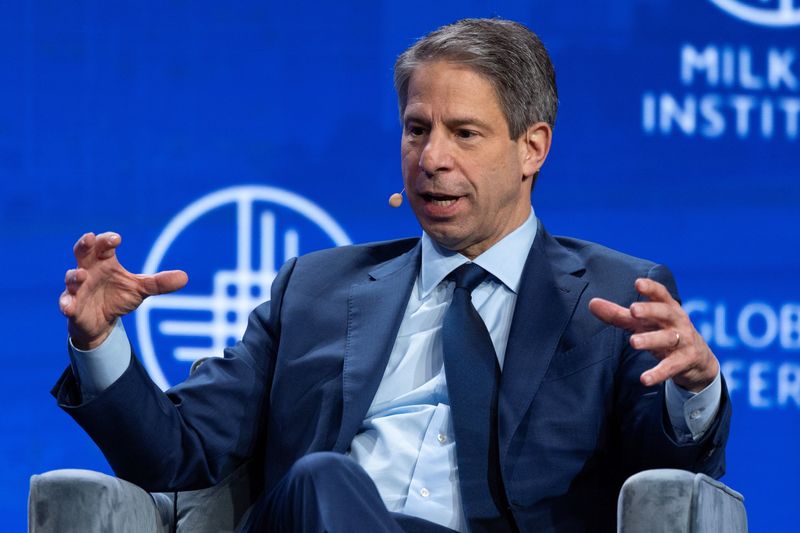
DANIEL SIMKOWITZ, CO-PRESIDENT, MORGAN STANLEY
“The noise is overdone in private credit, but that will create an opportunity. There is an M&A wave coming. The financing of that M&A wave, especially given some of the noise, is going to enable some alpha to be generated by being the financier into that M&A market.”
ANDRÉ ESTEVES, CHAIRMAN, BTG PACTUAL
“More recently, what we are seeing is not an outflow (out) of the U.S., but a more diversified inflow of capital. Emerging markets, for example, that were a forgotten asset class for the last six, seven years, became now a considerable asset class for global portfolios.”
GEORGE GONCALVES, U.S. MACRO STRATEGY HEAD, MUFG
“The global economy is still kind of very bifurcated. You can start here in the U.S. There are areas of strength dominated by AI and all the capital that’s going there. But you look at a lot of the older industries that are still suffering and not getting the sort of capital relief that they need.
“For 30, 40 years, we had the luxury of low rates. Capital did come to the U.S. because it was best treated there. Now we’re seeing rates in Japan staying elevated. We’re seeing rates around the world actually offer competition for the U.S. for the first time.”
KAREN KARNIOL-TAMBOUR, CO-CHIEF INVESTMENT OFFICER, BRIDGEWATER ASSOCIATES
“It is an economy that is strong, because you have a lot of spending that is not reliant on demand, that is going to kind of keep running. It is inflationary, particularly in the physical world, because you need to literally build out these data centers. You need power, you need defense, you need physical things, and there is only a limited supply of how many of them they are.
“And it is a kind of misshapen economy, because a lot of this spending is not necessarily that employment-heavy. So the headline numbers can look a lot better than it kind of feels like on the ground.”
OSCAR FAHLGREN, CHIEF INVESTMENT OFFICER, MUBADALA CAPITAL
“We’re undoubtedly standing just in front of the worst energy crisis we have seen in living memory. We have not felt the effects of the closure of the Strait of Hormuz on the energy markets quite yet. It is hard to see what will happen to the real economy once that comes through.”
FREDERICK POLLOCK, CHIEF INVESTMENT OFFICER, GCM GROSVENOR
“There’s no systematic overvaluation or undervaluation in the credit markets today. You have pockets where the values are wrong, but that’s always true, right?
“Meaning things get stale, they are actually undervalued. There is an opportunity to purchase or there is an AI disruption. There is a tech disruption. Things that people thought safe, say software lending, is not really safe. And there needs to be an appropriate revaluation of those assets.”
JOHN VIBERT, HEAD OF CREDIT, PGIM
“The market continues to be priced closer to perfection and seems to be looking through a lot of the geopolitical risks that are out there. A lot of the geopolitical risk is not yet priced in.”
(Reporting by Pritam Biswas, Prakhar Srivastava and Arasu Kannagi Basil in Bengaluru; Editing by Jonathan Ananda)