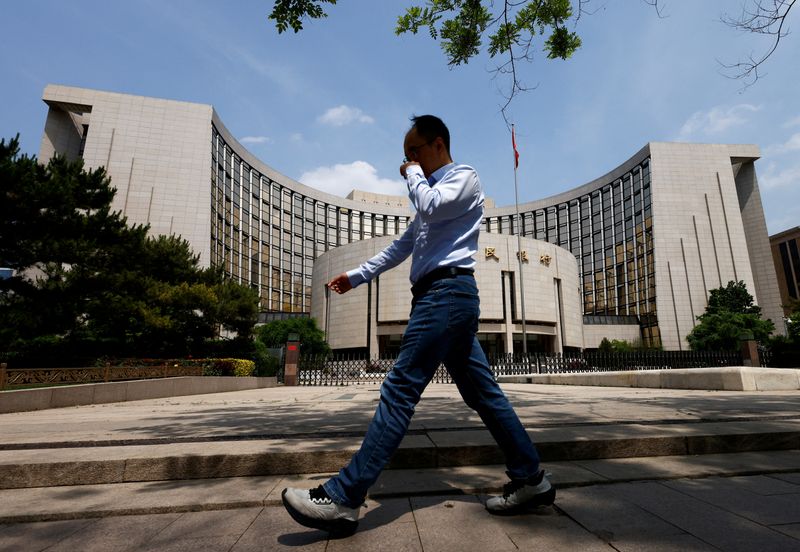
April 28 (Reuters) – China’s central bank has instructed some commercial banks to expand loan issuance in April, said sources with knowledge of the matter, as authorities seek to prevent a sharp slowdown in credit growth at a time of rising external economic risks.
The People’s Bank of China in a meeting asked banks to ensure the outstanding loan balances post positive month-on-month growth in April to underpin the economy, the sources said.

The sources declined to be named as they were not authorised to speak to the media.
The PBOC did not immediately reply to a request for comment.
A meeting by the central bank specifically requiring banks to expand credit is rare and comes as concerns mount over the impact of the Middle East conflict on the world’s second-largest economy as it grapples with sluggish consumption and a property sector debt crisis.
Analysts expect April credit data to soften, as the month typically marks a “low season” for loan demand. Banks generally front-load lending in the first quarter during the traditional sales campaign, making subsequent months appear weaker by comparison.
The guidance suggests that policymakers are concerned about an uneven economic recovery and tepid effective financing demand. By guiding financial institutions to maintain a reasonable lending pace, authorities aim to prevent a marked pullback in credit and sustain lenders’ role in stabilising growth, the sources said.
New bank lending in China jumped less than expected in March, indicating softer underlying credit demand as borrowers’ outlook on future income and growth dims.
China’s economy regained some momentum in the first quarter on solid exports, but growth is expected to cool over the rest of 2026 as the Iran crisis threatens to choke corporate profits and sap overseas demand, a Reuters poll showed.
Beijing has set a budget deficit of about 4% of GDP for 2026 and lined up heavy bond issuance to support growth, while the PBOC has pledged to keep policy accommodative despite having limited room to cut interest rates as inflation edges higher.
(Reporting by Reuters staff; Editing by Shri Navaratnam)