

By Corina Pons and Karol Badohal
MADRID/WARSAW, June 24 (Reuters) – Wealthy Polish, American and Gulf-based property buyers are pouring into Spain’s capital Madrid and Costa del Sol seeking luxury refuge from the wars in Ukraine and the Middle East as well as political turmoil in the United States.

Spain, particularly its Mediterranean coast, has long been a magnet for sun-seeking Britons and Germans. But in recent years a broader mix of investors looking to diversify their assets and hedge against instability has moved in, a half dozen real estate agents, European housing market analysts and a property lawyer told Reuters.
Official government data confirm the trend.
“Whether it’s Ukrainians or Poles settling on the Costa del Sol, or Americans coming to Spain, the common factor is the geopolitical situation,” said Rebeca Caballero, head of realtor Gilmar’s international department.
According to last year’s property register data, more than 39% of all home sales in major tourist provinces including Malaga on the Costa del Sol, Alicante on the Costa Blanca and the Balearic Islands involved foreign buyers.
That has helped to send prices surging in a country where housing is a major political issue and the central bank called for coordinated policy efforts to boost housing supply with an estimated shortage of 750,000 homes.
UKRAINE WAR TRIPLES POLISH PROPERTY DEMAND
Buyers from Poland, among Europe’s fastest-growing economies, have been investing in Spanish coastal properties since 2020. But their purchases have tripled since the COVID-19 pandemic and accounted for 4% of all foreign purchases last year, up from 1.6% in 2019.
“The strongest wave of investment came after the outbreak of the war in Ukraine … with a frenzy of purchases made over the phone,” said Agnieszka Marciniak-Kostrzewa, founder of a Marbella-based real estate agency.
Marlena Bartkowiak is part of that surge.
The 46-year-old, who owns a transport company in Poland, purchased an apartment in Benalmadena on Andalusia’s Costa del Sol as a backup plan when the war broke out.
“Spain came to mind as it was somehow the least involved in all sorts of political manoeuvring on the European stage,” said Bartkowiak, who still lives primarily in Poland.
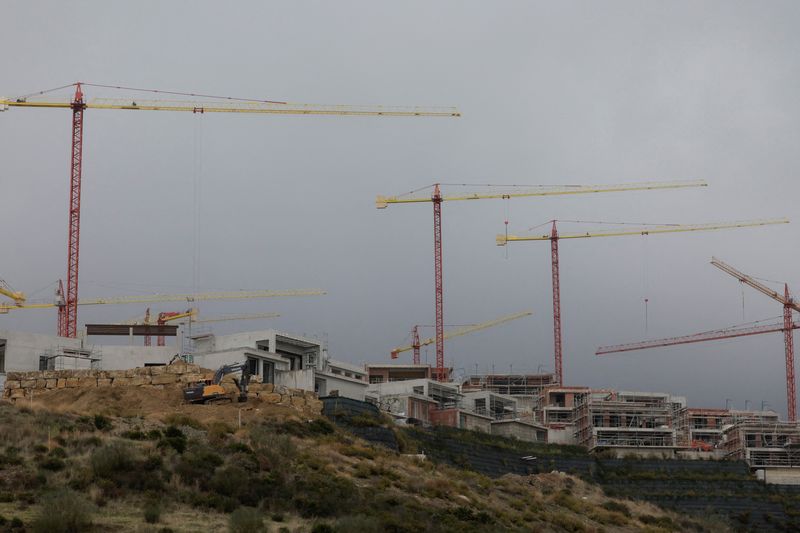
Neinor, one of Spain’s largest property developers, sold 70% of its premium 102-home Santa Clara complex completed in Marbella last year to Polish clients.
And Polish buyers dominate a 64-floor skyscraper under construction in Benidorm, another coastal hot spot.
AN ALTERNATIVE TO DUBAI
“Spain right now is a diversification play on security grounds,” said Paloma Perez Bravo, CEO of real estate firm Dils-Lucas Fox.
In the same way that conflict on Poland’s eastern border has driven Polish purchases, realtors are already seeing an influx of demand from investors based in the Gulf following the outbreak of the Iran war.
Three real estate firms told Reuters they are negotiating luxury property deals on the Costa del Sol with buyers from Dubai as the conflict deals a blow to the emirate’s image as a peaceful haven for the rich. At least two deals have already been completed.
Marciniak-Kostrzewa recently sold a property to a Polish client living in Dubai, who was seeking a safer alternative base for their family.
While Dubai has wooed foreigners with zero property tax, realty lawyer Maria Ruiz Lopez said regional wealth tax exemptions or allowances are a draw for Madrid and the Costa del Sol, making them more attractive to rich buyers than other parts of Spain.
“We believe there will be an opportunity to attract those seeking an alternative to Dubai … partly because conflicts make Spain appear as a calmer option,” said Mario Lapiedra Vivanco, deputy CEO at Neinor, which has already closed a deal with a buyer from Dubai.
HIGHER PRICES FEED THE INVESTMENT TREND
“It’s not just violent conflict, but also the political and social pressure,” said Gilmar’s Caballero, pointing to the surge in Americans — many of them of Hispanic origin — investing in Spain since President Donald Trump’s return to office last year.
“Many do it as an investment. And others see it as a Plan B, because they don’t know what’s going to happen in the United States,” she said.
From 2024 to 2025, Gilmar saw U.S. investments surge from 0.5% to 6.2% of its property transactions and Americans overtake Britons as the leading foreign buyers on the Costa del Sol.
Across Spain, Americans accounted for 2% of property purchases by foreigners and paid the third-highest average price after Swedes and Germans, according to data from the General Council of Notaries.
The broadening pool of foreign buyers has pushed up home values.
Realtors dealing in properties priced between €1 million and €20 million ($1.13 million and $22.68 million) say the rising values make buying in Spain an attractive investment, reinforcing the trend and setting the market apart.
The warm climate and stable economy also attract buyers.
Jack Harris, a London-based partner in Knight Frank’s international residential team, said luxury home prices in Spain have risen by as much as 9.5% year-on-year, faster than in other European markets like France and Italy.
“Spain has been something of an outlier in terms of performance across Europe over the last 12 months,” he said.
($1 = 0.8817 euros)
(Additional reporting by Iain Withers in London and Charlie Devereux in Madrid; Editing by Andrei Khalip and Joe Bavier)

By Corina Pons and Karol Badohal | Reuters | © Copyright Thomson Reuters 2026.
