I recently filed a complaint in Hamilton County Court of Common Pleas against the Cincinnati Planning Commission, the city of Cincinnati, and each of the planning commissioners for violations of Ohio’s Open Meetings Act. The complaint concerned an executive session held during the June 5 meeting of the commission.

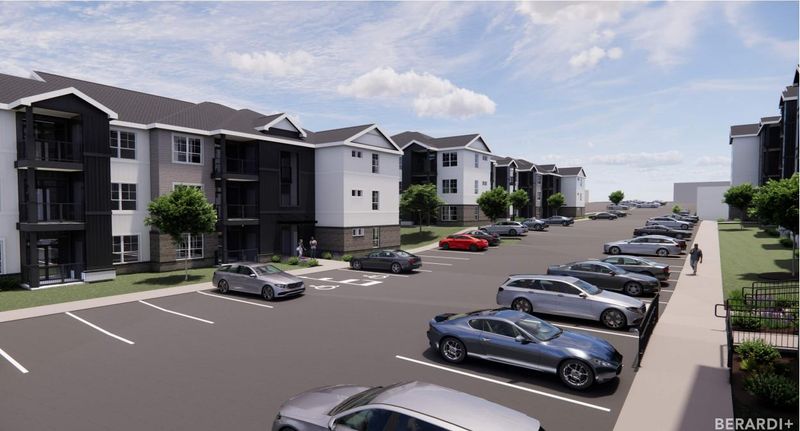
The commission was deciding on two concurrent applications for the proposed 167-unit Westline Flats affordable housing development: a zoning change and approval for the planned development itself.
Technically, the site is in the Westwood neighborhood, but it is only 400 feet from the border of West Price Hill. Nonetheless, the required neighborhood engagement included only Westwood neighborhood organizations. Realistically, the development will have a much greater impact on West Price Hill. Residents showed up to the meeting and tried to explain that to the planning commission.
There were commissioners, including the city manager’s representative on the board, who recognized the inequity in the process. The commissioners discussed possibly delaying a vote to allow for engagement with West Price Hill. However, by that time, the meeting had become deadline-driven.
The developer told the planning commission that it intended to apply in three days (June 8) for a Low Income Housing Tax Credit award. It sought the approval of the planning commission for both actions in order to strengthen its imminent application for the tax break.
What happened behind closed doors?
As a result, the planning commission was placed in the position of accommodating either the developer or West Price Hill. When the board chairman, Jacob Samad, was having difficulty deciding how to proceed, he made a motion to go into executive session.
Samad did not articulate a reason for the executive session and did not report its purpose afterwards. But any confusion about how to proceed with the meeting’s agenda was obviously cleared up behind closed doors. The planning commission ultimately approved both of the developer’s applications.
Significantly, at the close of the meeting, the chairman apologetically told the public, captured on the meeting’s video, that the commission sometimes feels pressured to make decisions under time constraints. He repeated “pressure” more than once in his brief remarks.
Did the planning commission follow procedures that give the public confidence that decisions were reached fairly? Has Cincinnati created a decision-making process in which affordable housing projects receive less scrutiny than other major developments?
Consider statements made by the City Council’s representative on the commission, Anna Albi. It sounded as if she supported the project based solely on the plan to seek the Low Income Housing Tax Credit. In her usual, overly animated way, Albi complained that Cincinnati does not have enough LIHTC projects compared to other Ohio cities. She proclaimed that she wants more of these projects.
Councilwoman Albi’s lack of objectivity was on full display.
Good policy requires good process
As it turns out, despite all the discussion and focus on the June 8 LIHTC deadline, the developer did not even submit an application, according to the city and the developer’s own legal counsel. But they were successful in obtaining the approvals they sought from the planning commission, which was their objective.
Subsequently, on July 17, the developer’s legal counsel sent a letter to the city suggesting that they were clear at the June 5 meeting about the ambiguity of the LIHTC process and the tentative nature of submitting an application by the June 8 deadline. In other words, the developer cannot understand why the chairman apologized to the public about feeling pressured.
The Westline Flats development is a case study of how affordable housing has become so politically favored that normal standards of transparency, equitable public participation and objective decision-making have been regularly pushed aside by our public officials, which is contrary to good government.
Todd J. Zinser is a Cincinnati native and resides in West Price Hill. He retired as the Inspector General of the U.S. Department of Commerce after 31 years of conducting audits and investigations of federal officials, programs, and operations. He remains a certified fraud examiner. He is the founder and executive director of the Cincinnati Oversight Project and is the host of a podcast on iHeartRadio and YouTube, “Citizen Watchdog with Todd Zinser,” which can also be viewed on www.cincinnatiwatchdog.com.
This article originally appeared on Cincinnati Enquirer: Westline Flats raises questions about City Hall transparency | Opinion
Reporting by Todd Zinser, Opinion contributor / Cincinnati Enquirer
USA TODAY Network via Reuters Connect

By Todd Zinser, Opinion contributor | USA TODAY Network