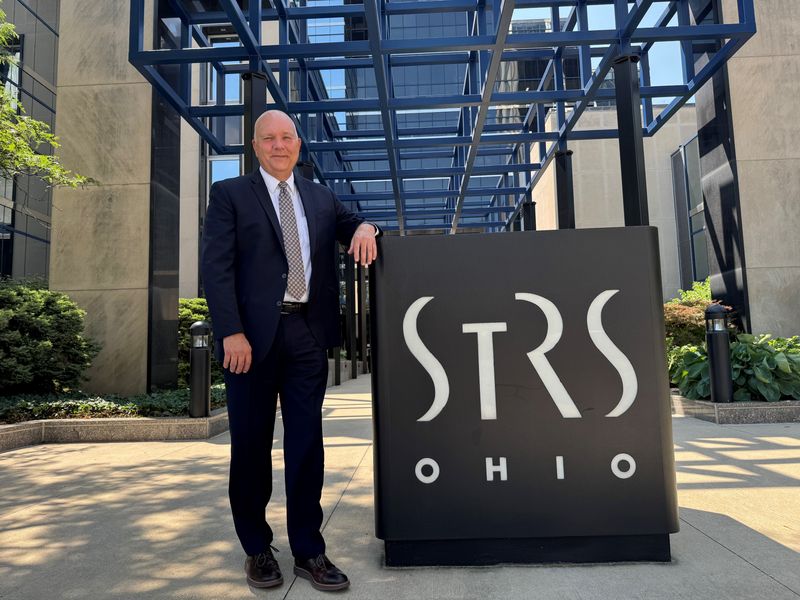
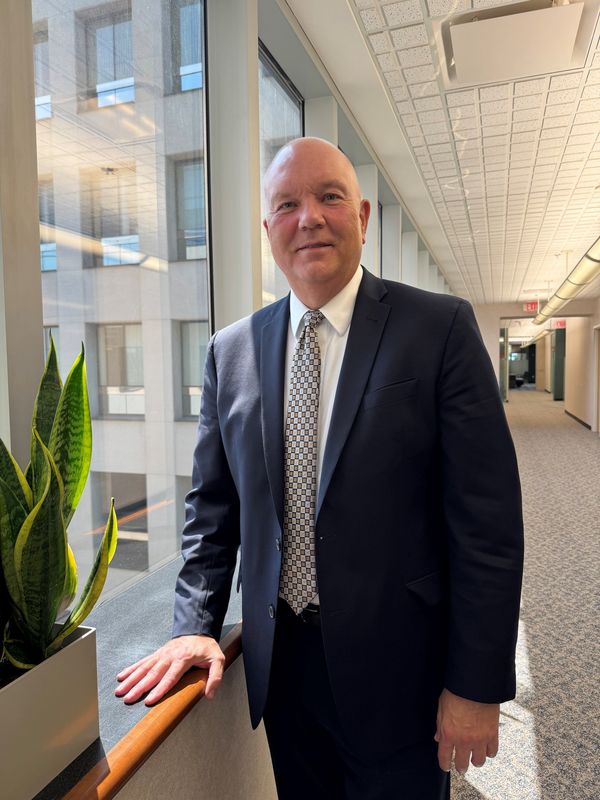
A year ago, Steve Toole took over a big job and a public relations mess at the State Teachers Retirement System of Ohio.

The fund had seen a mass exodus of top managers, STRS meetings often turned into rancorous affairs with infighting and harsh words, and the state attorney general was suing to oust the board chairman.
The STRS board had a 6-5 vote on hiring Toole as executive director. He took the job anyway.
“I had a lot of friends say, why are you doing this? Do you not read the paper?” Toole said.
Toole, who grew up in South Bloomfield and raised his children in Pickerington, graduated from Ohio State University and worked for decades in finance and pensions, decided he had the experience to stabilize STRS.
In his first year, Toole said he hired key managers, held monthly town hall meetings across Ohio, and worked to help board members find common ground.
“I’m a big fan of boring with retirement systems,” he said.
What is the State Teachers Retirement System?
Ohio has five public pension systems. STRS is the second largest, serving 550,000 teachers and retirees. It has more than $106 billion invested, 90% of which is managed by internal investment staff.
STRS is funded by a percentage of payroll contributed by workers, a percentage from employers and investment returns. The system is governed by an 11-member board of elected teachers and retirees as well as political appointees.
In a late-night move during state budget deliberations, lawmakers inserted language to change the makeup of the STRS board. It will shift control to political appointees, away from teachers. State Rep. Jim Hoops, R-Napoleon, is sponsoring another bill to unravel those changes.
Toole said he has no position on the matter. “This becomes a political issue. As soon as I pick sides, I’m going to upset some people.”
Turmoil at teachers’ pension fund
In recent years, activists mounted a board takeover, electing board members who were more sympathetic to their complaints about transparency, senior leadership, staff bonuses, and the suspension of the cost-of-living allowances for retirees.
Beginning in 2020, QED, led by former deputy state treasurer Seth Metcalf, pitched its services to STRS staff. After being rejected, QED worked with Wade Steen, Rudy Fichtenbaum and other former board members.
In 2024, then Ohio Attorney General Dave Yost filed a lawsuit to remove Fichtenbaum and bar him and Steen from serving on the STRS board in the future. In February, Franklin County Common Pleas Court Judge Karen Held Phipps ruled in favor of Yost. Steen and Fichtenbaum have appealed.
“From my perspective, it’s in the rearview mirror,” Toole said. He said his focus is to help board members understand the best fiduciary practices for the system.
The turmoil and infighting has taken a toll on STRS’ reputation among teachers and retirees, according to recent survey results. This year, fewer system members report favorable opinions of STRS than in 2019.
Goal: 90% funded
The 2012 pension reform law angered a lot of public workers. Essentially, they would have to work longer careers for lower pension benefits. But without those changes, STRS’ funding level would’ve dipped into dangerous territory.
The funding ratio, which measures assets to promised benefits, improved to about 82.5%, up from 57% in 2012. Toole said STRS now has a framework to further improve its financial picture to a 90% funding ratio, which would better insulate the system from a major correction in the stock market.
“These markets have been amazing for the last few years. There’s always a concern that we’re on a bubble,” Toole said.
This story has been updated to clarify Toole’s hometown.
State government reporter Laura Bischoff can be reached at lbischoff@usatodayco.com and @lbischoff on X.
This article originally appeared on The Columbus Dispatch: New STRS Ohio leader aims to restore trust after years of turmoil
Reporting by Laura A. Bischoff, Columbus Dispatch / The Columbus Dispatch
USA TODAY Network via Reuters Connect
By Laura A. Bischoff, Columbus Dispatch | USA TODAY Network