Glass House Brands went through its lowest and highest points in the company’s history in the past year, both due to decisions made in Washington, D.C.
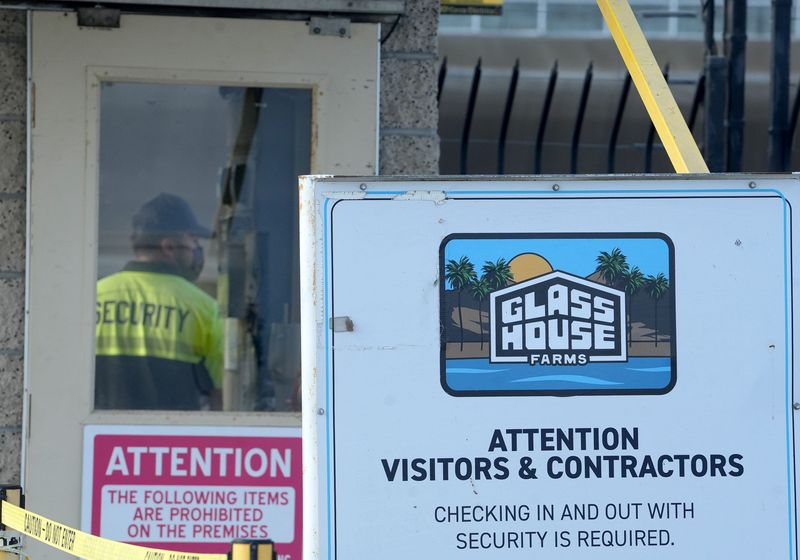
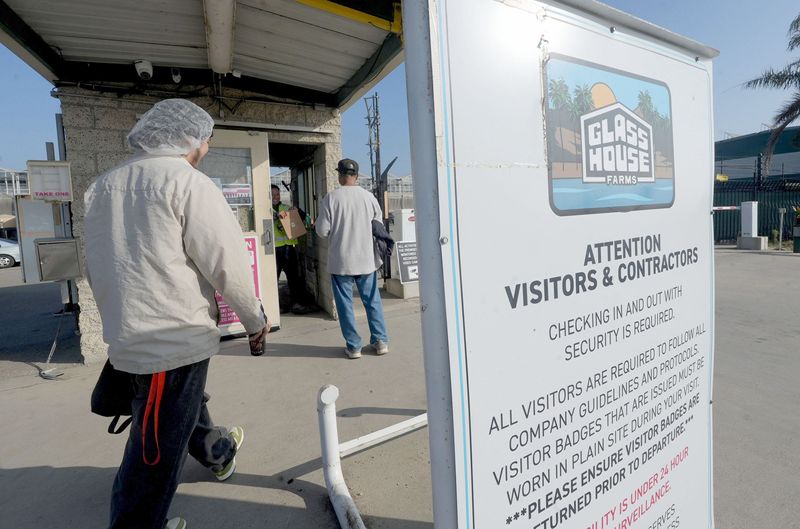
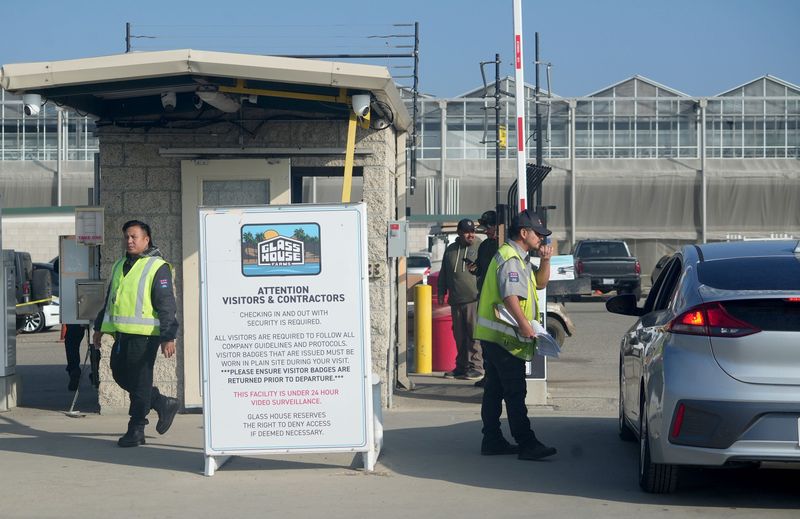
On July 10, 2025, federal agents raided the company’s cannabis greenhouses in Ventura and Santa Barbara counties, one of the biggest raids so far in President Donald Trump’s second-term immigration crackdown.

Hundreds of workers were arrested and one died from injuries sustained during the raid at the Glass House facility near Camarillo. The family of Jaime Alanís Garcia, the man who died after he fell from a greenhouse roof, has sued both the federal government and Glass House Brands.
Glass House had to rebuild its entire greenhouse workforce after the raids, as well as its procedures for vetting its own employees and the employees of its outside contractors. Federal officials said the Camarillo site had about a dozen underage workers, and the state has fined Glass House $21,000 for insufficient record-keeping on the ages of its workers and those of its contractors. Children as young as 14 can work in agriculture in California, but workers in the cannabis industry must be 21 or older.
Glass House lost millions due to the raids and the aftermath, when it was short on workers. The company’s revenue dropped by 10% in 2025 compared to the year before, including a 40% year-to-year decline in the fiscal quarter in which its properties were raided. The company was narrowly profitable in 2024; in 2025 it reported a loss of nearly $30 million.
Glass House is far and away the biggest cannabis grower in Ventura County, and its troubles were the main reason the county’s tax revenue from cannabis cultivation dropped 23% from the 2024-25 fiscal year to the 2025-26 year, which ended June 30. The county’s total cultivation tax revenue for the recently concluded year was $4.9 million, according to data provided by the county to The Star.
Glass House executives did not respond to requests for comment.
In a conference call with investors and analysts in May, to discuss the company’s most recent earnings, executives said Glass House is still recovering from the raids. CEO Kyle Kazan said Glass House was lowering its estimates for earnings in 2026, due to higher production costs than the company was expecting.
“The reason is that we continue to operate with a less experienced workforce of third-party labor contractors,” Kazan said during the call. “While the staff gains valuable experience every day, the first quarter was their first at pre-raid scale for harvest and production, and there remains a learning curve with operations. This has hindered our productivity.”
Graham Farrar, Glass House’s founder and president, likened the company’s recovery to a marathon runner who had both legs broken and is trying to get back into world-class shape. The company was learning to walk again right after the raid, and now it’s “starting to run again.”
“We had a labor force where in some cases, you are replacing people that might have been here with five years with someone who today has been here five months,” Farrar said.
Farrar, Kazan and other Glass House executives believe that a year later, their company is now close to full strength. They also think there are much better days ahead, due to a shift in federal policy unrelated to immigration enforcement. Within the next year, they hope to see Glass House cannabis for sale out of state and even overseas.
Rescheduling marijuana, relisting Glass House stock
In April, the Trump administration eased the federal prohibition on cannabis by moving medical marijuana from Schedule I to Schedule III of the U.S. Drug Enforcement Administration’s classification system, when it is legal and licensed by a state government.
Schedule I drugs are those with no accepted medical use and “high potential for abuse,” according to the DEA, such as heroin and LSD. Schedule III drugs, including codeine and anabolic steroids, have medical uses and “a moderate to low potential for physical and psychological dependence.”
Rescheduling isn’t full federal legalization, but some observers see it as a step in that direction. Even without full legalization, the new policy opens up huge opportunities for companies like Glass House.
When marijuana was classified as a Schedule I drug, the major U.S. stock exchanges would not list cannabis companies. For that reason, Glass House has been listed on a Canadian stock exchange since it began offering shares to the public five years ago.
Glass House’s primary business is cannabis cultivation and wholesale sales, and that business is licensed to grow both medical and recreational cannabis. It also owns a few retail stores that sell recreational cannabis.
As soon as the federal government reclassified medical marijuana, Glass House spun the retail division off into a separate, privately held entity, so that the remainder of the company could be listed on the New York Stock Exchange. On June 30, Glass House began trading on the NYSE, which is the world’s second biggest exchange, after the Nasdaq.
So far, the move to the NYSE hasn’t had a big effect on Glass House’s share price. Shares closed at $13 their first day on the NYSE, up 5% from the day before, and dropped over the next couple of weeks to close at $11.81 on July 10.
The federal rescheduling had a much bigger impact. Glass House shares shot up 60% on the day in December when Trump signed an executive order to have marijuana rescheduled. By the time the rescheduling took effect in April, Glass House shares had doubled in four months.
Frederico Gomes, an analyst who covers the cannabis industry for the investment bank ATB Capital Markets, said Glass House was the second U.S. cannabis company to move to a major stock exchange following the federal rescheduling, and he expects the other 10 or publicly-traded cannabis companies to soon follow their lead.
“The big rationale behind it is that being listed on a major exchange could attract more investors,” Gomes said. “Their stock hasn’t reacted the way people expected, but I think it’s going to be a gradual process.”
Gomes visited Glass House’s Camarillo-area greenhouses during the company’s investor meetings in June, and said he thinks the problems created by the raids are “mostly solved at this point.”
“You’re replacing pretty much your entire workforce, and that takes some time, but it seems like they’re pretty much on track,” he said.
Glass House hopes to sell overseas
The biggest benefit to Glass House of the marijuana rescheduling is the potential for interstate and international sales.
The DEA can now issue export permits for medical marijuana, though the agency hasn’t issued any yet. Gomes said he thinks U.S. companies are likely to start getting permits and exporting weed either this year or in 2027.
“It’s a new thing for the DEA and they’re trying to figure it out, but I believe there’s a path,” he said.
Interstate sales might come more slowly than international sales, Gomes said. U.S. states with legal marijuana all have different regulations, and many of them require cannabis to be grown and distributed within the state.
If cannabis companies are ever allowed to sell across state or national lines, Glass House is “one of the best-positioned” to profit, Gomes said.
With 5.5 million square feet under glass, Glass House’s Camarillo facility is the largest cannabis greenhouse complex in the world. The company has plenty of space to expand production, and its growing costs are very low for the industry, Gomes said.
Kazan and Farrar told investors on Glass House’s last earnings call that they recently traveled to Germany, where marijuana is legal and is often supplied by Canadian companies, for an industry conference.
“I can confirm that the rest of the world wants California cannabis, and we look forward to giving it to them,” Kazan said.
Tony Biasotti is an investigative and watchdog reporter for the Ventura County Star. Reach him at tbiasotti@vcstar.com. This story was made possible by a grant from the Ventura County Community Foundation’s Fund to Support Local Journalism.
This article originally appeared on Ventura County Star: A US raid set back Glass House. But new federal rules are a boon
Reporting by Tony Biasotti, Ventura County Star / Ventura County Star
USA TODAY Network via Reuters Connect
By Tony Biasotti, Ventura County Star | USA TODAY Network