Watching the news has become both stressful and addictive — and increasingly divisive. Whether the topic is politics or health care, it seems there is no longer room for a neutral opinion.
After a long day, my cats welcomed me to the couch. The kitties wanted my company, and I desperately needed to shift my mind away from work. So, I turned on the news. Immigration has become a subject on everyone’s lips. Immigrants are either portrayed as villains ruining this great economy or as invisible workers who quietly build that same economy behind the scenes. And those who had the privilege of being born in the United States are angry with one another because they cannot agree on where the foreigners seeking a better life belong.

As an immigrant myself, I struggle to stay impartial. I simply do not understand how quickly history can be forgotten. Ironically, many descendants of immigrants are now looking down on people who are native to this land. Many who have spent decades building their lives here and paying taxes are being cast aside. As I stared at the screen, I reminded myself that even though history can be forgotten, it cannot be erased. A feeling of unavoidable sadness grew inside me, so I changed the channel.
I joyfully dived into one of my faves, “Grey’s Anatomy.” Who doesn’t love Meredith Grey and the “bloody” work she does? That episode is called “Stronger Than Hate.” Somehow, the title resonated beyond the medical. Even though she was talking about our health, her words brought me right back to the news I had just turned off.
She spoke about microbes — the uninvited, foreign guests that we all carry. “Our bodies play host to trillions of bacteria and other microbes. They live on our skin, in our guts, up our noses … Microbes help us produce vitamins and stimulate our immune system … It turns out they’re right where they belong.”
This comparison became a remarkable illustration of how interconnected the world truly is. People fight over human immigrants without realizing that each of us already hosts an entire immigrant community within ourselves. Every human, regardless of nationality, hosts trillions of microorganisms representing thousands of species — an astonishing community of outsiders that our bodies depend on. Scientists increasingly recognize the gut microbiome as an ecosystem so important that some call it a forgotten organ. Without it, digestion, immunity, and even mental health suffer. The microbes even carry their own DNA. “Just as people who immigrate here bring their cultures and ancestry,” I thought to myself.
The gut microbiome is the largest of these communities, and I must feed it well if I want it to keep me healthy. The bacteria living rent-free in my intestines do not do well on greasy French fries but prefer foods rich in fiber. So, I’d better give them fruits, vegetables and whole grains. Smart. Original. Just like my Ukrainian grandmother taught me to eat.
I listened to my gut and grabbed a celery stick from the refrigerator. My intestinal friends said they wanted it.
As I imagined the benefits of eating it, I could not stop thinking about the parallel. The microbiota enters my body — the mainland — without me ever noticing, yet it is vital to my survival. When I hear the word microbe, I instinctively think of an enemy. I want my immune system — the border wall — to fight it and destroy it. I fail to remember that the vast majority of microorganisms are completely harmless to my well-being.
Just like in the natural ecosystem, different species depend on one another to survive. Even if the process is invisible, it is no less important. The same goes for the world system. We, humans, of various races, ethnicities and birth lands, depend on each other just as much. Even if work happens in the background of our lives and we do not see the clear picture, we must remember that we cannot thrive alone.
“Unity and acceptance are stronger than hate,” I thought to myself and grabbed a second celery stick.
After all, when they flourish, so do I.
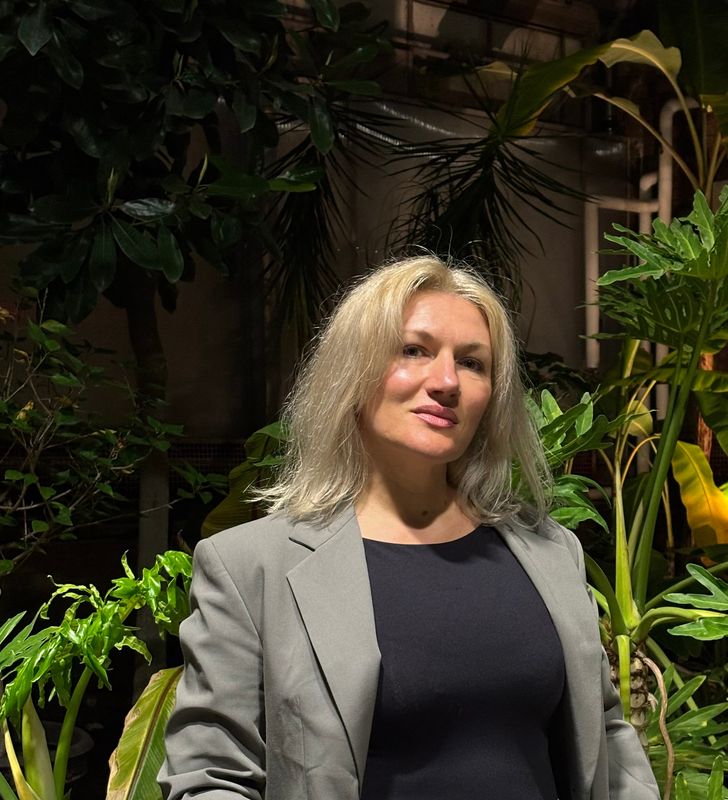
Nina Domricheva is a native Ukrainian living in Elkhart, and a first-generation immigrant.
This article originally appeared on South Bend Tribune: Listening to my gut on microbes — and immigration
Reporting by Nina Domricheva, Guest columnist / South Bend Tribune
USA TODAY Network via Reuters Connect
By Nina Domricheva, Guest columnist | USA TODAY Network