Florida is one of the most kratom-friendly states in the United States – although maybe not so friendly with some of us healthcare types.
Kratom is an herbal extract that comes from the leaves of a tropical evergreen tree native to Southeast Asia called Mitragyna speciosa. The matcha-green substance can act as a stimulant in low doses and a pain reliever in higher doses. For centuries, locals in Malaysia, Indonesia, and Thailand have chewed the crushed leaves or brewed the leaves for tea.

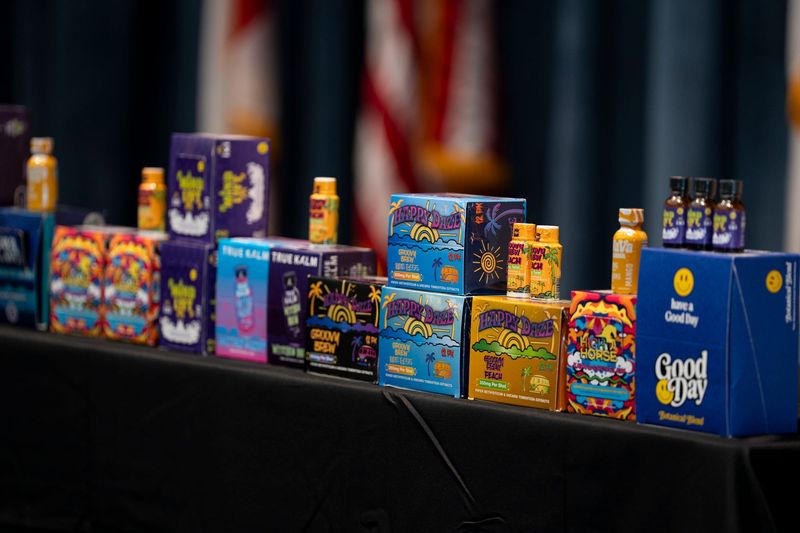
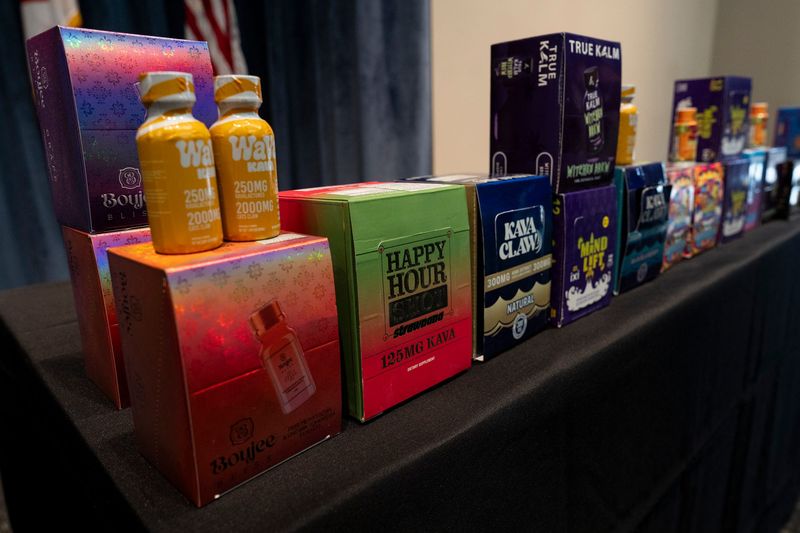
In recent years, kratom has gained popularity and availability in the United States, with the preferred ingestion form more often being tablet, capsule (filled with ground leaves), gummy, extract, or beverage (including concentrated energy shots).
Kratom is legal to buy, sell, possess, and use everywhere in the state of Florida – with the exception of Sarasota County, where there has been a local ban in place since 2014. It can be bought at gas stations, mini-marts, smoke shops, specialty stores, and bars.
Florida Attorney General James Uthmeier’s recently made an executive order for a statewide “emergency” ban on high-concentrated hydroxymytragynine (aka 7-OH) kratom. The Florida Kratom Consumer Protection Act (House Bill 179), passed in July of 2023, failed to regulate 7-OH concentrations.
In Florida, 7-OH is classified as a Schedule 1 controlled substance – the same category as heroin and fentanyl.
Natural kratom has trace amounts of 7-OH in its leaves, but many products being sold have been chemically converted to contain a much higher and dangerous concentration of the psychotropic compound than naturally occurring.
Higher concentrations of 7-OH in Kratom – sometimes referred to as “gas station morphine” – raise the risk of overdose and serious side effects, including seizures, hallucinations, chills, vomiting, liver damage or even death.
So why has the 2023 legislation not worked? Why the executive order? In this registered nurse’s opinion, one big factor is that addicts do not just have one – whether it’s one beer, or one crack rock, or one kratom tablet.
If an individual drinks 12 beers, each one containing a trace amount of alcohol – say three percent – that person’s blood-alcohol level will reach the point of impairment. It’s the same with kratom. Each tablet might only contain a trace amount of 7-OH, but the kratom addict is not stopping at one – and too much 7-OH can be more dangerous than too much ETOH (medical term for alcohol).
This registered nurse currently works on a substance-abuse rehabilitation unit that includes several kratom-using residents, including one who suffered a stroke after a kratom overdose.
The most laughable argument for kratom is that it can help one ease withdrawal symptoms and escape opioid addiction. In 20-plus years working in substance abuse and mental health, this nurse has never heard a healthcare practitioner tell a patient the following: “I recommend you stop by the gas station and get yourself some kratom.”
This nurse has never heard a healthcare practitioner advise a patient in pain to try kratom.
There are widely-accepted medications like buprenorphine (Brixadi, Sublocade) and buprenorphine-naloxone (Suboxone, Zubsolv) that can take away the cravings for opioids and help with pain relief.
The Food and Drug Administration (FDA) has not approved kratom for any medical use.
As of April 2026, kratom is banned in eight states – Alabama, Arkansas, Connecticut, Indiana, Kansas, Louisiana, Vermont, and Wisconsin.
In both 2017 and 2019, legislation was introduced in Florida that would have banned kratom statewide. Both bills died.
Legislators, stop representing the $1 billion kratom industry.
Introduce another bill to ban kratom – and pass it.
Mark Ryan is a registered nurse and lives in Tallahassee.
(This column was updated to correct the spelling of Attorney’s General James Uthmeier’s name and to clarify the facts of his emergency emergency measure in June 2026 which added newly discovered 7-OH chemical derivatives to Schedule I.)
This article originally appeared on Tallahassee Democrat: Dangers of kratom abuse make strong argument for a ban in Florida
Reporting by Mark Ryan, Your Turn / Tallahassee Democrat
USA TODAY Network via Reuters Connect
By Mark Ryan, Your Turn | USA TODAY Network