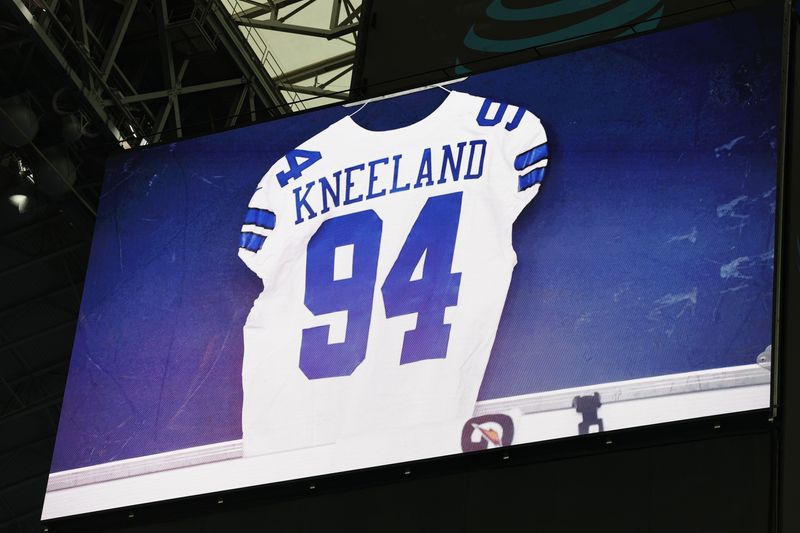
Eight months after the tragic death of Marshawn Kneeland, new light has been shed on circumstances that almost certainly contributed to the Cowboys defensive end taking his own life in November at the age of 24.
Postmortem brain tissue analysis revealed that Kneeland was diagnosed with stage 1 chronic traumatic encephalopathy, or CTE.

“Unfortunately, I was not surprised to find CTE in the brain of Mr. Kneeland, because we have found this progressive brain disease in nearly half of the athletes we’ve studied who have died before the age of 30,” said Dr. Ann McKee, director of the Boston University CTE Center. “Thanks to the generosity of our brain donor families, we now better understand the earliest stages of CTE, and it is bringing us closer than ever to diagnosing it during life. My team and I are fully dedicated to finding effective treatments and a cure for CTE.”
Stage 1 is the lowest level (of four stages) of the degenerative disease, which has been linked to repeated head impacts and traumatic brain injuries like concussions. CTE can only be diagnosed by studying the brain tissue of a deceased individual; one study has found CTE in the brains of 96% of the NFL players examined.
The condition has been identified in football players dating all the way back to the game’s earliest generations. Despite recent changes to the sport’s official rules and safeguarding advancements in helmet technology, concussions and head injuries remain a prevalent issue in today’s NFL.
“Mr. Kneeland played in the modern era of concussion protocols and better helmets, and yet he still developed CTE,” Concussion & CTE Foundation CEO Chris Nowinski said. “We have no reason to believe the current generation is at a lower risk of CTE than previous generations. Concussion protocols do not prevent CTE, because CTE is caused by repeated head impacts, not just concussions. If we want to reduce CTE risk, we must implement CTE prevention protocols and aggressively reduce the number and strength of head impacts at every level of the game.”
Kneeland, a second-round draft pick in 2024, died of a self-inflicted gunshot wound following a traffic violation and subsequent police chase in the Dallas metroplex on Nov. 6. During the episode, officers received information that Kneeland had expressed suicidal ideations, and the league was notified that he was texting goodbye message to family members.
Kneeland’s girlfriend, Catalina Mancera, was expecting a child at the time. Mancera gave birth to the couple’s son Makhai on June 11. Cowboys head coach Brian Schottenheimer previously said that the team would establish a memorial fund to help Mancera care for the child.
Mancera explained the family’s decision to go public with the results of Kneeland’s brain tissue study.
“While this diagnosis does not change the tragedy of his passing, it provides important context about some of the struggles he may have been facing,” she said. “We share this information to help people understand what NFL and other high contact sport athletes might be struggling with. Raising awareness is important to us. We continue to remember Marshawn with compassion for the person he was, rather than defining him by the final moments of his life.”
Todd is on X at @ToddBrock24f7. Also, follow Cowboys Wire on Facebook to join in on the conversation with fellow fans!
This article originally appeared on Cowboys Wire: Cowboys DE Marshawn Kneeland had CTE, analysis concludes
Reporting by Todd Brock, Cowboys Wire / Cowboys Wire
USA TODAY Network via Reuters Connect
By Todd Brock, Cowboys Wire | USA TODAY Network